
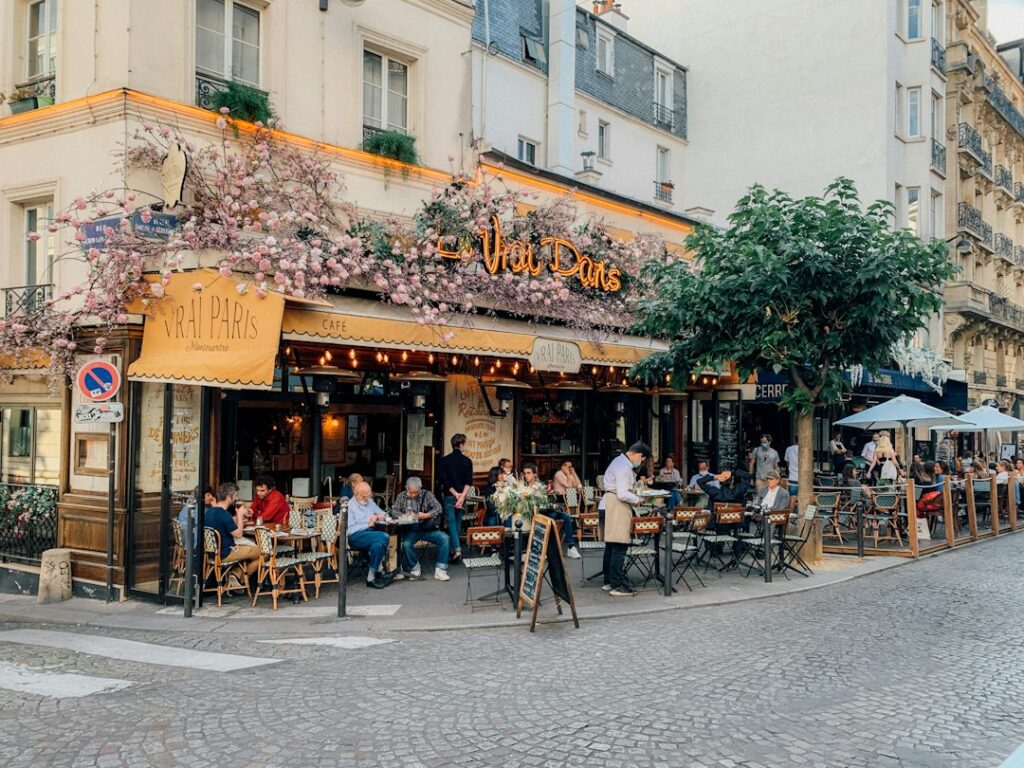
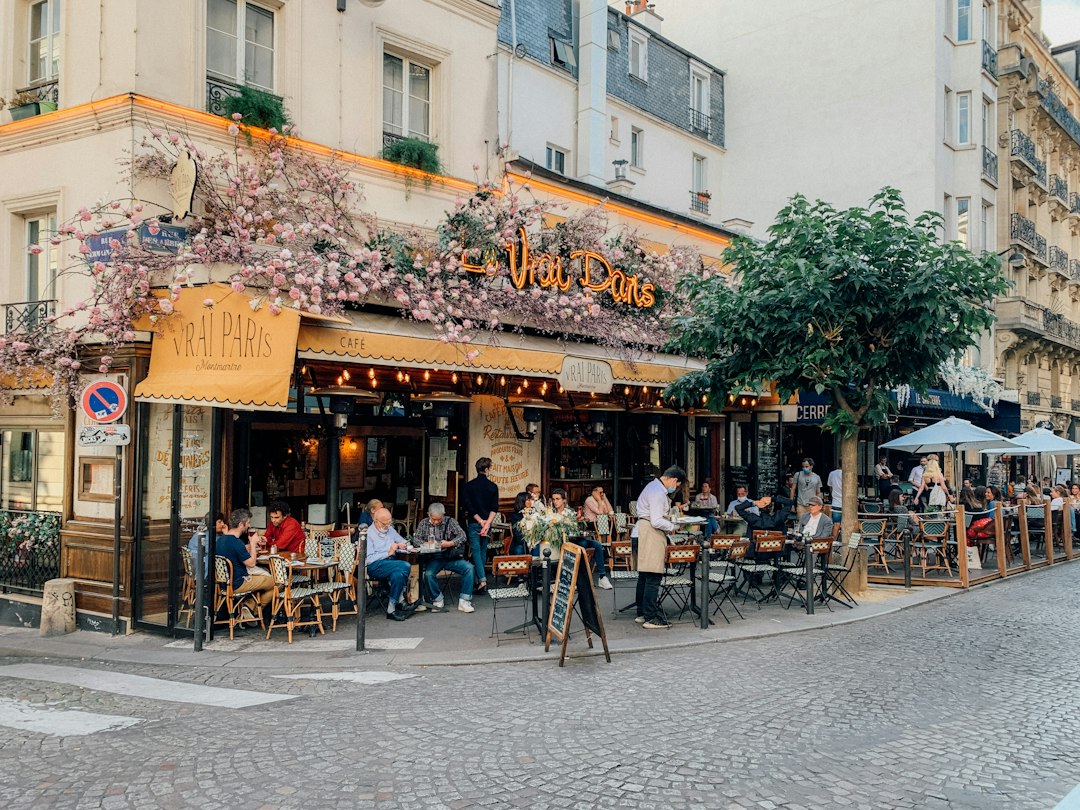
Walk into a Paris café and the first word out of your mouth matters more than what you order: a clear “Bonjour” to the room, or to the waiter behind the zinc counter, is the unwritten password that turns a stranger into a welcome guest. The café itself is a legally recognised fixture of French daily life, with prices, service charges and even the right to a free glass of tap water all governed by rules most visitors never notice. This is Guide № 005 in The Love Paris Guide series.
Get the Full Collectible Guide (Free PDF)
Parisian Café Etiquette — in a beautifully designed, printable booklet. The Love Paris Guide № 005.
The Greeting That Sets the Tone
The single most useful thing to know about a Parisian café has nothing to do with coffee. A polite “Bonjour madame” or “Bonjour monsieur” on arrival, and “Merci, au revoir” on the way out, is expected as a basic courtesy, not a bonus. Skipping it is widely read as brusqueness, which is a large part of why some visitors leave convinced that French waiters are cold. Address staff as madame or monsieur rather than snapping fingers, and you will generally find the service warms considerably.
It helps to remember that waiting tables in France is often a trained, career profession rather than a student side job. The person carrying your tray may have decades of experience, and treating the exchange as a professional interaction between equals — patient, unhurried, polite — is the etiquette that unlocks everything else.
Service Compris: Why You Don’t Really Tip
Since a French law that took effect in 1987, restaurant and café prices must be quoted service compris — with the service charge already included in the listed price. In practice this means the tip is baked into what you pay, and there is no expectation of the 15–20% add-on common in the United States. Leaving a euro or two, or rounding up the bill for good service, is appreciated but entirely optional. The rules on price display and service charges are enforced by France’s consumer and fraud authority, the DGCCRF, which is why every café is required to post its prices where customers can see them.
One Café, Several Prices
It is perfectly legal, and completely normal, for the same espresso to cost different amounts depending on where you drink it. Standing at the counter (au comptoir) is usually the cheapest option; sitting in the room (en salle) costs more; and taking a table on the terrace, where you are effectively renting a front-row seat on the street, costs the most.
That terrace premium buys a genuine privilege: the table is yours for as long as you want it. Nobody will hurry you out or slide a bill across the table to turn the seat. If you want to pay, you catch the waiter’s eye and ask for l’addition, s’il vous plaît — the bill will not arrive until you request it.
How to Order Like a Local
Ask for un café and you will be served a small black espresso, not a mug of filter coffee. A café allongé is a longer, more diluted espresso; a café crème is the milky morning drink often loosely called a café au lait at home. You are also entitled, on request, to a free carafe d’eau — a jug of tap water — alongside whatever you order, a right many visitors never think to use.
The café’s role stretches well beyond caffeine. Historic literary rooms such as Café de Flore and its Saint-Germain neighbour Les Deux Magots built their names on the writers and philosophers who treated a single coffee as rent on a table for the afternoon. Le Procope, opened in 1686 and often described as the oldest café in Paris still running, poured for Voltaire and the Encyclopédistes long before espresso machines existed.
Cafés, Salons de Thé and the Sweet Side
Not every sit-down drink happens in a café proper. A salon de thé follows slightly different rhythms, leaning toward tea, hot chocolate and pastry rather than a quick counter espresso. The Rivoli tea room Angelina is famous for a thick “l’Africain” hot chocolate served with a jug and a bowl of whipped cream, while Ladurée pairs its macarons with a more formal tea-room service. The etiquette overlaps with cafés — greet, take your time, ask for the bill — but the pace is gentler and the expectation to order food alongside your drink is stronger.
Planning a Café Afternoon
If you want to build café stops into a day out, the city’s official visitor service Paris je t’aime maps neighbourhoods and opening rhythms worth checking before you go. As a rule, cafés open early for the morning coffee-and-croissant crowd and stay open late; terraces fill in the early evening for the apéro hour. Choose your spot by whether you want to watch the street, read for an hour, or stand at the bar for two minutes — each is entirely acceptable, and each has its own price.
Myths Worth Retiring
Myth: Parisian waiters are rude. What reads as coldness is usually formality. Open with “Bonjour,” keep the exchange polite and unhurried, and the same waiter will generally be attentive and warm.
Myth: You must tip 15–20%. Service is included by law under service compris. Rounding up or leaving small change for good service is a kindness, not an obligation.
Myth: Ordering a milky coffee after breakfast is a faux pas. There is no such rule. Parisians tend to drink café crème in the morning and espresso later out of habit, but no waiter will refuse you a crème at 3pm.
Frequently Asked Questions
Do I need to tip in a Paris café?
No. The service charge is already included in the price under French law. If the service was good you might round up the bill or leave a euro or two, but it is optional and nobody expects a percentage.
Is tap water really free?
Yes. You can ask for une carafe d’eau — a jug of tap water — with your order at no charge. It is a standard right in French cafés and restaurants, separate from the bottled water you would pay for.
Why does the same coffee cost more at a table than at the bar?
Because you are paying for the seat and the time. Drinking au comptoir (standing at the counter) is cheapest, sitting inside costs more, and a terrace table costs the most — but that table is yours for as long as you like, with no pressure to leave.
More The Love Paris Guides
The Love Paris Guide is a numbered series — one tightly focused subject at a time, each with its own downloadable collectible edition. Guide № 001 is The Baguette, Guide № 002 is Bastille Day in Paris, Guide № 003 is The Eiffel Tower, Guide № 004 is Parisian Café Wine Culture, This is Guide № 005. More editions are on the way.
🇫🇷 Join Love Paris
Every week, get hidden stories, local secrets, and travel inspiration from people who live and love it.
Tours & experiences in Paris


Powered by Viator. Some links are affiliate links — we may earn a small commission at no extra cost to you.