By French law, a traditional baguette — the baguette de tradition française — may contain only four ingredients: wheat flour, water, salt, and yeast or leaven. No additives, no freezing, no shortcuts. That single 1993 decree, the Décret Pain, is why the loaf you tear into at a Paris counter tastes the way it does. This is Guide № 001 in The Love Paris Guide series.
Get the Full Collectible Guide (Free PDF)
The Baguette — in a beautifully designed, printable booklet. The Love Paris Guide № 001.
What Actually Makes a Baguette a Baguette
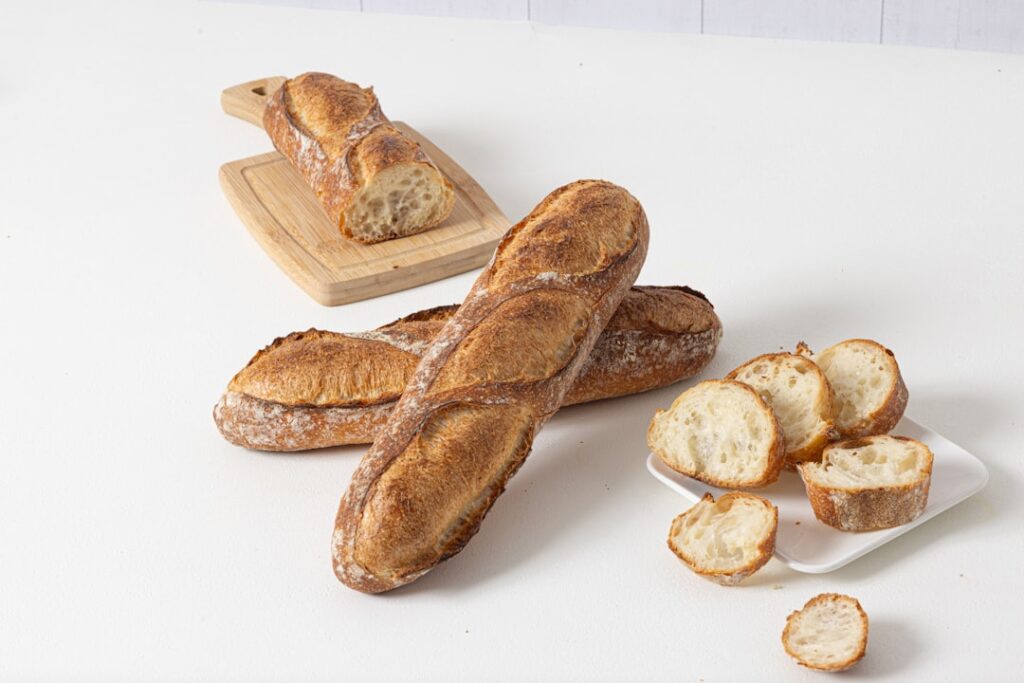
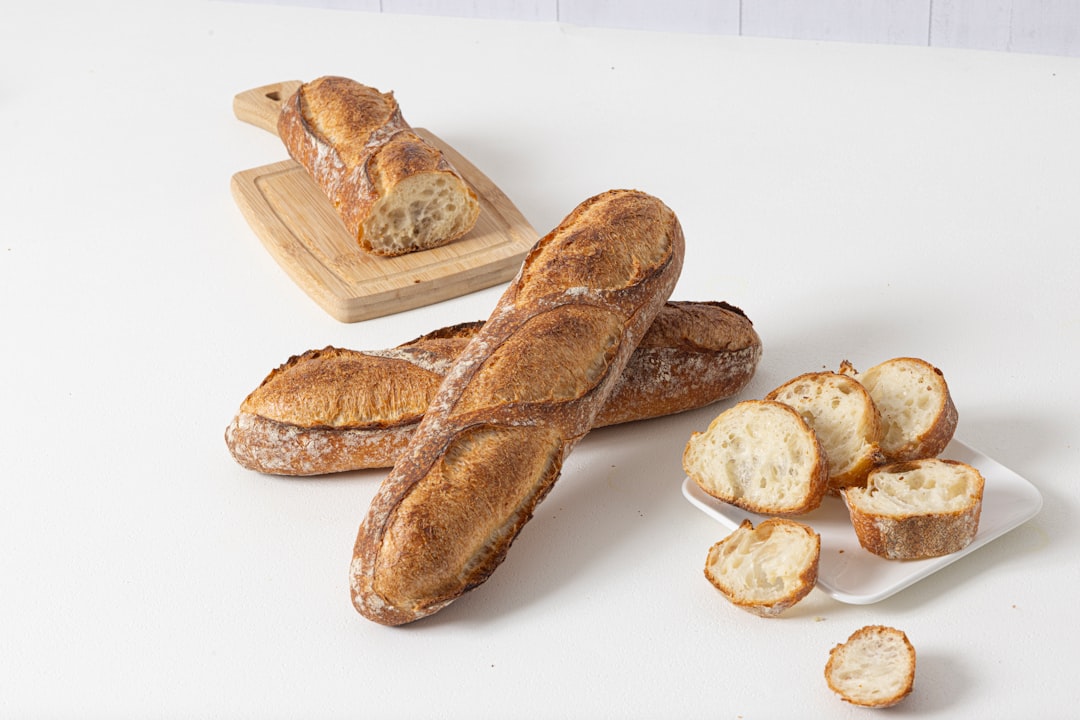
The long, thin shape most people picture is only a few generations old. The word baguette means “wand” or “stick,” and while long loaves existed in Paris well before the 20th century, the name itself became standard usage in the 1920s. A classic baguette runs roughly 65 centimeters long and weighs about 250 grams, with the diagonal slashes on top — called the grigne — serving a real purpose: they control where the loaf expands as gas rushes out during baking.
The crucial legal distinction in France is between an ordinary baguette and a baguette de tradition française. The traditional version, defined by the 1993 Décret Pain, cannot be frozen at any stage and cannot contain additives. An ordinary baguette can legally include a small amount of permitted additives such as broad-bean flour or ascorbic acid. When you want the real thing, ask for a tradition.
The Décret Pain and Why It Exists
By the early 1990s, industrial par-baked and frozen bread had spread widely, and shops could sell it under the same word used by artisan bakers. The French government responded in September 1993 with the Décret Pain, which reserved the term boulangerie for shops that mix, shape, and bake their dough on site. A supermarket reheating frozen dough cannot legally call itself a boulangerie, which is why the label above a door tells you something real before you even walk in.
How a Traditional Baguette Is Made
Good baguette dough is deliberately slow. Many Paris bakers use a long, cool fermentation — often overnight — which develops flavor and the open, irregular holes prized in the crumb. The dough is wet and slack compared to sandwich bread, which is part of why shaping it by hand takes skill. After a final proof, the baker scores the top and bakes it hot, usually with steam injected into the oven to produce that glassy, crackling crust.
A well-made tradition has a crust that shatters and sings, a cream-colored interior with holes of uneven size, and a faint nutty aroma from the wheat itself. A pale, uniformly soft loaf with tight even bubbles is usually a sign of a rushed or industrial process. The best test is simple: a fresh baguette should crackle audibly when you squeeze it.
The Grand Prix and the President’s Bread
Every year Paris holds the Grand Prix de la Baguette de Tradition Française, a blind competition judged by a panel that scores loaves on baking, crumb, taste, smell, and appearance. The winner earns a cash prize and, by tradition, a contract to supply baguettes to the Élysée Palace, the official residence of the French President, for a year. Bakeries across the city display their winning years on the window, and the results are widely reported each spring.
In 2022, UNESCO added the artisanal know-how and culture of baguette bread to its list of Intangible Cultural Heritage — recognition of the craft and daily ritual rather than a single recipe. France produces billions of baguettes a year, and the loaf remains one of the most recognizable everyday objects in the country.
How Parisians Actually Buy and Eat It
Locals buy bread daily because a real baguette, with no preservatives, goes stale within hours. It is common to hear someone order une tradition, pas trop cuite (not too baked) or bien cuite (well baked) — the degree of bake is a genuine matter of preference. Tearing a piece off the end on the walk home is such a widespread habit that the nub even has a nickname, the quignon or crouton.
Prices are modest and fairly consistent across the city, since bread remains a staple rather than a luxury. If a baker hands you the loaf lightly wrapped in a small paper sleeve rather than a full bag, that is normal — it keeps the crust crisp instead of trapping steam and softening it.
Myths Worth Retiring
Myth: The baguette’s shape was invented by Napoleon’s bakers so soldiers could carry loaves in their trousers. There is no historical evidence for this. It is a popular story with no documentation; the long loaf’s rise is better explained by 19th- and early-20th-century Parisian baking and later labor laws.
Myth: A 1920s law banning early-morning bakery work created the baguette. It is often said that a rule against bakers working before 4 a.m. pushed them toward faster-proving long loaves. This is commonly repeated, but the long loaf predates that period, so treat it as a contributing legend rather than a proven cause.
Myth: Any bread shop in Paris is a boulangerie. Since the 1993 Décret Pain, only shops that make their dough on site may legally use the word. A place selling reheated frozen bread cannot.
Frequently Asked Questions
What is the difference between a “baguette” and a “baguette de tradition”?
An ordinary baguette may legally contain a few permitted additives and can be made from frozen dough. A baguette de tradition française is defined by law: only flour, water, salt, and leavening, never frozen and never with additives. If you want the artisanal loaf, ask for a tradition.
How much does a baguette cost in Paris?
Prices vary by bakery and year, but a baguette is an inexpensive daily staple rather than a splurge, and a tradition typically costs a little more than an ordinary baguette. Prices are posted in the shop, so you can always check the counter before ordering.
How long does a baguette stay fresh?
Because a true baguette has no preservatives, it is at its best within a few hours of baking and turns stale by the next day. That is why Parisians buy bread daily. If you have leftovers, slice and use them for toast, or let them go fully stale for French toast — pain perdu.
More The Love Paris Guides
The Love Paris Guide is a numbered series — one tightly focused subject at a time, each with its own downloadable collectible edition. This is Guide № 001. More editions are on the way.
🇫🇷 Join Love Paris
Every week, get hidden stories, local secrets, and travel inspiration from people who live and love it.
Tours & experiences in Paris


Powered by Viator. Some links are affiliate links — we may earn a small commission at no extra cost to you.