
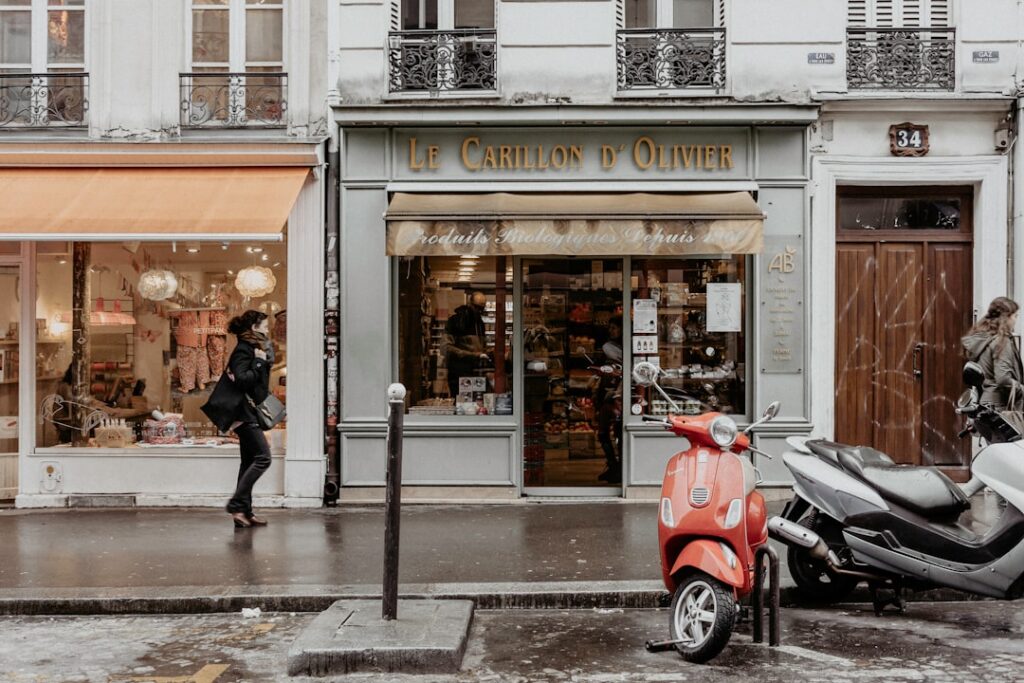
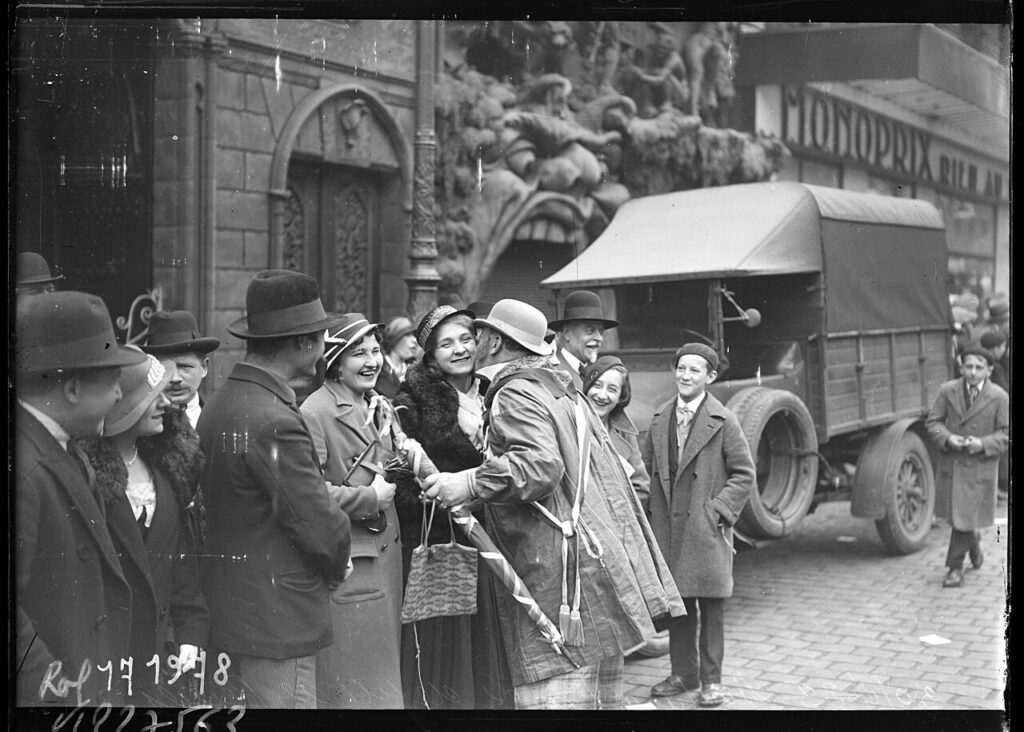
The Latin Quarter sprawls across the 5th arrondissement on the Left Bank, a tangle of medieval streets where students have gathered since the Sorbonne opened its doors in 1257. The neighborhood earned its name from the Latin spoken by medieval scholars, and today it remains Paris‘s intellectual heart—home to universities, independent bookshops, and bistros where conversations stretch late into the evening.
This is Paris at its most layered: Roman ruins beneath your feet, Renaissance colleges along narrow lanes, and Art Deco cinemas showing films in their original language. The Latin Quarter rewards wandering, but knowing where to start helps.
The Heart: Place de la Sorbonne and Rue de la Huchette
Begin at the Sorbonne itself, the university that defined this neighborhood. While the main campus isn’t generally open to visitors, the Place de la Sorbonne offers café terraces perfect for watching the daily ballet of students rushing between lectures. The square pulses with energy during term time, quiets in August.
Walk north to Rue de la Huchette, the Latin Quarter’s most atmospheric medieval street. Only a few paces wide, it’s lined with Greek restaurants, jazz clubs, and the Théâtre de la Huchette, which has staged Ionesco’s absurdist plays continuously since 1957. This street gets touristy by evening, but catch it at breakfast and you’ll have those medieval stones nearly to yourself.
For a quieter medieval experience, explore Rue Galande and Rue du Fouarre. The latter was where students once sat on straw—fouarre—to hear lectures outdoors. Today it’s home to Shakespeare and Company, the English-language bookshop beloved by writers and readers worldwide. Browse the new releases downstairs, climb the creaking stairs to the library, and if you’re lucky, catch one of the Sunday evening readings.
Roman Paris: The Arènes de Lutèce and Cluny
The Latin Quarter sits atop Lutetia, Roman Paris. Most visitors miss the Arènes de Lutèce, a first-century amphitheater tucked behind Rue Monge. Enter through the small gate at 49 Rue Monge or via Rue de Navarre. This oval arena once seated 15,000 spectators for gladiatorial contests. Now local residents play pétanque on the ancient sand, and it’s one of Paris’s loveliest spots for a quiet half-hour with a book.
The Musée de Cluny, officially the Musée National du Moyen Âge, preserves the neighborhood’s medieval treasures. Built atop Roman baths, the museum houses the Lady and the Unicorn tapestries, arguably the most exquisite medieval artworks in France. The Roman frigidarium—the cold bath—survives intact beneath the building, its vaulted ceiling a marvel of ancient engineering. The museum reopened after extensive renovations, and the new layout makes the medieval collections more accessible than ever.
Bookshops, Markets, and the Panthéon
Rue Mouffetard climbs the Montagne Sainte-Geneviève, a market street since medieval times. The upper section, from Place de la Contrescarpe to Rue de l’Épée de Bois, hosts food shops, cheese merchants, and produce vendors Tuesday through Sunday mornings. This isn’t a tourist market—it’s where locals shop. Grab provisions for a picnic: cheese from Androuet, bread from a boulangerie along the street, fruit from the outdoor stands.
At the summit of the hill stands the Panthéon, France’s secular temple honoring great citizens. Voltaire, Rousseau, Victor Hugo, Marie Curie, and Josephine Baker rest in its crypt. The interior dome, recently restored, glows with allegorical paintings. Foucault’s Pendulum swings in the nave, demonstrating Earth’s rotation. Entry requires a ticket, but it’s covered by the Paris Museum Pass.
Between the Panthéon and the Sorbonne, hunt for specialized bookshops. The Abbey Bookshop on Rue de la Parcheminerie sells new and used English titles and serves free coffee to browsers. Gibert Joseph on Boulevard Saint-Michel sprawls across multiple floors of new and secondhand books. These shops invite lingering.
Where to Eat and Drink Like a Student
The Latin Quarter offers everything from budget student cafeterias to white-tablecloth establishments. For authentic atmosphere, try a university restaurant—the Assas cafeteria at 92 Rue d’Assas serves subsidized meals to anyone with a student ID, but also welcomes travelers at slightly higher prices. It’s canteen food, but the experience is genuine.
Le Coupe-Chou, hidden on Rue de Lanneau, occupies a series of 16th-century rooms with exposed beams and candlelight. The menu runs traditional: duck confit, beef bourguignon, profiteroles. Reservations essential.
For wine by the glass and small plates, Les Pipos on Rue de l’École Polytechnique draws a local crowd. The blackboard lists natural wines, the plates are simple—terrines, cheeses, charcuterie—and the vibe is exactly what you hope for in the Latin Quarter: unpretentious, knowledgeable, welcoming.
Breakfast or afternoon tea belongs at Café de la Nouvelle Mairie on Rue des Fossés Saint-Jacques. This tiny corner café serves excellent coffee, natural wines, and a short menu of seasonal dishes. The square it faces, Place de l’Estrapade, offers a postcard-perfect Paris moment without the crowds.
Getting There and Practical Tips
The Latin Quarter is easily reached by Métro: Cluny–La Sorbonne (line 10), Maubert–Mutualité (line 10), Cardinal Lemoine (line 10), or Saint-Michel (line 4). From Notre-Dame, it’s a five-minute walk across Pont Saint-Michel.
Visit during university term (September through May) for the full atmosphere—the cafés fill with students, the bookshops buzz with browsers, and the neighborhood feels most alive. August is quieter, many shops close for the annual holiday, but you’ll have the medieval streets largely to yourself.
Most sites in the Latin Quarter are free to explore—the streets themselves are the attraction. Budget extra time simply to wander: down Rue de la Harpe, through the garden squares, along the quays where the bouquinistes sell vintage books and prints from their green boxes.
The Latin Quarter rewards repeat visits. Each narrow street opens onto another century, another story, another reason this neighborhood has captured imaginations for nearly 800 years.
Want more Paris stories delivered daily? Subscribe to the Love Paris newsletter—one short story about Paris in your inbox each day, from hidden gardens to perfect pastries.
Tours & experiences in Paris


Powered by Viator. Some links are affiliate links — we may earn a small commission at no extra cost to you.