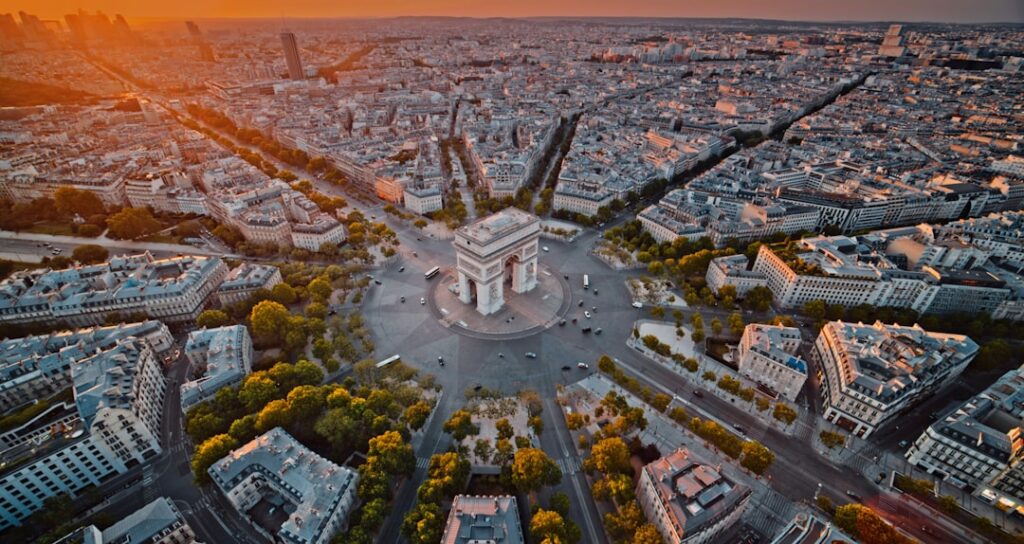
In the spring of 1871, Paris became the birthplace of one of history’s most radical experiments in democratic governance. For 72 days, the Paris Commune transformed the city into a self-governing republic, challenging monarchical and imperial power across Europe. Forty-five years later, in April 1916, Irish revolutionaries in Dublin would draw direct inspiration from this Parisian uprising when they seized the General Post Office and proclaimed an Irish Republic.
The connection between these two revolutionary moments is not merely symbolic—it is documented in the writings, speeches, and actions of the Irish rebels themselves. James Connolly, the socialist leader and military commander during the Easter Rising of 1916, explicitly referenced the Paris Commune in his political writings and saw the Irish struggle as part of a broader European tradition of revolutionary republicanism that had its most dramatic expression in the streets of Paris.
The Paris Commune of 1871 emerged in the aftermath of France’s defeat in the Franco-Prussian War. When the national government attempted to disarm the Parisian National Guard, the citizens of Paris rose up, established their own elected council, and governed the city according to radical democratic principles. Women participated in governance, workers controlled their workplaces, and the separation of church and state was enforced. The Commune was ultimately crushed in the ‘Bloody Week’ of May 1871, but its legacy rippled across Europe for decades.
Irish nationalists and socialists, particularly those in Connolly’s circle, studied the Commune closely. They saw in it a model for how a popular uprising could challenge imperial power and establish a workers’ republic. Connolly’s Irish Citizen Army, which fought alongside the Irish Volunteers in 1916, was explicitly organized along socialist principles influenced by the Communard example.
Revolutionary Symbolism and Tactics
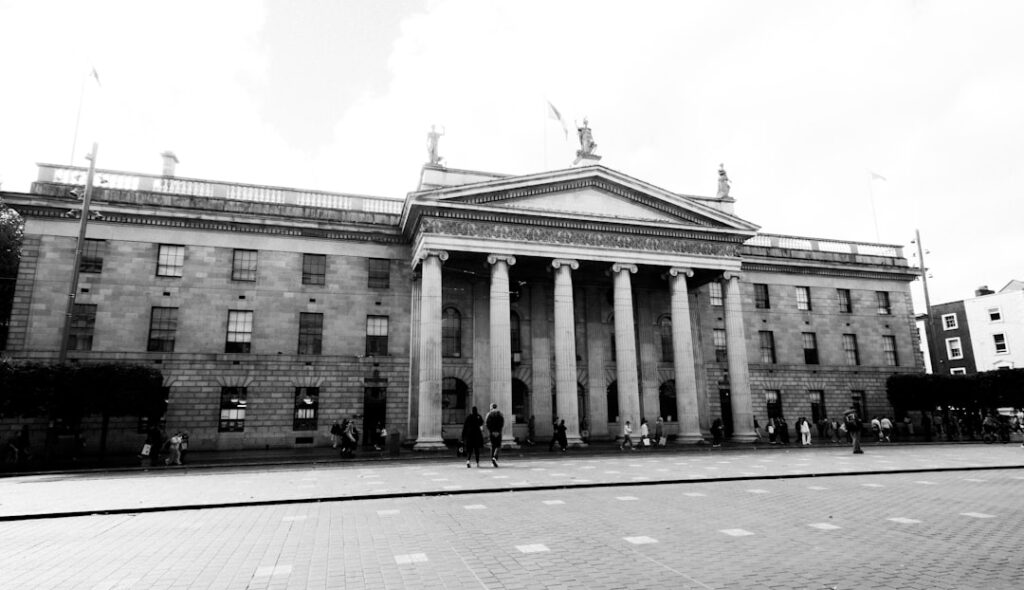
The tactical parallels between the two uprisings are striking. Both involved the seizure of symbolic public buildings in capital cities. Where the Communards held the Hôtel de Ville and fortified Montmartre, the Irish rebels occupied the General Post Office on O’Connell Street and established strongholds throughout central Dublin. Both uprisings issued proclamations declaring new republics and asserting the sovereignty of the people over imperial or monarchical authority.
The Proclamation of the Irish Republic, read from the steps of the GPO on Easter Monday 1916, echoed the democratic and egalitarian principles of the Paris Commune’s declarations. It promised equal rights and opportunities to all citizens and invoked ‘the right of the people of Ireland to the ownership of Ireland.’
Legacy and Memory
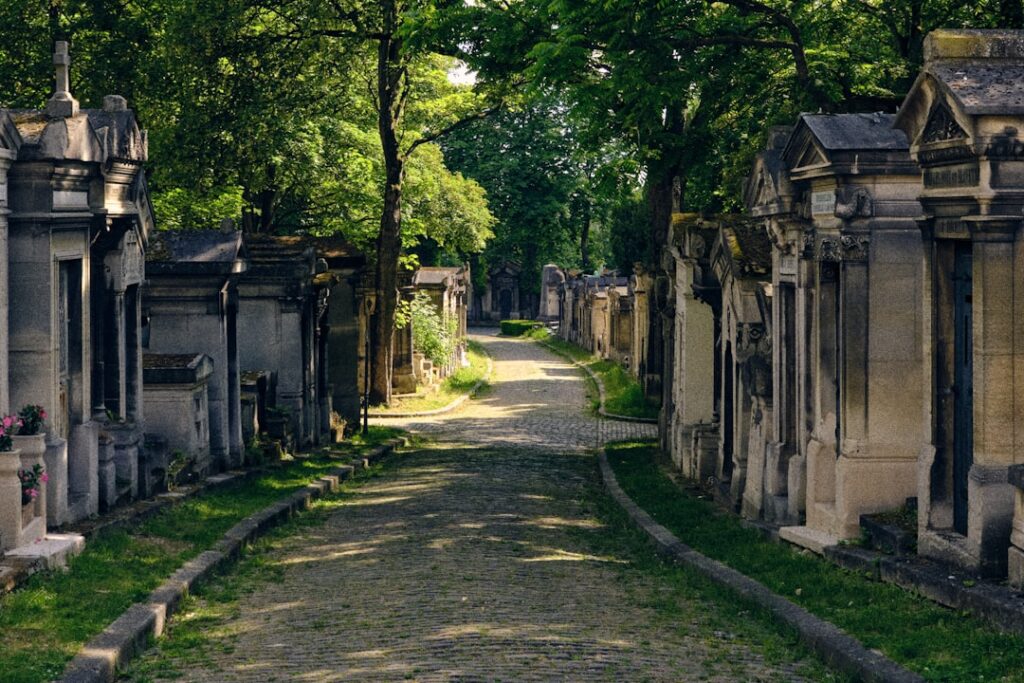
Today, both cities commemorate these revolutionary moments as foundational to their national identities. In Paris, the Mur des Fédérés in Père Lachaise Cemetery remains a pilgrimage site where the last Communards made their stand. In Dublin, the GPO is perhaps Ireland’s most important national monument, its facade still bearing bullet holes from 1916.
The French Republic that eventually emerged was shaped by the Commune’s ideals, even if it took decades to fully realize them. Similarly, the Irish Republic declared in 1916 became reality in 1949, though the path was long and painful. Both uprisings were initially condemned by many of their own citizens, only to be later embraced as heroic founding moments.
For visitors to Paris interested in this revolutionary heritage, the Commune’s story can be traced through the city’s streets, from the heights of Montmartre where it began to the eastern neighborhoods where it made its last stand. And for those who walk the streets of Dublin where 1916 unfolded, it’s worth remembering that the rebels who fought there carried with them the memory of Paris—a city that had shown, however briefly, that another world was possible.
Tours & experiences in Paris


Powered by Viator. Some links are affiliate links — we may earn a small commission at no extra cost to you.