
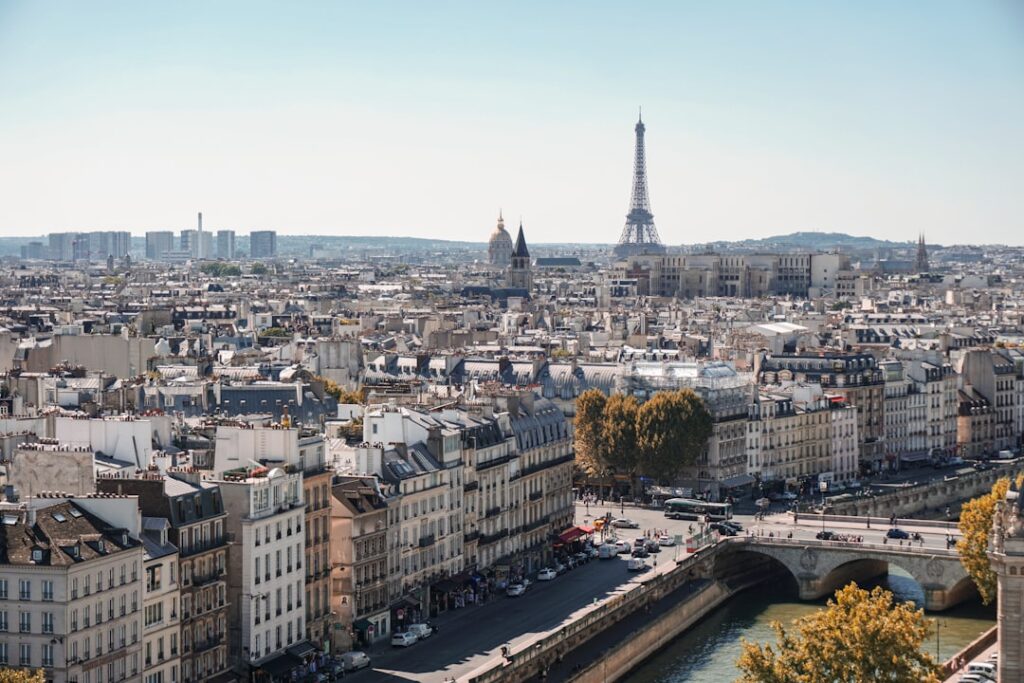
Walk onto the Île de la Cité and you’re standing where Paris began. This narrow island in the middle of the Seine has been inhabited since Roman times, and today it holds some of the city’s most stunning medieval architecture, quiet corners that tourists miss, and enough history to fill a dozen visits.
Despite being home to Notre-Dame and Sainte-Chapelle, much of the island remains surprisingly peaceful. Early mornings and late afternoons reveal a different side to this historic heart—one where you can walk cobblestone streets without the crowds and discover why this 22-acre island has captivated people for more than two millennia.
The Island’s Ancient Origins
The Parisii tribe settled here in the 3rd century BC, drawn by the Seine’s natural protection and trade routes. The Romans called it Lutetia and built a thriving town. Today, you can still see remnants of this ancient past if you know where to look.
Start at the Square du Vert-Galant, the triangular garden at the island’s western tip. Named after Henri IV (whose equestrian statue stands on the Pont Neuf above), this peaceful spot sits at the original water level of the Seine. Descend the steps and you’re standing where Roman boats once docked. It’s one of the best places in Paris to watch the river flow and see both banks of the city spread before you.
The Crypte Archéologique, beneath the square in front of Notre-Dame, reveals layers of history from Gallo-Roman walls to medieval cellars. It’s often overlooked, but spending thirty minutes here transforms your understanding of how the island evolved over two thousand years.
Beyond Notre-Dame and Sainte-Chapelle
Yes, these two Gothic masterpieces anchor the island—Notre-Dame on the eastern end (still undergoing restoration but magnificent from the outside) and Sainte-Chapelle tucked within the Palais de Justice complex, its stained glass ablaze with color on sunny days. But the island offers more than its famous monuments.
Place Dauphine, one of Paris’s most elegant residential squares, hides behind the Palais de Justice. Henri IV commissioned it in 1607, and its red brick and stone facades still feel like a village within the city. The square has only one restaurant—Au Rendez-vous des Camionneurs—but several cafés with outdoor seating where locals come for lunch. It’s the kind of place where you can sit with a coffee and forget you’re fifty meters from the busiest tourist sites in France.
Rue Chanoinesse, running behind Notre-Dame, preserves the feeling of medieval Paris better than almost anywhere else in the city. The narrow street follows the exact path it did in the 12th century, when cathedral canons lived in houses here. Number 10 still has its original medieval cellars.
The Flower Market and Everyday Life
The Marché aux Fleurs, between Boulevard du Palais and Quai de la Corse, has sold flowers since 1808. It’s open daily, with stalls overflowing with orchids, roses, herbs, and houseplants. On Sundays, it becomes the Marché aux Oiseaux, adding caged birds to the mix—a tradition that feels charmingly old-fashioned.
This is where you see the island’s residential side. People who actually live here (and there are still about a thousand residents) shop at the small Monoprix on Rue de la Cité, buy bread at the boulangerie on Rue Chanoinesse, and walk their dogs along the quais at dusk.
For lunch, skip the tourist traps along Rue de la Cité and head to Café Saint-Régis on Rue Jean du Bellay, right at the bridge to Île Saint-Louis. Their croque monsieur is perfect, and the sidewalk tables offer prime people-watching.
Walking the Island
You can walk the perimeter of Île de la Cité in twenty minutes, but give yourself two hours to do it properly. Start at Pont Neuf (ironically Paris’s oldest standing bridge, completed in 1607) and walk east along the Right Bank side, the Quai de l’Horloge. You’ll pass the Conciergerie, where Marie Antoinette was imprisoned before her execution—its Gothic halls and prisoner cells are open to visitors and often less crowded than other monuments.
Cross to the Left Bank side at Pont Saint-Michel and walk back west along Quai des Orfèvres (gold- and silversmiths once worked here). The view of Notre-Dame from Pont de l’Archevêché never gets old, and this is where you’ll find the love locks, though officials regularly remove them to protect the bridges.
End at Square du Vert-Galant at sunset. Bring a bottle of wine—it’s perfectly legal and very Parisian. Watch the bateaux-mouches glide past and the light turn golden on the Pont des Arts.
Practical Information
The island sits in the 1st and 4th arrondissements, connected to both banks by multiple bridges. Métro Cité (Line 4) deposits you in the center, while Saint-Michel (Lines 4 and RER B/C) puts you at the southern edge. Pont Neuf station (Line 7) is technically on the Right Bank but a short walk across the bridge.
Visit early morning—before 9 AM—to see the island wake up without crowds. Weekday afternoons are busiest. The flower market is prettiest Thursday through Saturday when fresh stock arrives.
Many visitors see only Notre-Dame and Sainte-Chapelle before rushing off. That’s a mistake. The island rewards slow exploration: the forgotten streets, the river views from different angles, the small squares where Parisians still live their daily lives amid all this history.
Want more stories about Paris’s hidden corners and timeless neighborhoods? Subscribe to the Love Paris newsletter and get one short story delivered each day—the Paris you won’t find in guidebooks.
Tours & experiences in Paris


Powered by Viator. Some links are affiliate links — we may earn a small commission at no extra cost to you.