
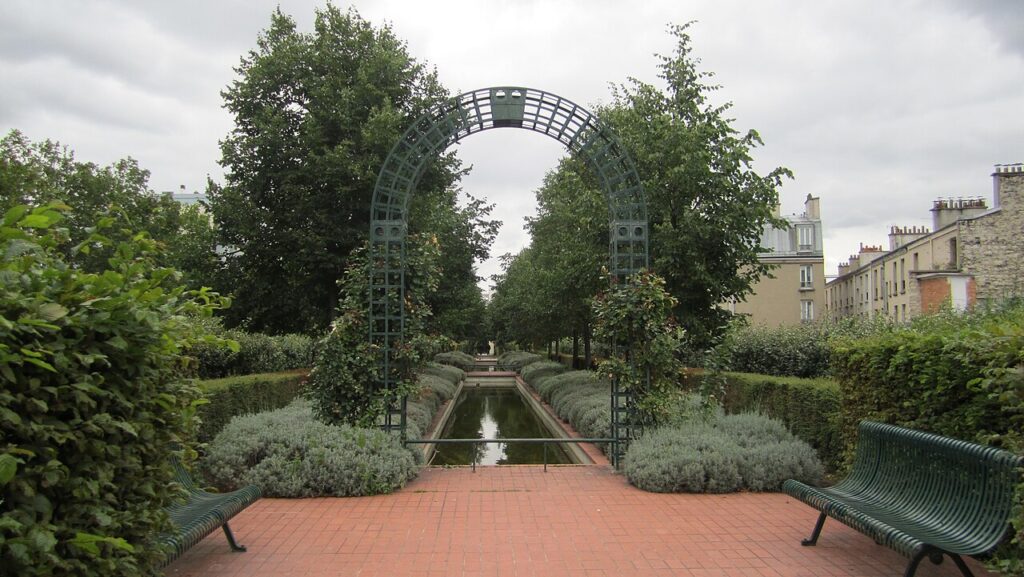
Stretching nearly three miles from the Bastille Opera to the périphérique, the Promenade Plantée is one of Paris‘s best-kept secrets. Built atop a disused railway viaduct in 1993, this elevated garden predates Manhattan’s High Line by more than a decade—yet most visitors to Paris have never heard of it.
The walkway begins near Place de la Bastille and follows the old Vincennes railway line through the 12th arrondissement, offering a completely different perspective on Paris. You’ll walk above street level through tunnels of wisteria and bamboo, past rose gardens and cherry trees, looking down on neighborhood courtyards that even longtime Parisians rarely see.
Where to Start and How to Get There
The western entrance sits at Avenue Daumesnil, just steps from the Bastille Opera. Take métro line 1, 5, or 8 to Bastille, then walk east along Avenue Daumesnil for two minutes. You’ll spot a staircase leading up to the viaduct near number 1.
This is the most dramatic section: the first kilometer runs along the brick arches of the Viaduc des Arts, where the former railway arches now house furniture makers, violin craftsmen, and design ateliers. It’s worth descending midway to browse these workshops—many welcome visitors and showcase traditional French craftsmanship you won’t find in tourist districts.
The promenade is open daily from 8 a.m. to sunset (around 9:30 p.m. in summer, 5:30 p.m. in winter). Early morning offers the best light for photography and the quietest atmosphere, though the park fills with joggers and families by mid-morning on weekends.
What You’ll See Along the Way
The character of the promenade shifts as you head east. The elevated section gradually descends to ground level around Rue de Reuilly, where the path continues through the Jardin de Reuilly and tunnels beneath Avenue du Général Michel Bizot before emerging in the Bois de Vincennes.
Between Bastille and Reuilly, you’ll pass over Boulevard Diderot with views toward the modern towers of Bercy, walk through covered sections draped with climbing plants, and cross a series of small bridges above residential streets. In spring, the hawthorn and cherry blossoms create a canopy overhead. Summer brings roses and lavender. Even in winter, the architectural bones of the viaduct and the bare branches offer their own austere beauty.
Around the midpoint, near the Jardin de Reuilly, benches overlook a small park where locals play pétanque and children use the playground. This is a good place to rest before continuing east or turning back.
Practical Tips for Your Visit
The full walk from Bastille to the Bois de Vincennes takes about 90 minutes at a leisurely pace, but most visitors explore just the first elevated section—a 30 to 40 minute walk ending at Place Félix Éboué. You can exit at several points along the route via staircases leading back to street level.
Bring water, especially in summer, as there are no fountains or cafés directly on the promenade. The neighborhood streets below, however, offer plenty of options. Try Café de l’Industrie on Rue Saint-Sabin (just south of the Bastille entrance) for lunch, or grab sandwiches from a boulangerie on Avenue Daumesnil before your walk.
The path is paved and mostly flat, suitable for strollers, though a few sections have stairs where you’ll need to carry. Cyclists aren’t officially allowed on the elevated portion, making it peaceful for walkers. Dogs on leashes are welcome.
For a longer outing, continue all the way to the Bois de Vincennes, where the promenade connects to the park’s extensive trail network. From there, you can visit the Château de Vincennes or loop back on métro line 1 from Château de Vincennes station.
Why It Matters
What makes the Promenade Plantée special isn’t just its innovative design—it’s the way it reveals a side of Paris tourists rarely see. You’re not in the postcard neighborhoods here. This is residential Paris, where real Parisians live, hang laundry, and tend window boxes. The views into apartment courtyards and over neighborhood rooftops offer glimpses of daily life that feel almost intrusive in their intimacy.
It’s also blissfully uncrowded. Even on summer weekends, you’ll share the path with local joggers and families rather than tour groups. The 12th arrondissement doesn’t make many guidebook itineraries, which is precisely why it’s worth visiting.
The combination of industrial heritage and lush planting creates something genuinely original—a green corridor that’s neither park nor street, offering a journey through Paris from an entirely unexpected angle.
Want more hidden corners of Paris delivered to your inbox? Subscribe to the Love Paris newsletter and receive one short story each day about the city beyond the guidebooks.
Tours & experiences in Paris


Powered by Viator. Some links are affiliate links — we may earn a small commission at no extra cost to you.