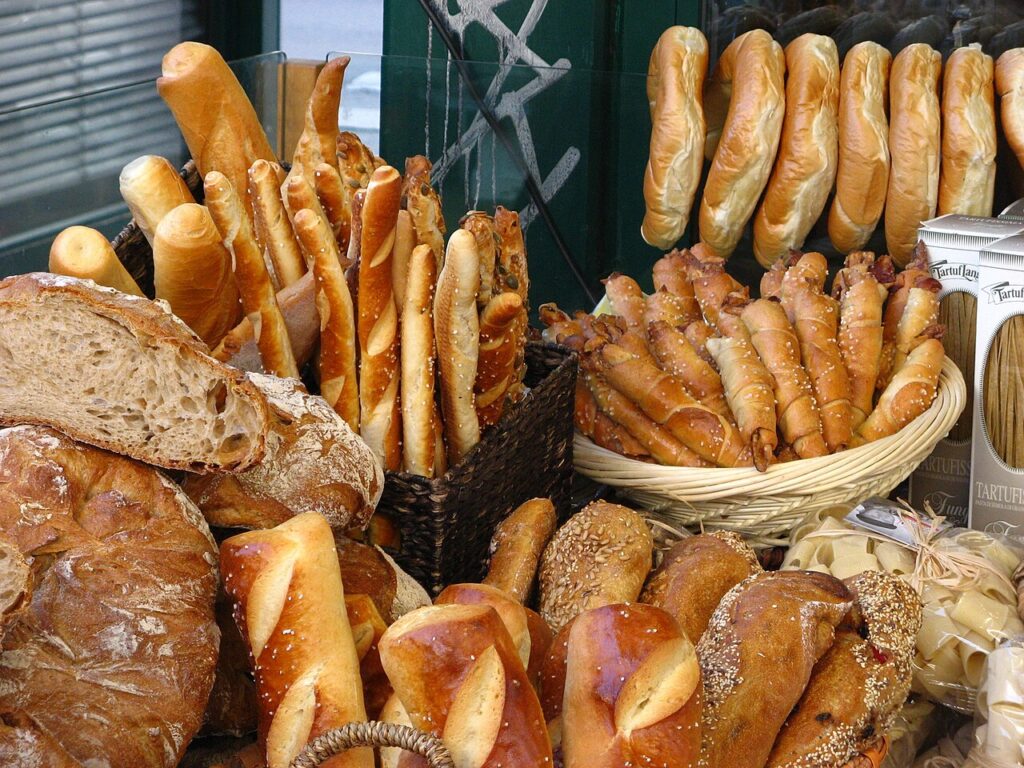
The baguette is more than bread in Paris—it’s a daily ritual, a symbol of French culture, and a source of fierce neighborhood loyalty. Every morning, Parisians emerge from bakeries clutching their warm loaves, often taking a bite before they’ve even reached home. But not all baguettes are created equal, and knowing where to find the city’s best can transform your Paris experience from ordinary to unforgettable.
A proper baguette has a crackling, golden crust that shatters at the first bite, releasing a tender, airy crumb with complex flavor notes—slightly nutty, faintly sweet, and just the right amount of tang. Here’s where to find the ones that locals queue for every day.
Left Bank Legends
On the Left Bank, Poilâne at 8 Rue du Cherche-Midi (6th arrondissement) is legendary, though their specialty is actually their round sourdough miche. Still, their traditional baguette holds its own, baked in wood-fired ovens using methods passed down through four generations. Arrive before 10 a.m. to avoid the queue that stretches down the block.
A few streets away, Éric Kayser at 8 Rue Monge (5th arrondissement) serves what many consider the textbook example of a perfect baguette. Kayser pioneered the return to natural fermentation in Paris, and his baguette Monge, made with liquid levain, has a deeper flavor than most. The Latin Quarter location is ideal if you’re visiting the Panthéon or wandering through the neighborhood’s bookshops.
For a more under-the-radar gem, head to Boulangerie Utopie at 20 Rue Jean-Pierre Timbaud (11th arrondissement). Baker Sami Bouattour won the 2017 Grand Prix de la Baguette, earning him the right to supply the Élysée Palace. His winning baguette has a particularly crispy crust and an open, irregular crumb structure that’s become his signature.
Right Bank Favorites
In the Marais, Du Pain et Des Idées at 34 Rue Yves Toudic (10th arrondissement) is worth the detour, even though it’s technically closer to Canal Saint-Martin. Their baguette tradition is baked throughout the day in a Belle Époque oven that dates to 1889. The bakery itself is a marvel—original tilework, painted ceilings, and that intoxicating smell of fresh bread that hits you half a block away.
Near the Champs-Élysées, Maison Landemaine has multiple locations, but the original at 5 Rue de Tocqueville (17th arrondissement) is where Rodolphe Landemaine perfected his organic, stone-ground flour baguettes. His baguette de tradition has won numerous awards and maintains its structure even hours after baking—the sign of proper fermentation and quality flour.
In Montmartre, locals bypass the tourist-trap bakeries around Sacré-Cœur and head down the hill to Grenier à Pain at 38 Rue des Abbesses (18th arrondissement). This unassuming spot has won the city’s best baguette competition twice. Get there early—their baguettes sell out by early afternoon, especially on weekends.
What Makes a Great Baguette
French law strictly defines a baguette de tradition française: it must contain only wheat flour, water, salt, and yeast or sourdough starter. No additives, no freezing, no pre-made dough. When you see “tradition” on the label, you’re getting the real thing, protected by a 1993 decree designed to preserve traditional baking methods.
The best baguettes are baked multiple times throughout the day—early morning, late morning, and mid-afternoon. Ask “C’est frais?” (Is it fresh?) and any good baker will tell you exactly when the current batch came out of the oven. A truly fresh baguette should still be warm or at least room temperature, never cold from storage.
Look for an irregular shape with slight blisters on the crust, proof of proper fermentation and high oven heat. The color should be deep golden, not pale. When you press the crust, it should crackle audibly—Parisians call this chanter, or singing. Inside, the crumb should have holes of varying sizes, not a uniform sponge-like texture.
The Parisian Bread Ritual
Buying bread is a daily practice in Paris because baguettes go stale quickly—by design. Without preservatives, that incredible crust becomes leathery within hours, and the bread itself loses its magic by the next morning. This is why you’ll see Parisians at the bakery every single day, often twice.
The ritual is simple: enter, wait your turn (never skip the queue), and say “Bonjour” before ordering. Ask for “une baguette, s’il vous plaît” or, if you want the premium version, “une tradition.” Many locals also request “bien cuite” (well-done) for a darker, crispier crust. The baker will often offer to slice it—”Je vous la coupe?“—which is handy if you’re picnicking, though purists prefer their baguette whole.
The best way to eat a truly fresh baguette? Break off the crusty heel (le quignon) on your walk home. It’s not just acceptable—it’s practically mandatory. That’s the bite that tells you everything about the quality of what you’re holding.
Whether you’re picking up breakfast, building a picnic for the Luxembourg Gardens, or simply want to understand why Parisians care so deeply about their bread, seeking out a great baguette is one of the city’s most authentic and delicious experiences.
Want more insider tips on where to eat and drink in Paris? Subscribe to the Love Paris newsletter and get one short story a day about the city’s best-kept secrets, from hidden bakeries to perfect café terraces.
Tours & experiences in Paris


Powered by Viator. Some links are affiliate links — we may earn a small commission at no extra cost to you.