
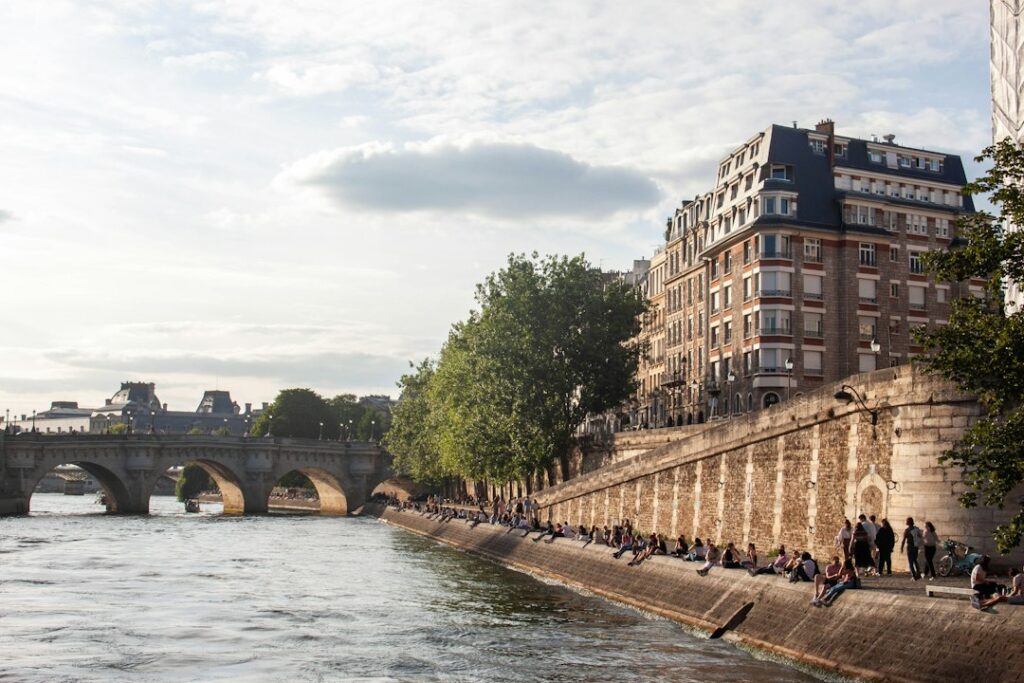
The Seine‘s Left Bank between the Pont de l’Alma and the Institut de France holds more literary history per square meter than perhaps anywhere else on earth. This stretch of quai, with its green bookstalls and stone bridges, shaped the work of Hemingway, Baudelaire, and countless others who walked these same paths looking for inspiration.
The walk takes two to three hours at a leisurely pace, but you could easily spend an entire afternoon browsing the bouquinistes and stopping at riverside benches. Early morning offers soft light and quiet stretches; late afternoon brings golden hour over the water.
Starting Point: Pont de l’Alma to Pont des Invalides
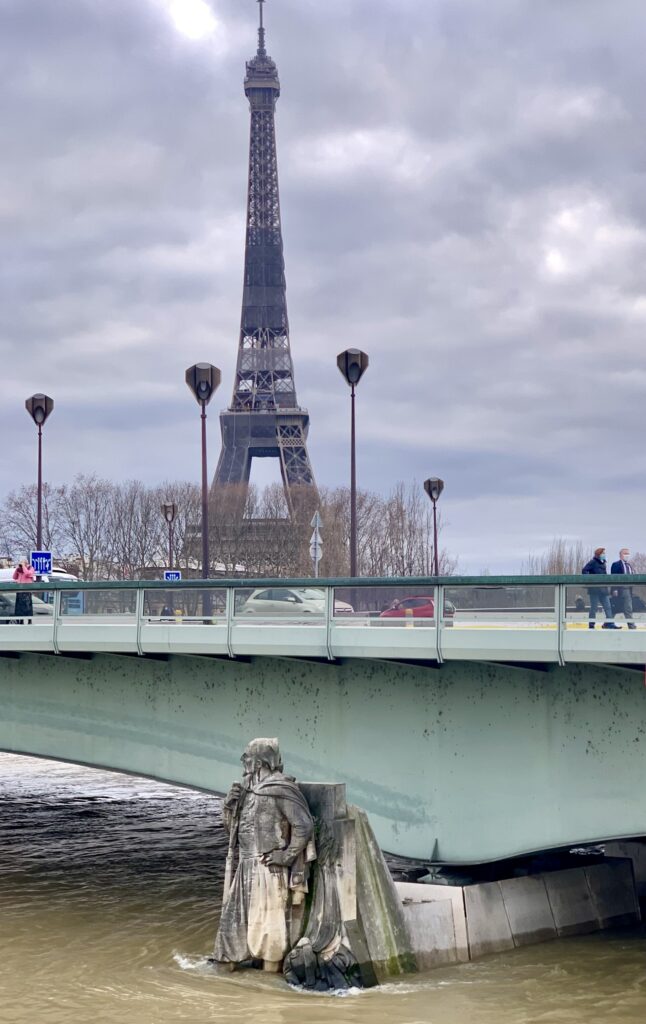
Begin at the Pont de l’Alma and look down at the Zouave, the stone soldier standing on the bridge’s pier. He is the only one of the bridge’s four original statues still in place, and Parisians have long used him as a rough flood gauge: when the water reaches his ankles, the riverside roads close, and in the great flood of 1910 it covered his shoulders (Ville de Paris, checked October 2026).
The Paris most visitors miss
Our free 8-page PDF guide: 25 places, from Galerie Vivienne's 1880 mosaic floor to Canal Saint-Martin's locks, each linked to its official site.
Walk east with the river on your left and step out onto the Pont des Invalides for the full sweep: the Eiffel Tower downstream, the glass roof of the Grand Palais on the Right Bank, and the Seine curving on toward the heart of the city. Back on the Left Bank, just past the bridge, look right down the long lawns of the Esplanade des Invalides to the gold dome of Les Invalides.
The Bouquinistes: Paris’s Open-Air Bookshops
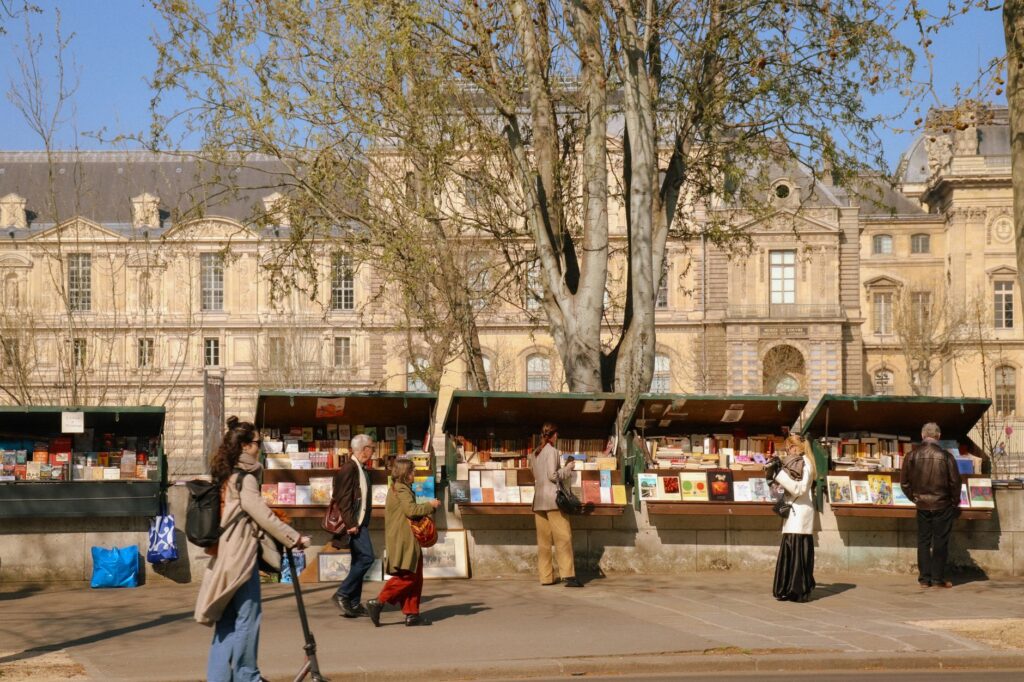
Keep going past the Musée d’Orsay. From the Rue du Bac, on the Quai Voltaire by the Pont Royal, the green boxes of the bouquinistes start along the parapet. On the Left Bank they run all the way to the Institut du monde arabe; on the Right Bank, from the Louvre to the Pont Marie. More than 200 booksellers work the quais, and their tradition is said to go back to the book sellers on the Pont Neuf in Henri IV’s time (Ville de Paris).
Each stall is a set of four boxes, painted the regulation “vert wagon”, the same green as the city’s Wallace fountains. What they sell varies wildly: vintage magazines, old postcards, first editions, tourist prints, and genuine rare books all mixed together. The best finds come from patient browsing and friendly conversation.
Bouquinistes must open at least four days a week, so not every box is open every day; weekends are the liveliest time to browse. Look for pre-war guidebooks, vintage Métro maps, and illustrated children’s books from the 1920s and 1930s for finds that pack easily.
Pont Royal to Pont des Arts
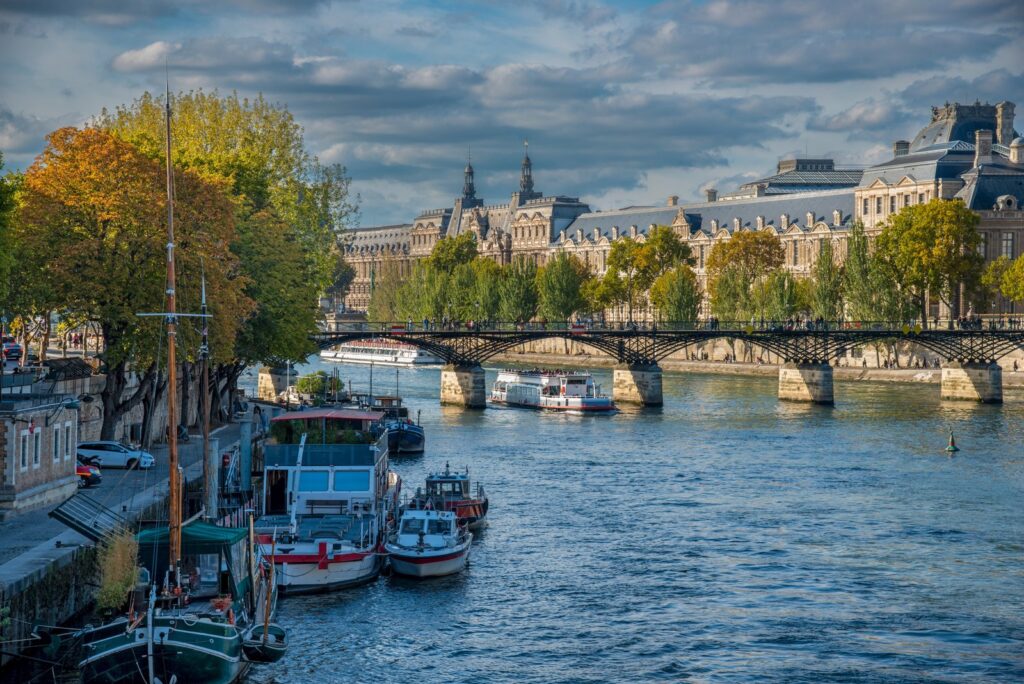
The Pont Royal, begun in 1685 under Louis XIV, is the third-oldest bridge in Paris, after the Pont Neuf and the Pont Marie. Its five stone arches have survived revolutions and floods, and from the middle you look across to the Louvre and the Tuileries Garden on the Right Bank.
Just past the bridge, the riverside path widens into a favorite local spot for evening picnics and summer sunbathing. Students from nearby universities spread out on the stone embankment steps, and on warm evenings impromptu wine gatherings form as the sun sets behind the Right Bank buildings.
The Pont des Arts, the next bridge after the Pont du Carrousel, connects the Left Bank to the Louvre. Its pedestrian-only span fills with street musicians, sketch artists, and people simply sitting to watch the river traffic. Its railings were once covered in love locks; after part of a railing gave way under their weight in 2014, the city removed the locks in 2015 and fitted glass panels instead. The view from here takes in the entire Île de la Cité, with the towers of Notre-Dame rising above the trees.
Institut de France and the Final Stretch
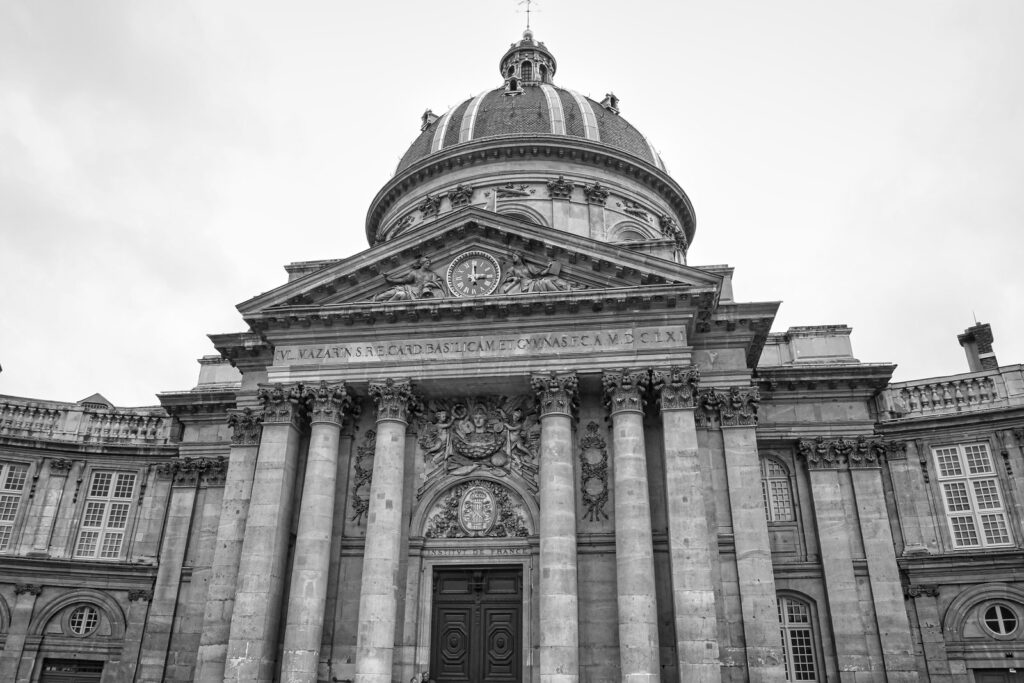
The walk ends at the Institut de France, the domed 17th-century building on the Quai de Conti that brings together five academies, including the Académie française. Its dome faces the Pont des Arts, with the Louvre across the water behind you: one of the most photographed views in Paris. The Institut opens its palace for visits from time to time; its official site lists them.
The bouquinistes’ green boxes carry on along the Quai de Conti toward the Pont Neuf, so there is more browsing to do before you leave the river.
To return, you can loop back along the same quai, cross to the Right Bank via any bridge for a different perspective, or head inland into the 6th arrondissement’s network of literary cafés and bookshops. The nearest Métro stations are Pont Neuf, across the river, and Saint-Michel.
Check official Paris tourism sites before you go for any temporary closures of the riverside paths—occasional high water or maintenance work can close sections, though alternative routes always exist just one level up on the street.
Tours & experiences in Paris


Powered by Viator. Some links are affiliate links — we may earn a small commission at no extra cost to you.