The 13th arrondissement doesn’t appear on many tourist itineraries, and that’s what makes it worth a morning. While visitors crowd into Montmartre and the Marais, this southeastern slice of Paris has turned into one of the city’s most varied neighborhoods: towering murals, Asian supermarkets and bakeries, a swimming pool on a barge, and the four glass towers of the national library.
Stretching from the Gare d’Austerlitz to the Périphérique, the 13th takes in several distinct quarters, each with its own character. The riverside once held railway yards, warehouses and factories; today much of it is new housing, offices, university buildings and terraces along the Seine.
Street Art on a Grand Scale
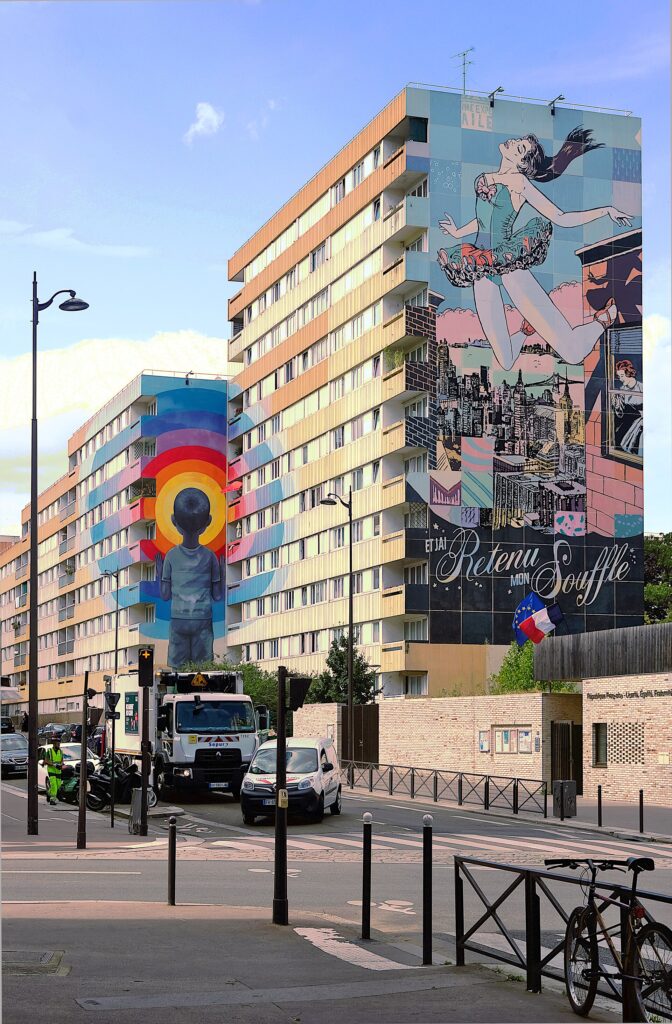
The 13th has become one of the best places in Paris to see large-scale street art, with murals covering whole building facades. Most of them belong to Boulevard Paris 13, a route set up with the Galerie Itinerrance, and they cluster along Boulevard Vincent-Auriol and the streets around it. Look for Shepard Fairey’s work, the 25-meter-high “Turncoat” painted by the British artist D*Face in 2018, and the Chilean artist Inti’s “La Madre Secular 2”. The Paris tourist office’s street art walk in the 13th lists each wall with its address, including C215’s stencil work on Place Pinel.
The Paris most visitors miss
Our free 8-page PDF guide: 25 places, from Galerie Vivienne's 1880 mosaic floor to Canal Saint-Martin's locks, each linked to its official site.
Start at métro Nationale and walk along the boulevard, then wander into the side streets: Rue Jeanne-d’Arc has painted tower blocks of its own. In 2013 the neighborhood made headlines with the Tour Paris 13, a building painted from top to bottom and opened to the public before it was demolished.
The best approach is simply to wander. Bring a camera and look up: these murals need to be seen from across the street to take in their scale.
The Asian Quarter and Triangle de Choisy
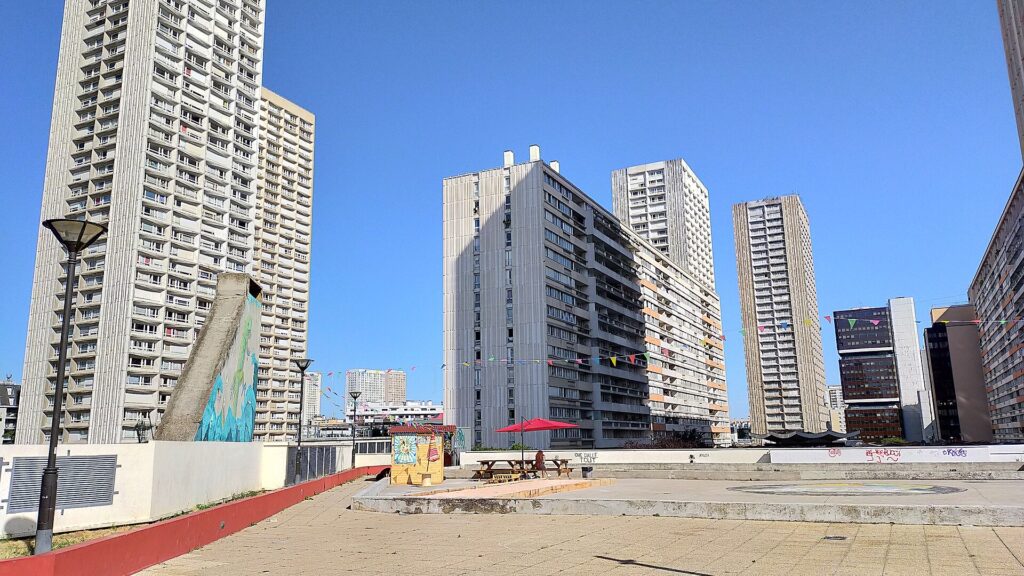
Paris’s largest Asian quarter centers on the Triangle de Choisy, bounded by Avenue de Choisy, Avenue d’Ivry and Boulevard Masséna. This isn’t a themed Chinatown with souvenir shops; it’s a working neighborhood where Vietnamese, Cambodian, Chinese and Laotian families have lived and traded since the 1970s.
Tang Frères, whose original supermarket is on Avenue d’Ivry, anchors the district, but the smaller grocers along both avenues are just as interesting: fresh herbs bundled by variety, whole aisles of noodles, freezers full of dumplings.
Avenue de Choisy has Asian bakeries selling egg tarts and steamed buns, and pho and banh mi counters that serve the neighborhood first, visitors second. Come at lunchtime, when everything is freshest.
Les Docks on the Seine
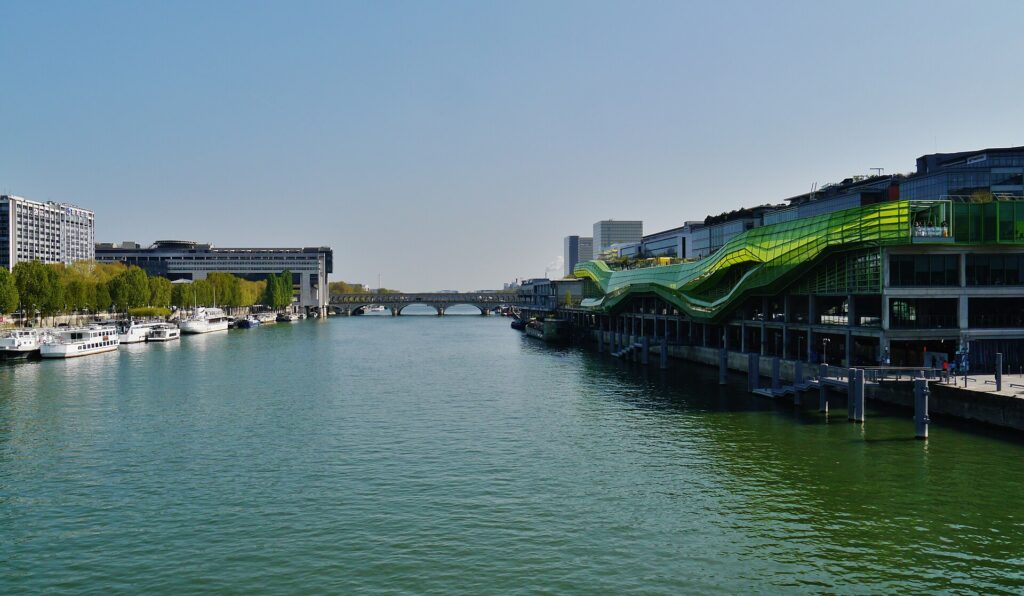
The old riverside warehouses on Quai d’Austerlitz, rebuilt with a green tubular facade, are now Les Docks, Cité de la Mode et du Design, home to the French fashion institute, exhibition spaces, and bars and restaurants with terraces over the Seine. It’s a good place to start or end a walk along the river.
The Floating Pool and the Footbridge
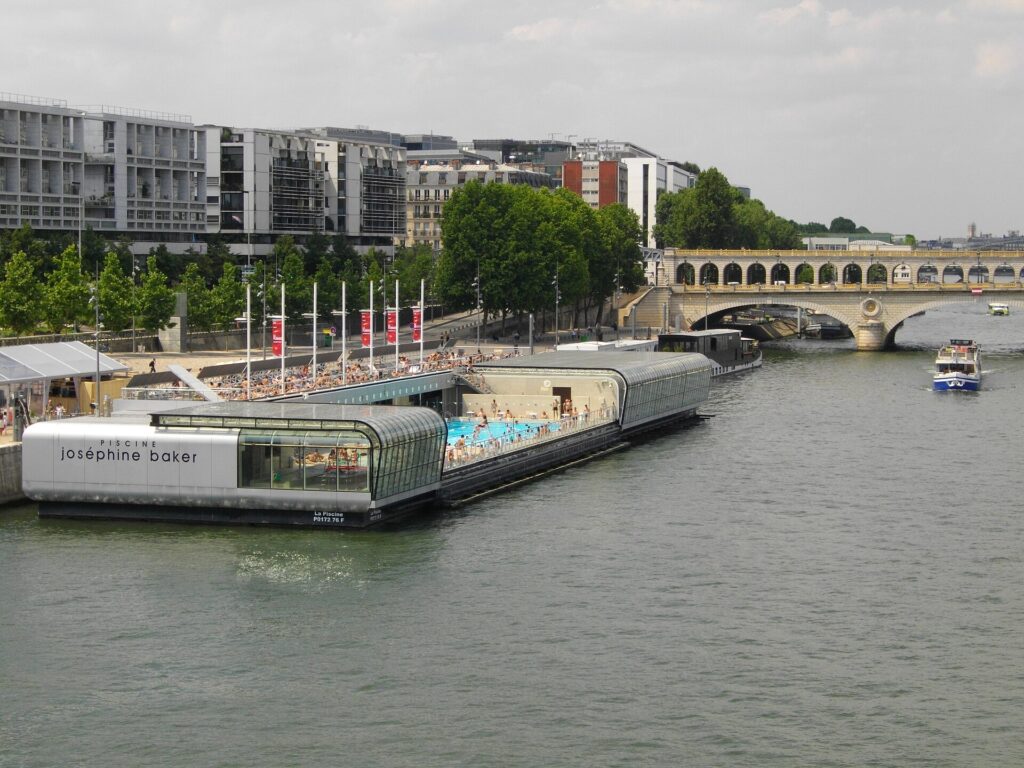
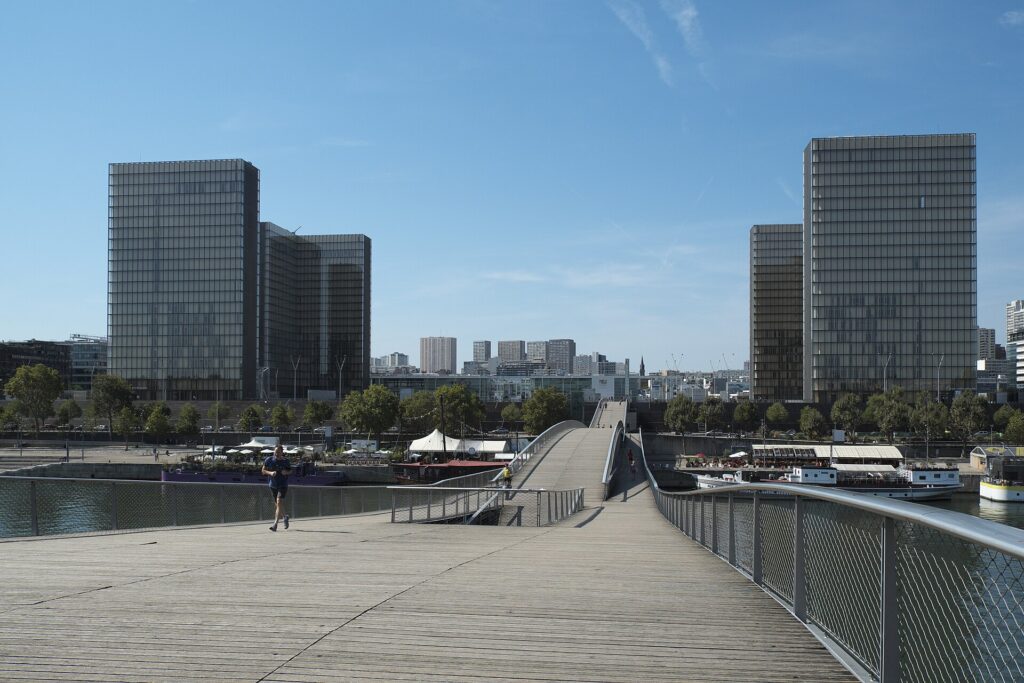
Further upstream, at the foot of the national library, the Piscine Joséphine-Baker is a city swimming pool built on a boat moored at Quai François-Mauriac. Its 25-meter pool sits under a glass roof that opens in summer, with a sun deck looking out over the Seine. Check the City of Paris page for opening times before you go.
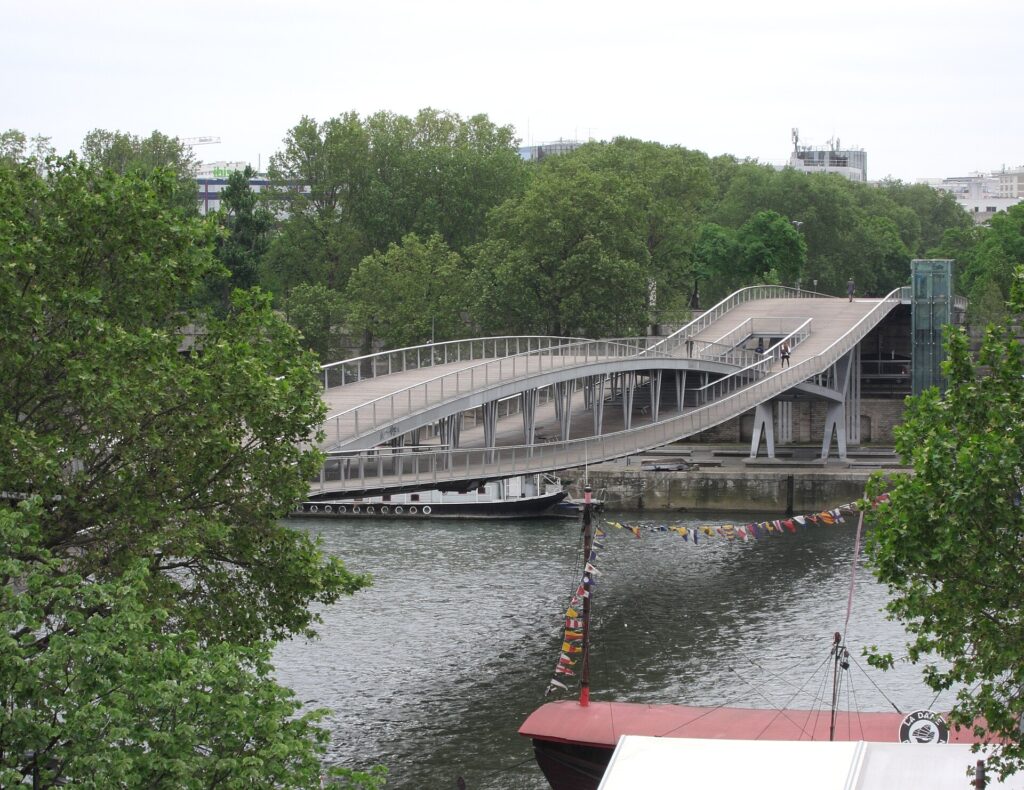
Right beside it, the Passerelle Simone-de-Beauvoir, opened in 2006 and the 37th bridge over the Seine in Paris, carries walkers and cyclists from the library’s riverside to the Parc de Bercy in the 12th arrondissement. The City of Paris tells its story in its page on the bridges of Paris. Its curving decks give good views of both banks.
The National Library and Its Towers
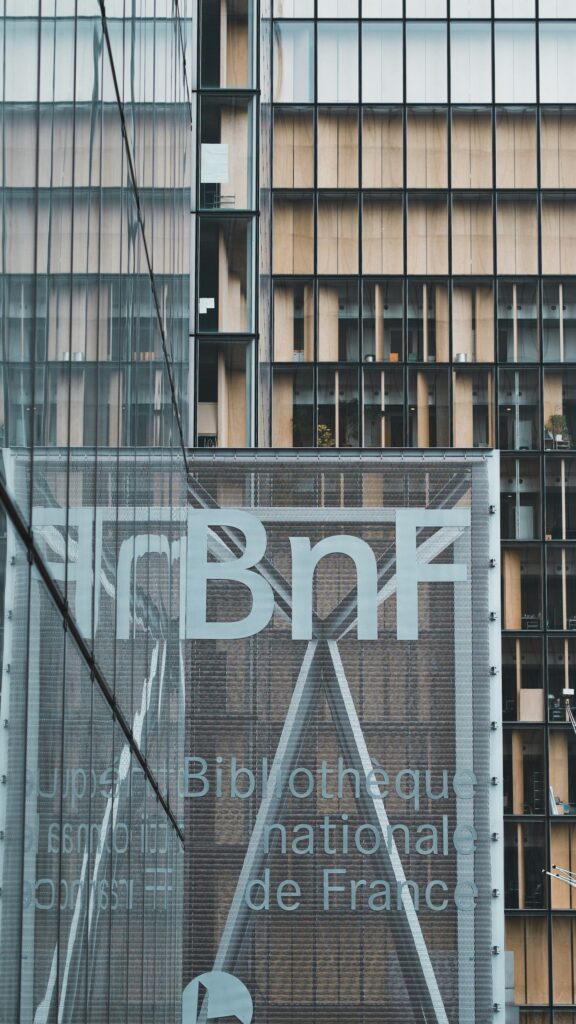
The Bibliothèque nationale de France, site François-Mitterrand, dominates the eastern end of the arrondissement with four glass towers shaped like open books. Built between 1989 and 1995, it set off the renewal of the whole riverside district around it.
The wide wooden esplanade between the towers looks down into the library’s sunken garden of tall trees, and it’s one of the few big open plazas in this part of Paris, a good spot to get your bearings with a view toward the river. Inside, the library holds temporary exhibitions; see its website for what’s on and how to get in.
The streets around the library have filled with cafés, bookshops and restaurants serving students and researchers.
Getting There and Around
Métro lines 5, 6, 7 and 14 and the RER C all serve the 13th, with line 14 the fastest way from central Paris to Bibliothèque François-Mitterrand. The T3a tram runs along the southern edge of the arrondissement on the Boulevards des Maréchaux, with stops at Porte d’Italie, Porte de Choisy and Porte d’Ivry.
The neighborhood is more spread out than the older quarters, so comfortable shoes matter. Its wide sidewalks and bike lanes make it one of the easier areas for cycling, and Vélib’ stations are dotted throughout.
Plan for a half-day if you want to cover the street art, the Asian quarter and the riverside in one visit. The 13th rewards slow exploring rather than landmark-hopping: this is neighborhood Paris, not monumental Paris.
Updated October 2026: we corrected the details of the footbridge, the floating pool and the tram, removed two wrong lines (about the Cité Universitaire and a bus route), and added a photo and an official link for each place.
Tours & experiences in Paris


Powered by Viator. Some links are affiliate links — we may earn a small commission at no extra cost to you.