
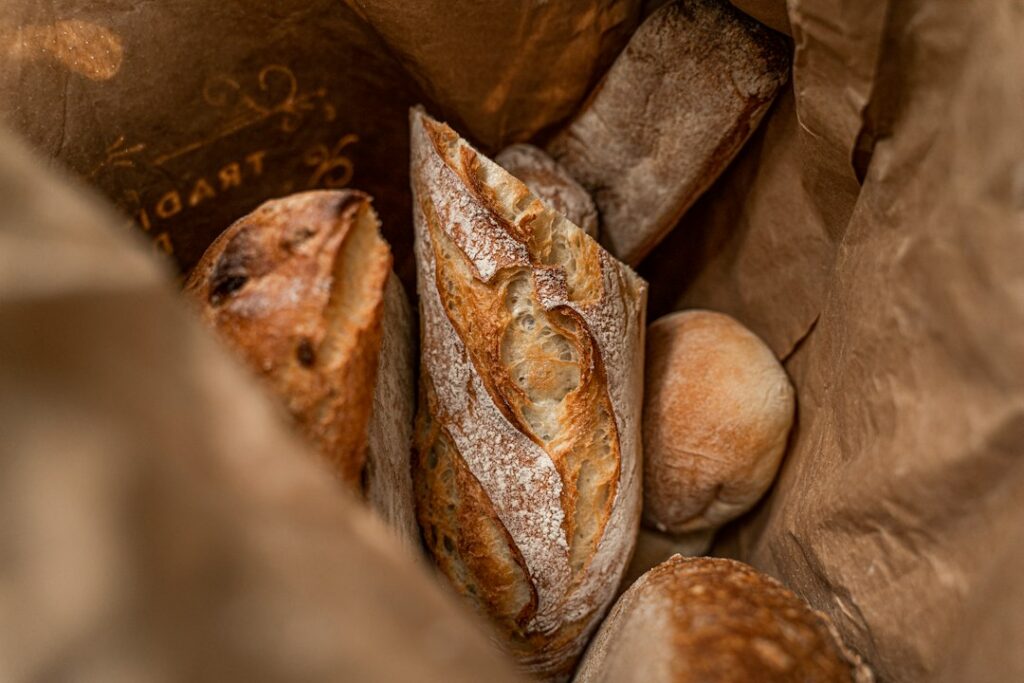
Every neighborhood in Paris has its boulangerie—often several—and locals are fiercely loyal to their favorite. The morning ritual of picking up fresh bread isn’t just habit; it’s a daily act of quality control. A proper Parisian can tell you which baker has the best croissants on Tuesday, whose sourdough peaked last month, and who just hired a new apprentice who’s still learning the ropes.
The city’s boulangers aren’t just selling bread. They’re maintaining centuries of craft, competing for annual awards, and serving as the social heart of their blocks. Here’s where to find the best, and what to order beyond the ubiquitous baguette.
The Left Bank Masters
In the 6th arrondissement, Poilâne on Rue du Cherche-Midi remains the most famous boulangerie in Paris, and for good reason. Their massive sourdough loaves—baked in wood-fired ovens in the basement since 1932—have a thick, dark crust and dense, tangy interior. Order a half-loaf (une demi-miche) unless you’re feeding a crowd. Their apple tarts and punitions (butter cookies) are equally legendary. The bakery opens at 7:15 a.m., and the midmorning line snakes out the door.
A few blocks away, Eric Kayser on Rue Monge (in the 5th) offers a more delicate approach. His baguette Monge won awards for its crisp crust and irregular honeycomb interior. The pain des amis, a rustic loaf studded with seeds and grains, makes exceptional toast. Kayser has multiple locations now, but this original shop near the Jardin des Plantes maintains the highest standards.
For pastries, Laurent Duchêne on Rue Wurtz in the 13th produces some of the city’s finest viennoiseries. His croissants have visible layers, a deep butter flavor, and the perfect balance of crisp exterior and tender interior. The pain aux raisins here is studded with plump fruit and custard that doesn’t taste like it came from a dispenser. Arrive before 9 a.m. on weekends or accept that your favorite might be gone.
Right Bank Favorites
In the Marais, Du Pain et des Idées on Rue Yves Toudic (10th arrondissement, near Canal Saint-Martin) operates from a beautiful 1889 bakery with original tilework and glass ceiling. Their pain des amis and escargots (coiled pastries filled with chocolate, pistachio, or praline) justify the perpetual line. The orange blossom escargot is ethereal. They’re closed weekends and Mondays, which tells you everything about their confidence.
Cross into the 18th arrondissement, and Mamiche on Rue des Martyrs serves exceptional organic loaves and a kouign-amann that rivals any in Brittany. Baker Thomas Teffri-Chambelland mills his own flour and ferments his dough for days, resulting in complex, deeply flavored breads. The pavé (a rustic square loaf) has a crust that shatters and an interior that stays moist for days.
Near Parc Monceau, Sébastien Gaudard on Rue des Martyrs (he has two locations) brings pastry-chef precision to classic viennoiseries. His croissants win awards annually, and his brioche is so rich it barely qualifies as bread. The financiers—small almond cakes—come in seasonal flavors and make perfect afternoon treats with coffee.
What to Order and When
Timing matters. Croissants and pains au chocolat emerge from ovens in waves: typically around 7:30 a.m., 10 a.m., and sometimes early afternoon. The earlier batches are still warm; the later ones have had time to rest and develop texture. Ask “Ils sont chauds?” (Are they warm?) if temperature matters to you.
Beyond the standards, try a chausson aux pommes—a turnover filled with apple compote that should be tart, not candy-sweet. A proper one has visible layers and filling that doesn’t squirt out. The pain au levain (sourdough) varies wildly by baker; some prefer mild tang, others go aggressively sour. Ask for a taste if you’re buying a whole loaf.
For sandwiches, the baguette tradition (required by law to contain only flour, water, salt, and yeast) has more flavor and better texture than the standard baguette. It costs slightly more and is worth it. A ficelle is a skinny baguette with more crust-to-crumb ratio—ideal if you’re the type who fights for end pieces.
Boulanger Etiquette
Say “Bonjour” when you enter, even if there’s a line. Wait your turn without hovering. When it’s your turn, order decisively: “Une tradition et deux croissants, s’il vous plaît.” If you need a moment, step aside and let the next person go.
Don’t ask them to slice bread unless you’re elderly or disabled—it’s considered an insult to the crust. Don’t squeeze the merchandise. Don’t ask for your baguette in a bag if you’re walking home; carry it under your arm like a local, even if one end gets nibbled along the way.
Cash is still preferred at many neighborhood bakeries, though cards are increasingly accepted. Sunday and Monday closures are common; check before you make a special trip.
The best boulangers aren’t trying to reinvent bread—they’re perfecting techniques that haven’t changed in generations. Once you’ve tasted the difference between a mediocre baguette and an exceptional one, you’ll understand why Parisians are so particular about their bakeries.
Want more insider tips on where Parisians actually eat, shop, and explore? Subscribe to the Love Paris newsletter and get one short story about the real Paris in your inbox every day.
Tours & experiences in Paris


Powered by Viator. Some links are affiliate links — we may earn a small commission at no extra cost to you.