
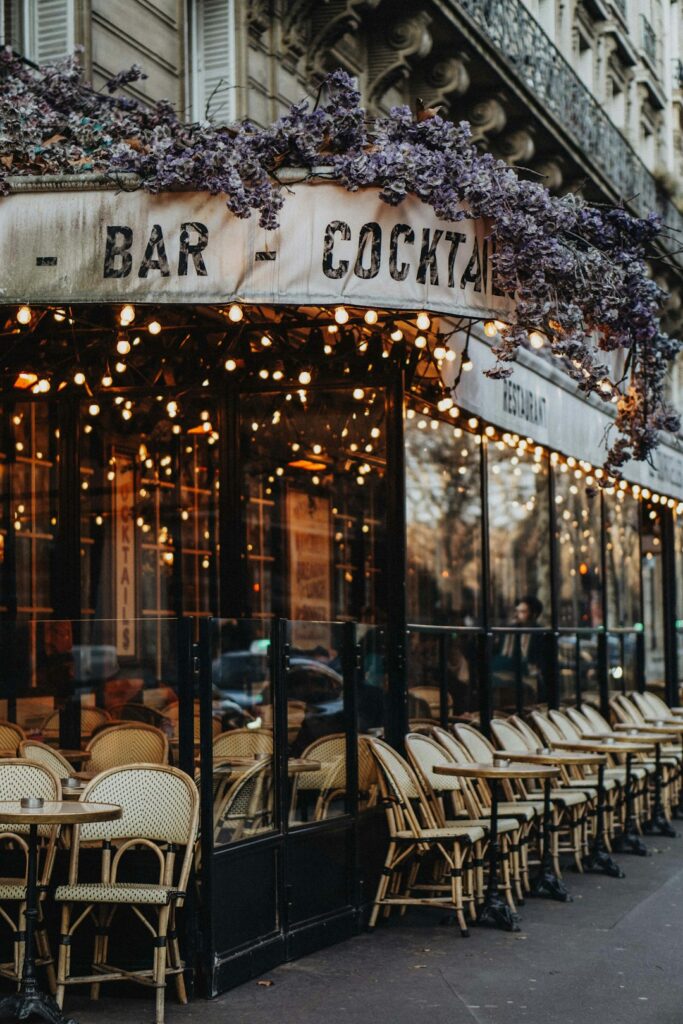
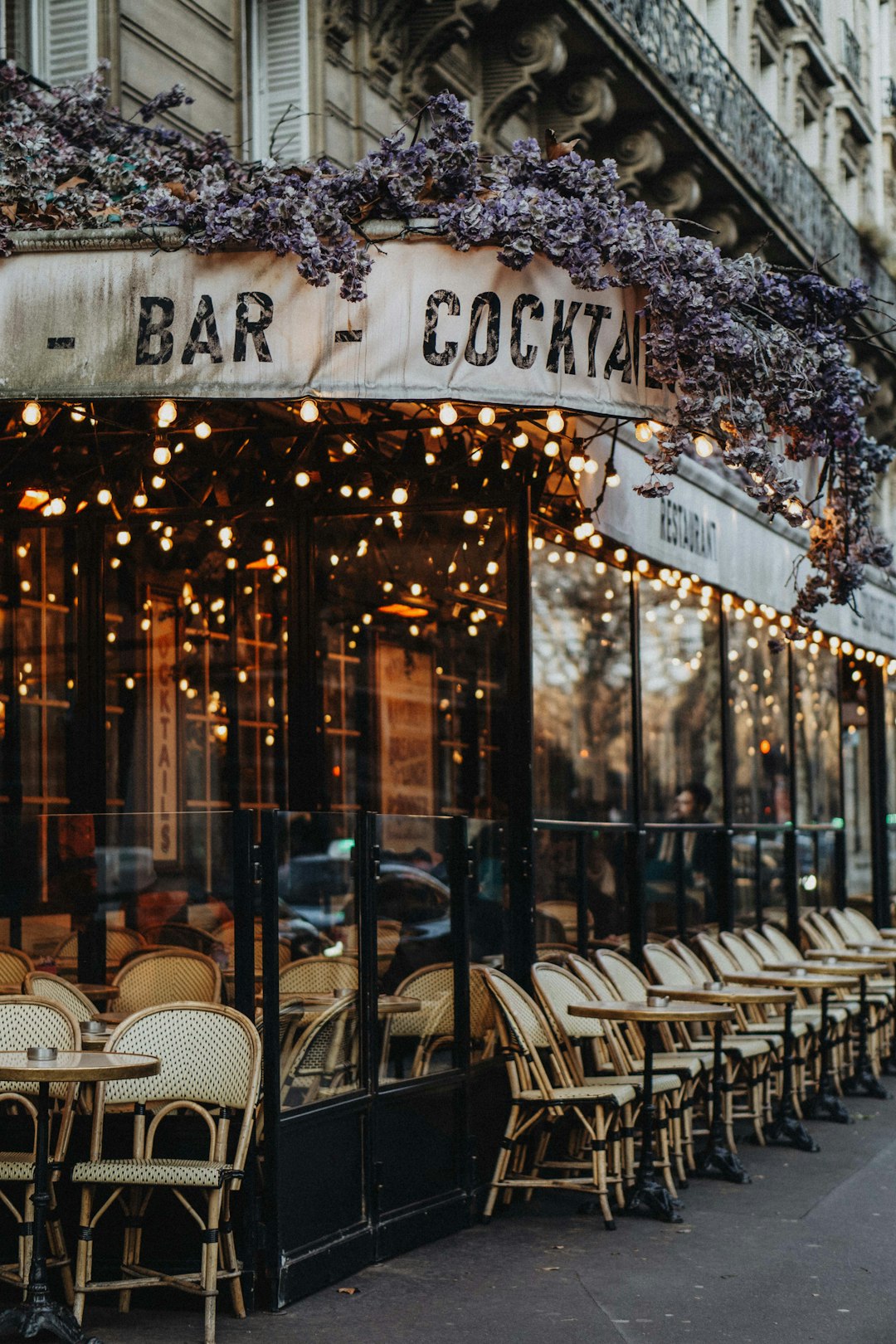
The Bloody Mary was, by most accounts, poured into existence not in New York but in Paris — mixed by bartender Fernand Petiot at Harry’s New York Bar in the early 1920s, when tinned tomato juice first reached the city and Russian émigrés brought their vodka with them. That single detail says a lot about how Paris drinks: it borrows freely, refines relentlessly, and then quietly claims the result as its own. This is Guide № 006 in The Love Paris Guide series.
Get the Full Collectible Guide (Free PDF)
Parisian Cocktail Culture — in a beautifully designed, printable booklet. The Love Paris Guide № 006.
A City That Drank Before It Mixed
Long before the cocktail shaker arrived, Paris ran on the apéritif — the pre-dinner drink meant to open the appetite rather than end the night. Vermouths and bitter aperitifs such as Lillet from Bordeaux and the wormwood-based Suze built an entire ritual around the early evening, and much of it survives today in the word apéro. When American bartenders fled Prohibition in the 1920s, they landed in a city that already understood the idea of a considered drink before a meal, and they simply added ice, citrus and technique to it.
That is why so many “American” classics carry a French passport. The French 75 — gin, Champagne, lemon and sugar — is commonly credited to Harry MacElhone and named after the 75mm field gun used in the First World War. The Sidecar, built on cognac and orange liqueur, is claimed by Paris and London in roughly equal measure, and the debate has never fully cooled.
Harry’s, The Ritz, and the Grand Hotel Bars
Harry’s New York Bar at 5 Rue Daunou opened in 1911 and remains one of the few places where you can order a drink in a room that plausibly invented it. Its wood-panelled interior, shipped over from a Manhattan bar, still carries the college pennants and clubby atmosphere that drew Hemingway, Fitzgerald and a long line of expatriates.
The other pilgrimage is Bar Hemingway inside The Ritz Paris, a small room hung with photographs and fishing memorabilia, presided over for decades by the celebrated bartender Colin Field. These hotel bars are not cheap and they are not meant to be quick — the pleasure is in the precision, the ceremony, and the fact that the recipes have been made ten thousand times before yours.
The Modern Revival
For most of the twentieth century, Paris was a wine city that happened to have a few great bars. That changed around 2007, when the Experimental Cocktail Club opened a dimly lit room in the 2nd arrondissement and effectively restarted the city’s cocktail conversation. A wave of bars followed — many of them now fixtures on international “best bars” lists — clustered in the Marais, in South Pigalle (locally shortened to SoPi) and along the Canal Saint-Martin.
A distinctly Parisian idea runs through the best of them: a growing number of bars now build their lists almost entirely from French spirits and producers, treating Chartreuse, cognac, Calvados, French vermouths and regional liqueurs as a serious palette rather than an afterthought. It is the same instinct that drives French cooking — work with what the country makes best.
The French Bottles Behind the Drinks
Some of the world’s most-used cocktail ingredients are French to the core. Cointreau, the clear orange liqueur from Angers, sits inside the Sidecar, the Margarita and the Cosmopolitan. Chartreuse, still made by Carthusian monks from a secret blend of 130 plants, is so tightly rationed that bars have occasionally been forced to limit its use. Aromatised wines such as Noilly Prat vermouth from the Mediterranean coast give the Martini and the Manhattan their backbone.
Then there is absinthe, the anise spirit that defined Belle Époque café life before France banned it in 1915. The ban held for nearly a century; the spirit was made legal to sell in France again in 2011, and the elaborate ritual of the slotted spoon, sugar cube and slowly dripped iced water has returned with it.
How to Drink Like a Local
The apéritif hour runs roughly from 6 to 8 in the evening, and it is treated as a social occasion in its own right rather than a warm-up. Service is legally included in the price at any Paris bar, so tipping works differently than in the United States — rounding up or leaving a euro or two for exceptional care is appreciated but never expected. Cocktail bars, unlike cafés, often keep later and later hours as the night goes on, and the better rooms take reservations. The Paris tourist office, Paris je t’aime, publishes current listings and opening hours if you want to plan a route through a neighbourhood.
Myths Worth Retiring
Myth: Absinthe makes you hallucinate. The culprit was said to be thujone, a compound in wormwood, but the amounts in absinthe are far too low to cause hallucinations. The wild reputation owed more to very high alcohol content, cheap adulterated bottles, and a moral panic that suited the wine lobby of the day.
Myth: The Bloody Mary is an American invention. It is most commonly credited to Fernand Petiot at Harry’s New York Bar in Paris in the 1920s, years before he refined it further at the St. Regis in New York.
Myth: A Kir is made with Champagne. The classic Kir uses still white wine — traditionally Bourgogne Aligoté — with a measure of crème de cassis. Make it with Champagne and you have ordered a Kir Royale, which is a different, and pricier, drink.
Frequently Asked Questions
When is the apéritif hour in Paris?
Generally between 6 and 8 in the evening. It is the window when Parisians gather for a first drink and a small bite before dinner, and many bars build their early-evening menus around it.
Do I need to tip in a Paris cocktail bar?
No. Service is included by law in the listed price. Rounding up the bill or leaving a euro or two for particularly good service is a polite gesture, but there is no expectation of a percentage tip.
Which neighbourhoods have the best cocktail bars?
The strongest concentrations are in the Marais, in South Pigalle (SoPi), along the Canal Saint-Martin, and around the 2nd arrondissement near the old grand-hotel bars. Each has its own tempo, from intimate speakeasy-style rooms to lively canal-side terraces.
More The Love Paris Guides
The Love Paris Guide is a numbered series — one tightly focused subject at a time, each with its own downloadable collectible edition. Guide № 001 is The Baguette, Guide № 002 is Bastille Day in Paris, Guide № 003 is The Eiffel Tower, Guide № 004 is Parisian Café Wine Culture, Guide № 005 is Parisian Café Etiquette, This is Guide № 006. More editions are on the way.
🇫🇷 Join Love Paris
Every week, get hidden stories, local secrets, and travel inspiration from people who live and love it.
Tours & experiences in Paris


Powered by Viator. Some links are affiliate links — we may earn a small commission at no extra cost to you.