
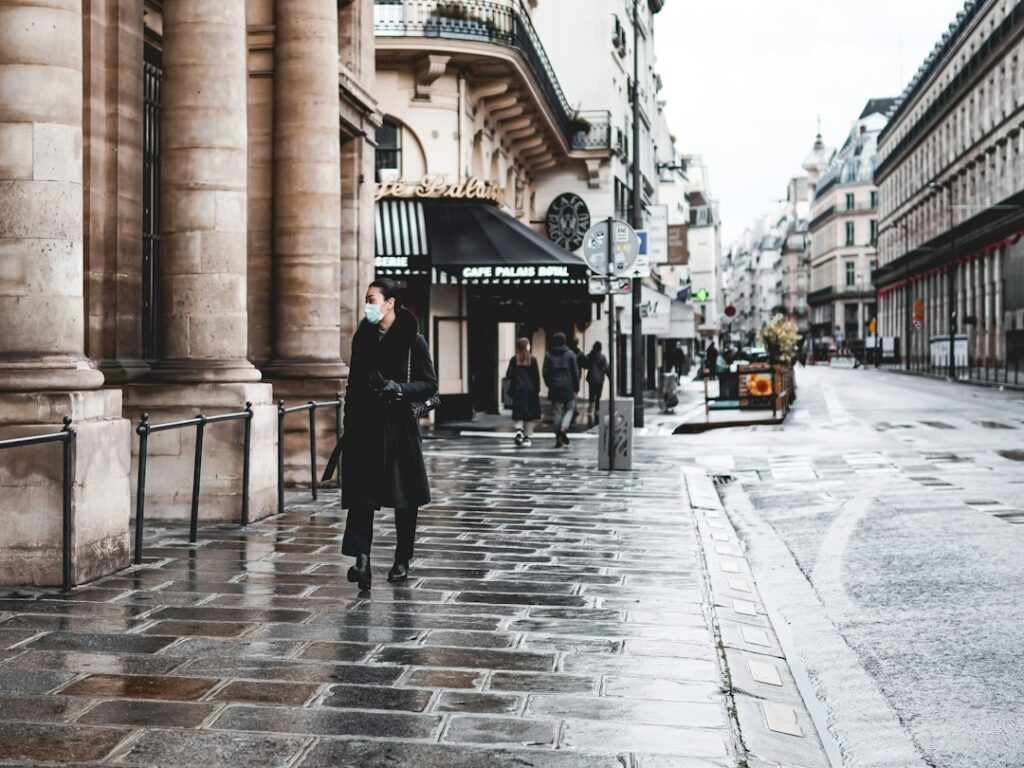
The Marais spreads across the 3rd and 4th arrondissements like a living museum of Parisian history. Medieval streets twist past Renaissance mansions, 17th-century squares open without warning, and every corner reveals another era. But this isn’t a neighborhood frozen in time—it’s where students grab lunch beside elderly residents who’ve lived here for fifty years, where contemporary art galleries occupy former aristocratic townhouses, and where Sunday crowds spill from brunch spots onto sidewalks that haven’t changed shape in four hundred years.
You can spend days here and still discover new corners. The neighborhood rewards wandering, but a few anchors help you understand what makes it special.
The Heart of the Marais: Place des Vosges and Rue des Francs-Bourgeois
Start at Place des Vosges, Paris‘s oldest planned square. Built in 1612, its red brick arcades and perfect symmetry still look exactly as Henri IV intended. Victor Hugo lived at number 6—his house is now a free museum worth thirty minutes of your time. The square itself is better: bring a book, sit on the grass (yes, you’re allowed), and watch light change on the facades.
From the southwest corner, walk west on Rue des Francs-Bourgeois. This is the Marais’s main artery, lined with clothing boutiques in buildings that once housed nobility. At number 60, push through the courtyard entrance to reach the Musée Carnavalet—devoted entirely to Paris history, recently renovated, and free to enter. Even if you skip the museum, step inside to see the courtyard.
Rue des Francs-Bourgeois runs all the way to Rue des Archives. Along the way you’ll pass concept stores, vintage shops, and sidewalk falafel joints that draw weekend lines. L’As du Fallafel at 34 Rue des Rosiers (one block south) is famous, but the line moves fast and the pita is worth it.
The Jewish Quarter and Rue des Rosiers
The Marais has been home to Paris’s Jewish community since the 13th century. Rue des Rosiers remains its cultural heart, though gentrification has changed the mix. Sacha Finkelsztajn at number 27 still bakes the same Eastern European pastries it has since 1946—the poppy seed strudel and challah are exceptional. Next door, Florence Kahn sells smoked fish and rye bread.
Between the food shops you’ll find fashion boutiques and wine bars that arrived in the past decade. This combination—traditional Jewish bakeries beside modern cocktail spots—defines the contemporary Marais. Come Sunday morning when everything’s open and the street becomes a pedestrian river of shoppers, eaters, and strollers.
Hidden Courtyards and Hôtels Particuliers
The Marais’s real treasures hide behind street-level doors. These hôtels particuliers—private mansions built for aristocratic families—were constructed around interior courtyards that shield them from street noise. Many now house museums or cultural institutions with public access.
Hôtel de Sully at 62 Rue Saint-Antoine offers one of the most beautiful Renaissance courtyards in Paris. Walk straight through to the formal garden, then exit through the back gate directly into Place des Vosges—a secret shortcut locals use daily. The building occasionally hosts photography exhibitions.
Hôtel de Soubise at 60 Rue des Francs-Bourgeois contains the National Archives and a spectacular courtyard that’s free to enter. If the Archives Museum is open, the Rococo interiors upstairs—particularly the Princess’s chambers—rival Versailles for sheer decorative excess.
For contemporary art, the Hôtel Salé houses the Musée Picasso. The mansion itself, built in 1659 for a salt-tax collector, is as impressive as the art collection. The newly restored courtyard and grand staircase are worth the admission alone.
Where to Eat and Drink in the Marais
The Marais feeds you well at every price point. Breizh Café at 109 Rue Vieille du Temple makes Brittany-style buckwheat galettes and imports its cider directly from Breton producers—arrive before noon or after 2pm to avoid the lunch rush. Chez Janou at 2 Rue Roger Verlomme serves Provençal cooking under a grape-vine-covered terrace, plus they stock over 80 pastis varieties if you’re curious.
For morning coffee, KB CaféShop at 53 Avenue de la République roasts its own beans and pulls proper espresso. Carette on Place des Vosges offers premium people-watching from its terrace, though you’ll pay extra for the location.
The natural wine movement found early ground here. La Belle Hortense at 31 Rue Vieille du Temple combines a wine bar with a bookshop—unusual but it works. Le Mary Celeste at 1 Rue Commines does creative small plates and cocktails in a space that fills up by 8pm most nights.
Practical Details
The closest métro stations are Saint-Paul (line 1), Chemin Vert (line 8), and Filles du Calvaire (line 8). All three put you within a five-minute walk of the main sights. Most museums close Mondays. Shops typically open around 11am, later on Sundays.
The Marais gets crowded weekend afternoons, especially Rue des Francs-Bourgeois and around Place des Vosges. Visit weekday mornings for a quieter experience, or come late afternoon when light hits the old stone particularly well.
This is a walking neighborhood—the streets are too narrow and tangled for efficient bus routes. Wear comfortable shoes. The cobblestones are original, which means they’re uneven and hard on feet after a few hours. But that’s also part of the appeal: you’re walking streets that have looked essentially the same since the 1600s, in a city that demolished most of its old quarters.
Want to explore more of Paris’s best neighborhoods and hidden corners? Subscribe to the Love Paris newsletter—one short story about the city every day, straight to your inbox.
Tours & experiences in Paris


Powered by Viator. Some links are affiliate links — we may earn a small commission at no extra cost to you.