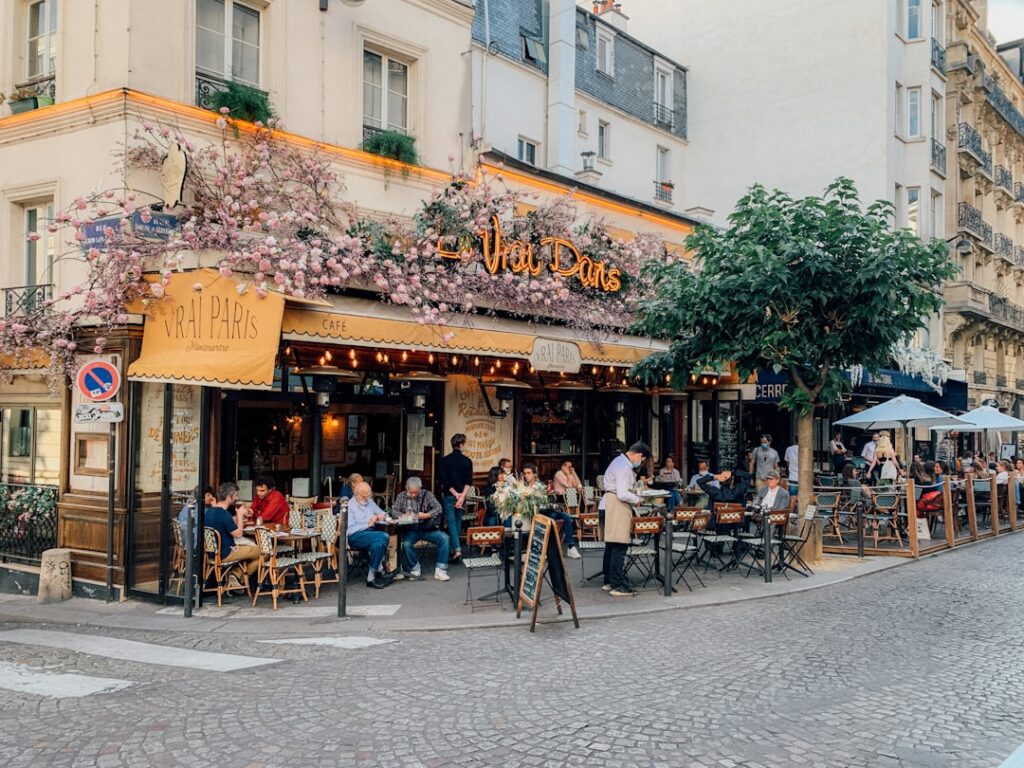
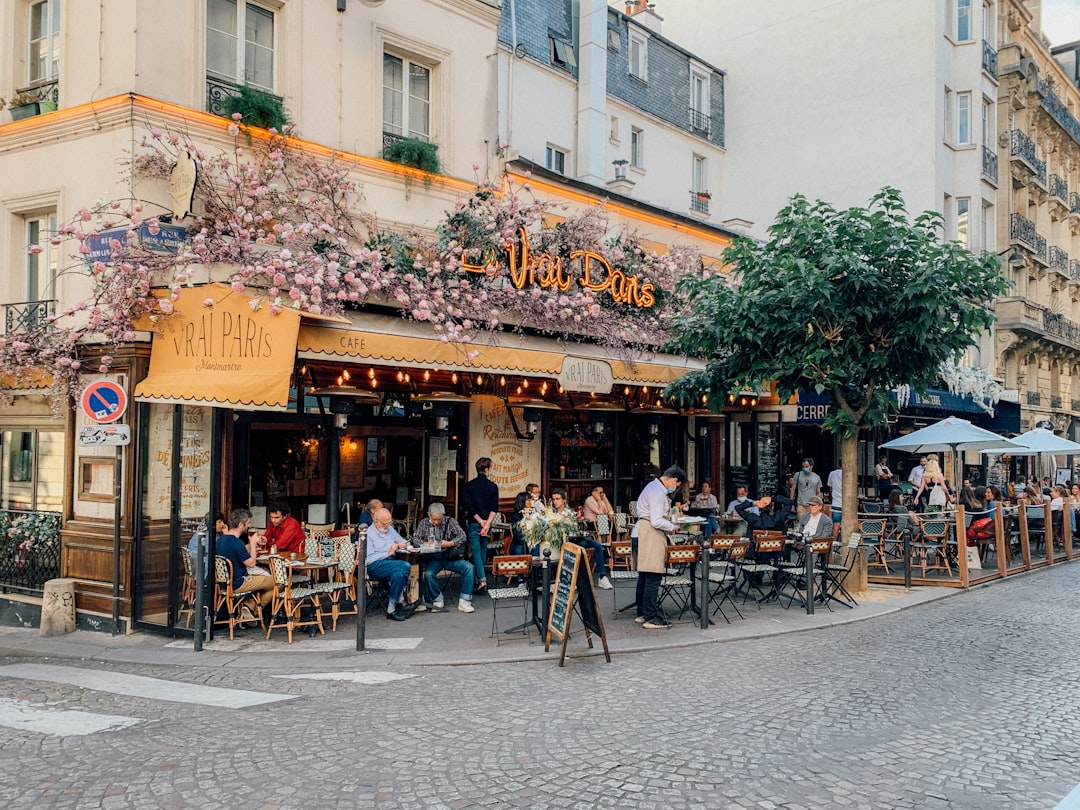
Order a glass of red in a Paris café and it often arrives cool to the touch — a Beaujolais or Loire red served a few degrees below room temperature, sometimes straight from a cellar or fridge. This is not a mistake or a foreign affectation; it is the everyday rhythm of the Parisian café, where wine is priced by the glass, poured without ceremony, and drunk standing at the zinc counter as easily as sitting on the terrace. Welcome to Guide № 004 in The Love Paris Guide series.
Get the Full Collectible Guide (Free PDF)
Parisian Café Wine Culture — in a beautifully designed, printable booklet. The Love Paris Guide № 004.
Wine by the Glass: How the Café Pour Actually Works
In a traditional Paris café you will typically see wine offered as un verre de vin — a glass — in a few basic categories rather than a long list. The classic shorthand is a ballon (a rounded, stemmed glass) of red, or simply “un rouge,” “un blanc,” or “un rosé.” Many cafés pour a house wine, the vin de la maison, which is the least expensive and perfectly normal to order.
Pricing follows a rule that surprises first-time visitors: what you pay depends heavily on where you stand. It is generally cheaper to drink au comptoir (at the counter) than en salle (seated inside), and cheaper inside than on the terrace. This tiered pricing is a long-standing café convention, and in many establishments the tariffs for each are still posted, as French regulations have historically required prices to be displayed.
The Zinc Counter and the Café’s Origins
The bar counter in a classic café is called le zinc, named for the zinc-alloy tops that became common in Paris in the nineteenth century. Standing at the zinc for a quick glass of wine or coffee remains one of the most economical and authentically local ways to drink in the city. The counter was, and often still is, the social heart of the room.
Café wine culture grew out of the older world of the bistrot and the wine merchant. It is commonly said that early Paris bistros were tied to marchands de vin — wine sellers who also served simple food — and to the Auvergnat migrants who ran many of the city’s coal-and-wine shops, the bougnats. Wine, in other words, was woven into the café’s commercial DNA from the start, long before espresso machines arrived.
What’s in the Glass: Light Reds and Everyday Bottles
The reds that define café drinking tend to be light, fruit-forward, and easy — wines built for a midday glass rather than long aging. Beaujolais, made from the Gamay grape, is the archetype, along with reds from the Loire such as those made from Cabernet Franc. These are the wines most likely to be served slightly chilled, which suits their bright, low-tannin style.
You will also encounter the language of French wine labelling. AOC (Appellation d’Origine Contrôlée) marks wines tied to a specific region and set of rules, while vin de pays or the newer IGP designation covers broader, often more affordable regional wines. A café house pour is frequently one of these simpler categories, chosen for value and drinkability rather than prestige.
Why the Red Is Served Cool
The habit of serving light reds cool traces back to the phrase chambré — meaning wine brought to “room temperature.” The catch is that the room in question was a nineteenth-century one, cooler than a modern heated apartment. So-called room temperature for a red is traditionally around 15–18°C, and lighter reds like Beaujolais are often best a touch below that.
This is why a café red arriving cool is a sign of care rather than carelessness. A warm, over-heated red tastes flabby and alcoholic; a lightly chilled Gamay tastes fresh. If you prefer yours warmer, it is perfectly acceptable to hold the glass in your hand and let it come up a few degrees.
Ordering Like a Regular
A few practical customs go a long way. A friendly bonjour to the staff before ordering is expected and genuinely changes the reception you get. To order, a simple “un verre de rouge, s’il vous plaît” is all you need; if you want the house wine, ask for the vin de la maison. When you are ready to leave, ask for l’addition.
Tipping is not obligatory, because service is included by law — the service compris that appears on French bills. Rounding up or leaving a euro or two for good service is common and appreciated, but the double-digit percentage expected in some countries is not the norm here.
Myths Worth Retiring
Myth: French people drink wine with every meal, including breakfast. In reality, per-capita wine consumption in France has fallen dramatically over the past several decades, and daily drinking is far less universal than the cliché suggests. Café wine today is often a social or leisurely choice rather than a fixed daily ritual.
Myth: Serving red wine chilled is wrong. For light-bodied reds, a slight chill is traditional and intentional, not a faux pas. The idea that all reds must be room temperature is a modern oversimplification of the older term chambré.
Myth: You must tip 15–20% in a Paris café. Service is included by French law, so heavy tipping is not expected. Small rounding up is the local custom.
Frequently Asked Questions
Is it cheaper to drink standing at the bar?
Yes. In most traditional cafés, drinking au comptoir (at the counter) costs less than sitting inside, which in turn costs less than a terrace table. The price tiers are a long-standing café convention, and are often posted so you can compare before you order.
What should I order if I don’t know French wine?
Ask for the vin de la maison — the house wine — by the glass, specifying red, white, or rosé. It is the everyday, affordable pour and a reliable way to taste what the café serves day to day. A light red such as Beaujolais is a friendly starting point.
Why is my red wine cold?
Because light reds are traditionally served slightly cool, around or just below 15–18°C, to keep them fresh. This suits fruit-driven, low-tannin styles like Gamay-based Beaujolais and is a deliberate choice, not an error.
More The Love Paris Guides
The Love Paris Guide is a numbered series — one tightly focused subject at a time, each with its own downloadable collectible edition. Guide № 001 is The Baguette, Guide № 002 is Bastille Day in Paris, Guide № 003 is The Eiffel Tower, This is Guide № 004. More editions are on the way.
🇫🇷 Join Love Paris
Every week, get hidden stories, local secrets, and travel inspiration from people who live and love it.
Tours & experiences in Paris


Powered by Viator. Some links are affiliate links — we may earn a small commission at no extra cost to you.