
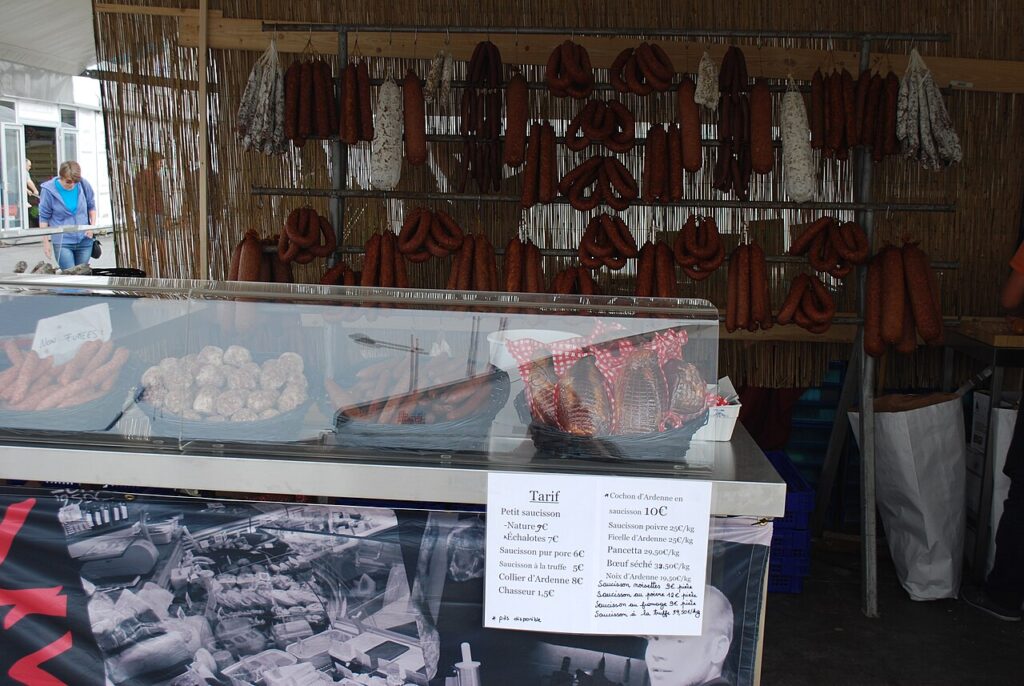
Walk past any proper Parisian charcuterie and you’ll see locals queuing for their weekly provisions: sliced jambon blanc for sandwiches, pâté for Sunday lunch, rillettes for a casual apéro. These specialty shops are as essential to Parisian life as the boulangerie, yet they remain mysterious to many visitors. Learning to navigate them opens a delicious door into everyday French food culture.
Charcuterie in Paris isn’t just about cured meats. It’s a complete prepared foods tradition that includes terrines, pâtés, rillettes, sausages, salads, and ready-to-eat dishes that have sustained French home cooking for generations. The best shops are run by artisans who make everything on-site, following recipes passed down through families.
Understanding What You’re Looking At
Behind the glass counter, you’ll find categories that follow a logic once you know what to look for. Start with the basics: jambon blanc (cooked ham) and jambon de Paris are mild, perfect for sandwiches. Jambon cru, including varieties like Bayonne and Serrano, are salt-cured and aged. Saucisson sec is dry-cured salami, sold whole or sliced.
The pâté and terrine section deserves attention. Pâté de campagne is coarse country-style, while terrine de foie is smoother and richer. Rillettes—shredded meat cooked slowly in its own fat—comes in pork, duck, or goose versions. Each has a distinct texture and flavor that pairs differently with bread and wine.
You’ll also see prepared salads: céleri rémoulade (celery root in mustard mayonnaise), carottes râpées (grated carrots), and salade de lentilles. These aren’t afterthoughts—they’re carefully made sides that round out a simple meal. Many Parisians build entire dinners around charcuterie and salads, adding only bread and wine.
Where Parisians Actually Shop
The gold standard is Maison Vérot, with locations in the 7th and 15th arrondissements. Their boudin noir (blood sausage) is legendary, and their pâté en croûte—meat pâté baked in pastry—wins awards. Everything is made in their atelier behind the shop. Arrive before noon on Saturday or everything good will be gone.
In the Marais, Terroirs d’Avenir on Rue du Nil sources from small producers and makes fresh charcuterie daily. Their andouillette (tripe sausage) converts skeptics, and their selection of regional specialties brings the French countryside to central Paris. The staff knows every producer personally and can tell you exactly where each item comes from.
Au Pied de Cochon in the Latin Quarter (not the 24-hour brasserie, but the charcuterie on Rue Monge) specializes in Lyonnaise classics: rosette de Lyon, cervelas pistache, and proper saucisson brioché. The owner trained in Lyon and maintains exacting standards. This is where local chefs shop for their staff meals.
For something more accessible in Montmartre, Charcuterie Lelay on Rue Lepic makes excellent basics without the premium prices of the famous names. Their jambon persillé—ham set in parsley-flecked aspic—is perfect for a picnic in Parc des Buttes-Chaumont.
How to Order Like a Local
Point at what interests you and ask for “une tranche” (a slice) to taste. Good charcutiers expect this and will offer samples readily. When you find something you like, specify quantity by the slice for ham (“quatre tranches” gets you four slices) or by weight for everything else. One hundred grams (“cent grammes”) serves one person generously; 200 grams serves two.
For pâté and terrines, ask them to slice it at the counter rather than buying pre-packaged. It stays fresher and you get exactly the amount you want. The same goes for sausages—have them slice saucisson sec rather than buying a whole piece unless you’re feeding a crowd.
Don’t skip the prepared dishes. A good poulet rôti (roast chicken) from a charcuterie beats most restaurant versions, and the pommes de terre sarladaise (potatoes cooked in duck fat) are worth the indulgence. These items are usually displayed in a separate case near the register.
What to Do With Your Haul
The simplest approach: buy a fresh baguette, pick up some cornichons and good butter, and assemble everything on a cutting board. This is a legitimate French dinner, not just an appetizer. Add a bottle of Beaujolais or Côtes du Rhône and you’ve captured the essence of Parisian home dining.
For a proper picnic, combine sliced jambon, pâté de campagne, and saucisson sec with a container of céleri rémoulade and radishes with salted butter. Pack it to the Luxembourg Gardens or along the Canal Saint-Martin. Parisians do this year-round, not just in summer.
Most charcuterie keeps well for several days refrigerated, though pâté and terrines are best within 48 hours of slicing. Let everything come to room temperature before serving—cold fat has no flavor, and these products are designed to be eaten at cave temperature, around 55-60°F.
The real insider move is building relationships. Visit the same shop regularly, remember names, and ask questions about new items. Charcutiers love customers who appreciate their craft, and you’ll start getting recommendations for seasonal specialties before they’re displayed.
Want more insider guides to Parisian food traditions delivered to your inbox? Subscribe to the Love Paris newsletter—one short story a day about the city beyond the guidebooks.
Tours & experiences in Paris


Powered by Viator. Some links are affiliate links — we may earn a small commission at no extra cost to you.