
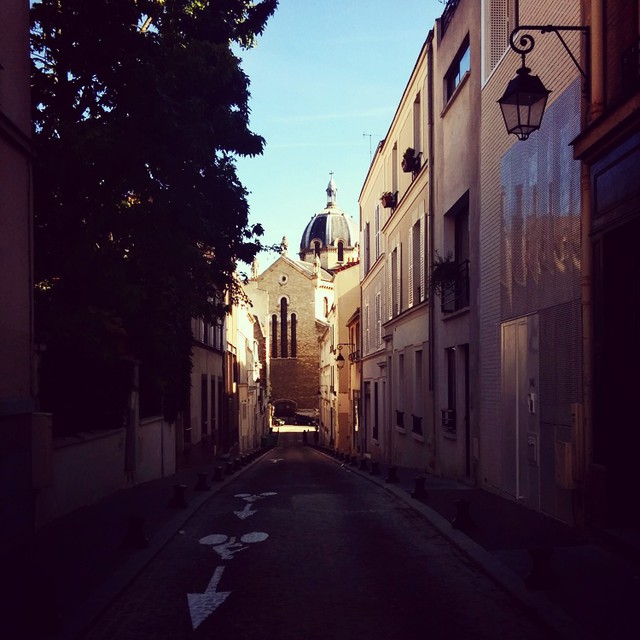
While tourists crowd Montmartre’s steps and the Marais’s boutiques, the Butte-aux-Cailles remains refreshingly local. This hilltop quarter in the 13th arrondissement preserves the village atmosphere that once defined Paris‘s outer neighborhoods, complete with narrow cobbled lanes, low-rise houses with gardens, and a fierce community spirit that has resisted high-rise development for decades.
The neighborhood takes its name from Pierre Caille, who owned vineyards here in the 1500s. That rural character persisted well into the 20th century, and today’s Butte-aux-Cailles still feels like a secret village hidden within the city limits.
Walking the Village Streets
Start your exploration at Place Paul Verlaine, the neighborhood’s tiny main square where locals gather at outdoor café tables under plane trees. From here, Rue de la Butte-aux-Cailles—the main commercial street—climbs gently uphill, lined with independent restaurants, wine bars, and shops that have nothing to do with tourism.
Turn onto any of the side streets and you’ll discover what makes this area special. Rue des Cinq-Diamants is quintessential Butte-aux-Cailles: cobblestones, low houses painted in faded pastels, window boxes overflowing with geraniums, and almost no through traffic. Villa Daviel, a private lane off Rue Barrault, features identical workers’ cottages from 1912, each with a small front garden—it looks more like a London mews than Paris.
The neighborhood is famous for its street art. Entire building facades serve as canvases for large-scale murals, particularly along Rue Domrémy and Rue Alphand. Unlike the tagged walls you see elsewhere, these are commissioned works that the community embraces as part of the neighborhood’s identity.
Swimming and Community History
The Piscine de la Butte-aux-Cailles, at 5 Place Paul Verlaine, is one of Paris’s most beautiful public pools. Built in 1924 in Art Nouveau style, it fills with water from an artesian well 600 meters below ground—naturally warm at 28°C year-round. The well was discovered in 1863, and Parisians have been coming here to swim ever since. Even if you don’t take a dip, peek through the entrance to see the period tilework and ironwork.
This spirit of communal amenities runs deep in the Butte-aux-Cailles. The neighborhood has a history of cooperative movements and worker associations. In 1871, it was one of the last holdouts of the Paris Commune, and that independent streak persists in the area’s numerous cooperative businesses and community gardens today.
Where to Eat and Drink
The Butte-aux-Cailles has become known for its dining scene—locals from across Paris make the trip here for dinner. Le Temps des Cerises, a workers’ cooperative restaurant at 18-20 Rue de la Butte-aux-Cailles, serves traditional French food at reasonable prices and has been run collectively since 1976. Book ahead on weekends.
For natural wine and small plates, Chez Gladines (multiple locations on Rue de la Butte-aux-Cailles) is a neighborhood institution serving Basque-influenced French food with generous portions and a convivial atmosphere. Arrive early or expect to wait—they don’t take reservations.
L’Oisive Thé, tucked on a quiet corner at 2 Rue Alphand, serves homemade cakes and excellent tea in a tiny salon that feels like someone’s living room. It’s the perfect afternoon stop while walking the neighborhood.
The bar scene here is refreshingly unpretentious. Le Merle Moqueur at 11 Rue de la Butte-aux-Cailles has been pouring drinks since the 1920s and maintains its vintage zinc bar and old posters. La Folie en Tête nearby attracts a young, artsy crowd with craft beers and live music several nights a week.
Practical Information
The Butte-aux-Cailles sits between Place d’Italie and Tolbiac metro stations (both on Line 7). From Place d’Italie, walk east on Avenue des Gobelins, then turn right on Rue Barrault—you’ll reach the heart of the neighborhood in about eight minutes. From Tolbiac, head west on Rue de Tolbiac and turn left on Rue de la Butte-aux-Cailles.
Visit on a weekday afternoon to see the neighborhood at its most peaceful, or come for dinner on a Friday or Saturday night when the restaurants and bars fill with Parisians. Sunday morning brings a small organic market to Place de la Commune de Paris, just north of the main neighborhood.
Unlike more touristy areas, the Butte-aux-Cailles has few museums or official sights. That’s precisely the point. Bring comfortable shoes for the cobblestones, leave your map open to discovery, and spend a few hours experiencing a side of Paris that feels genuinely local. The neighborhood rewards wandering—down narrow passages, past community gardens, around unexpected corners where village Paris still thrives.
Want more hidden neighborhoods and insider Paris stories delivered to your inbox? Subscribe to the Love Paris newsletter—one short story about the city every day, written for people who want to know Paris beyond the guidebooks.
Tours & experiences in Paris


Powered by Viator. Some links are affiliate links — we may earn a small commission at no extra cost to you.