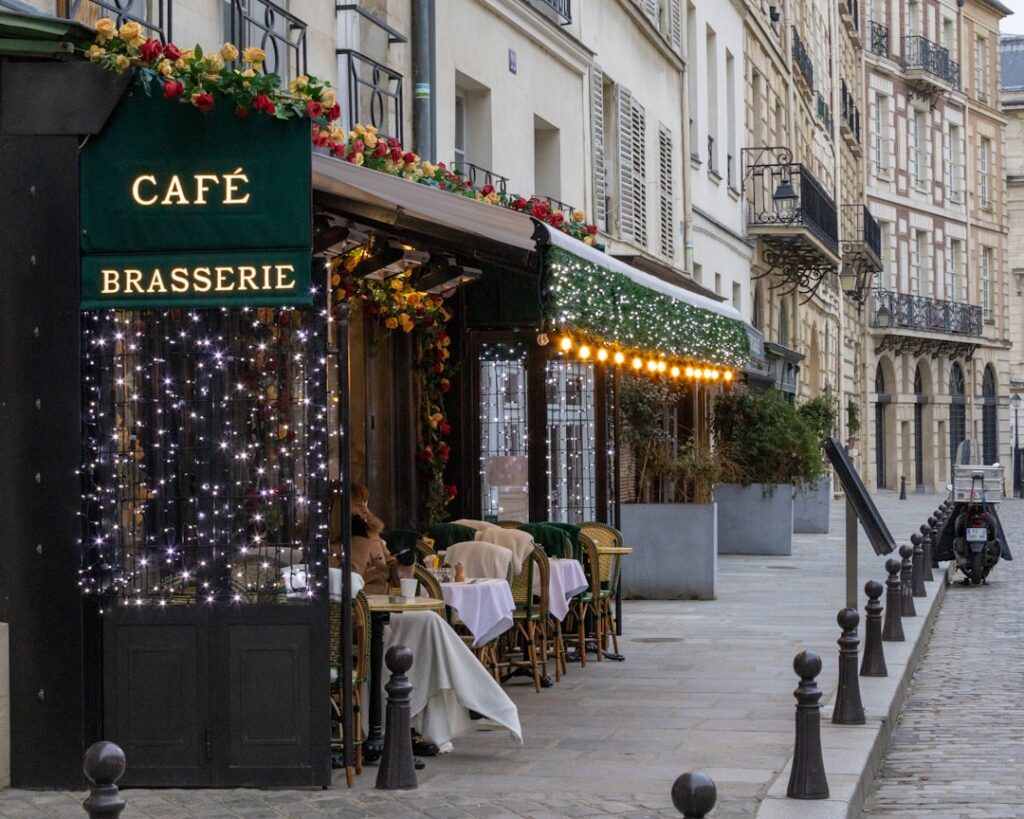

Parisian café culture isn’t just about coffee—it’s a way of life perfected over centuries. Whether you’re settling in for a morning espresso at the zinc counter or claiming a terrace table for an afternoon of people-watching, knowing the unwritten rules makes all the difference between feeling like a tourist and blending in with the locals.
The Parisian café is democratic theater: writers scribble in notebooks, couples argue and reconcile, neighbors debate the day’s news, and solitary souls nurse a single drink for hours without anyone suggesting they move along. Here’s how to join them.
Understanding the Café Hierarchy
Not all café seating is created equal, and the price reflects it. Stand at the bar (le comptoir or le zinc), and you’ll pay the lowest rate—typically €1.50 for an espresso. Sit inside at a table, and the price climbs to perhaps €3. Claim a coveted terrace seat, and you might pay €4.50 for the same coffee. You’re not just buying caffeine; you’re renting prime Parisian real estate, sometimes for hours.
This three-tiered pricing system is perfectly normal and posted clearly on the menu board. Locals often start their morning at the bar with a quick espresso and a croissant, standing elbow-to-elbow with strangers. The terrace is reserved for leisurely occasions when time doesn’t matter.
Once you sit down, that table is yours for as long as you want it. The waiter will never rush you or present the check until you ask for it (“l’addition, s’il vous plaît”). This is fundamental to French café culture—you’ve purchased not just a drink, but time and space to think, read, write, or simply exist.
What to Order and When
Morning means coffee, specifically un café (espresso) or un café crème (espresso with steamed milk). Never order a café crème after 11 a.m.—it’s a breakfast drink, and asking for one at 3 p.m. marks you as a foreigner. Afternoon and evening call for un café or un noisette (espresso with a dash of milk).
If you want American-style filter coffee, ask for un café allongé or un café américain. It won’t taste like coffee from Seattle, but it’s closer than a straight espresso.
Wine by the glass (un verre de vin) appears on café menus all day, and no one blinks if you order a glass of Côtes du Rhône at 11 a.m. Beer—une pression for draft, une demi for a half-pint—is equally acceptable at any hour. In summer, try un pastis, the anise-flavored apéritif that tastes like liquid Provence.
For non-alcoholic options beyond coffee, order un citron pressé (freshly squeezed lemon juice served with water and sugar so you mix it to taste) or une menthe à l’eau (mint syrup with water). Both are infinitely more interesting than soda.
The Best Neighborhoods for Café Life
Saint-Germain-des-Prés remains café central, home to the legendary Les Deux Magots and Café de Flore on Boulevard Saint-Germain, where Sartre and de Beauvoir held court. These are tourist-packed now and wildly expensive, but they’re also genuinely historic. Go once for the experience, then explore the quieter side streets.
Try Café de la Mairie on Place Saint-Sulpice for a more authentic experience—same neighborhood, half the price, and a front-row view of one of Paris’s most beautiful squares. Or walk to Rue de Seine and settle into La Palette, an art-school favorite since 1902 with a gorgeous tile interior.
The Marais offers excellent people-watching at the cafés ringing Place des Vosges and Place du Marché Sainte-Catherine. Au Petit Fer à Cheval on Rue Vieille du Temple has a horseshoe-shaped bar and perpetually packed tables.
For a more local vibe, head to the 11th arrondissement around Rue Oberkampf or the 10th near Canal Saint-Martin, where cafés like Chez Prune attract a younger, neighborhood crowd. These spots feel less like museums and more like places where actual Parisians actually live.
Café Etiquette: The Unwritten Rules
Always greet the waiter with “Bonjour” when you arrive and “Au revoir” or “Bonne journée” when you leave. This isn’t optional—it’s basic politeness. Wave frantically for service and you’ll wait forever; catch the waiter’s eye and give a subtle nod, and they’ll come when ready.
Don’t expect free water automatically. Ask for une carafe d’eau (a pitcher of tap water), which is free and perfectly drinkable throughout Paris. Bottled water (eau minérale) costs €5-8.
Smoking on café terraces is legal and common. If smoke bothers you, sit inside. The waiter won’t move ashtrays or ask smokers to stop—it’s part of the terrace experience.
Tipping isn’t required since service is included (look for “service compris” on the bill), but locals round up or leave small change—€1-2 for drinks, perhaps 5-10% for food. Anything more marks you as American.
Making the Most of Your Café Time
Bring a book, a notebook, or just your thoughts. Parisians don’t treat cafés as places to get in and out quickly—they’re outdoor living rooms. Spend an hour watching the rhythm of the street. Notice how locals greet neighbors, how couples share a single newspaper, how that woman three tables over has been nursing the same glass of wine for 90 minutes while reading Proust.
Visit the same café multiple times during a longer stay. After your third visit, the waiter will start to recognize you. By the fifth, they might remember your order. This is when Paris opens up—when you’re no longer a tourist consuming an experience, but a temporary regular participating in the daily theater of neighborhood life.
The best cafés aren’t necessarily the famous ones or the ones with the fanciest interiors. They’re the ones where you feel comfortable claiming a table, ordering a coffee, and settling in to watch Paris unfold around you at its own unhurried pace.
Want more insider guides to Paris beyond the guidebooks? Subscribe to the Love Paris newsletter and get one short story about the real Paris delivered to your inbox every day.
Tours & experiences in Paris


Powered by Viator. Some links are affiliate links — we may earn a small commission at no extra cost to you.