
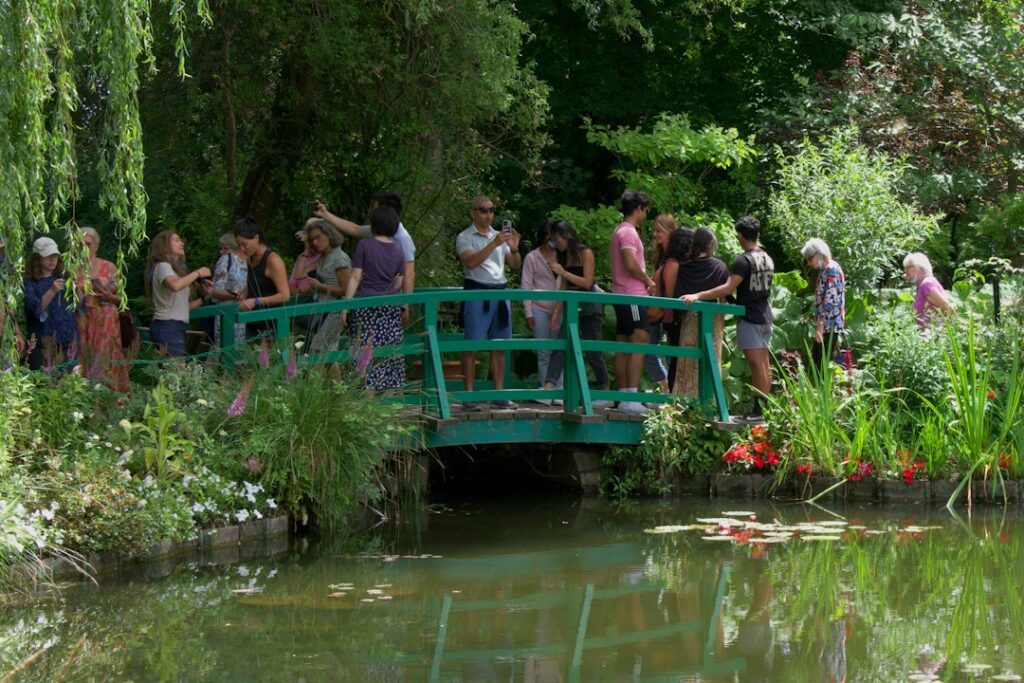
Claude Monet didn’t just paint water lilies—he designed the garden that grew them. An hour northwest of Paris, the village of Giverny holds the artist’s meticulously planned paradise: two gardens, a pink stucco house, and the lily pond that became one of art history’s most recognizable images. A day trip here isn’t just about seeing where Monet lived from 1883 until his death in 1926. It’s about stepping into a living canvas.
The Two Gardens: Flower and Water
Monet’s property divides into two distinct spaces. The Clos Normand, the flower garden directly in front of his house, explodes with color from April through October. Monet planted it without traditional French formality—nasturtiums tumble over pathways, roses climb metal arches, and dahlias mix with poppies in deliberate disorder. He wanted to paint nature, not tame it.
Walk under the wisteria-covered bridge to reach the water garden, where everything shifts. Japanese maples frame the famous green bridge, weeping willows trail in the pond, and water lilies float exactly as they do in the Orangerie’s grand panels. Monet diverted a branch of the Epte River to create this landscape, spending decades perfecting it. Come in late spring when wisteria drapes the bridge, or in summer when the lilies bloom heaviest.
The gardens close from November through March. Arrive at opening (9:30 a.m.) to beat tour groups, especially from May through July when crowds peak. October offers brilliant autumn color with fewer visitors.
Inside Monet’s House
The house itself reveals the man behind the paintings. Yellow dining room walls hung with Japanese prints. A blue-and-white tiled kitchen where Monet’s second wife Alice managed elaborate meals for the artist and his many guests—Cézanne, Renoir, Rodin, and Clemenceau all dined here. Upstairs, Monet’s bedroom looks onto the garden, his studio rebuilt to display reproductions of his work.
The gift shop occupies what was once Monet’s first studio. Skip the generic souvenirs and look for the excellent garden books and quality prints. The Musée des Impressionnismes, a five-minute walk from Monet’s property, stages temporary exhibitions exploring Impressionism and its legacy—worth the extra hour if you have time.
Getting There and Back
Trains leave from Paris Saint-Lazare to Vernon roughly hourly, taking 45 minutes. From Vernon station, you can catch the shuttle bus (timed with train arrivals), rent a bike, or walk the flat five kilometers along the Seine. The walk takes about an hour through Norman countryside—apple orchards, stone farmhouses, and river views—and makes a lovely approach if you’re not rushed.
Book train tickets in advance through the SNCF website or app. The first train leaves around 8 a.m., getting you to Giverny for opening. The last useful return from Vernon departs around 7 p.m., giving you a full day. Day trips become even easier with organized tours that handle transportation and often include priority access, particularly useful during peak season when ticket lines stretch long.
Beyond the Gardens
Giverny’s single main street, Rue Claude Monet, runs from the gardens to the Musée des Impressionnismes. Stone houses draped with roses line the way, converted into galleries, cafés, and shops. The Hôtel Baudy, where American Impressionist painters lodged in the 1880s and 1890s, serves lunch in a garden studio that once hosted Cézanne. The food is simple—salads, omelets, regional cider—but the atmosphere carries history.
The village cemetery sits up the hill behind the church. Monet’s grave, marked by a simple stone, lies under trees beside family members. No grand monument, just as he wanted. It’s a quiet spot that most visitors miss, too eager to return to Paris.
Pack a picnic if the weather cooperates—the meadows along the Epte River offer perfect spots to spread a blanket. The Wednesday and Sunday morning market in Vernon (if your timing works) sells Norman cheeses, cider, and produce for an authentic regional lunch.
Giverny proves that Monet wasn’t just documenting nature—he was composing it. Every sight line, color combination, and reflection was deliberate. Walking these paths shows you how an artist sees, how light and season transform the same view endlessly. It’s the closest you’ll come to standing inside an Impressionist painting.
Want more Paris stories delivered daily? Subscribe to the Love Paris newsletter—one short story about Paris in your inbox each day, from hidden gardens to insider dining tips.
Tours & experiences in Paris


Powered by Viator. Some links are affiliate links — we may earn a small commission at no extra cost to you.