
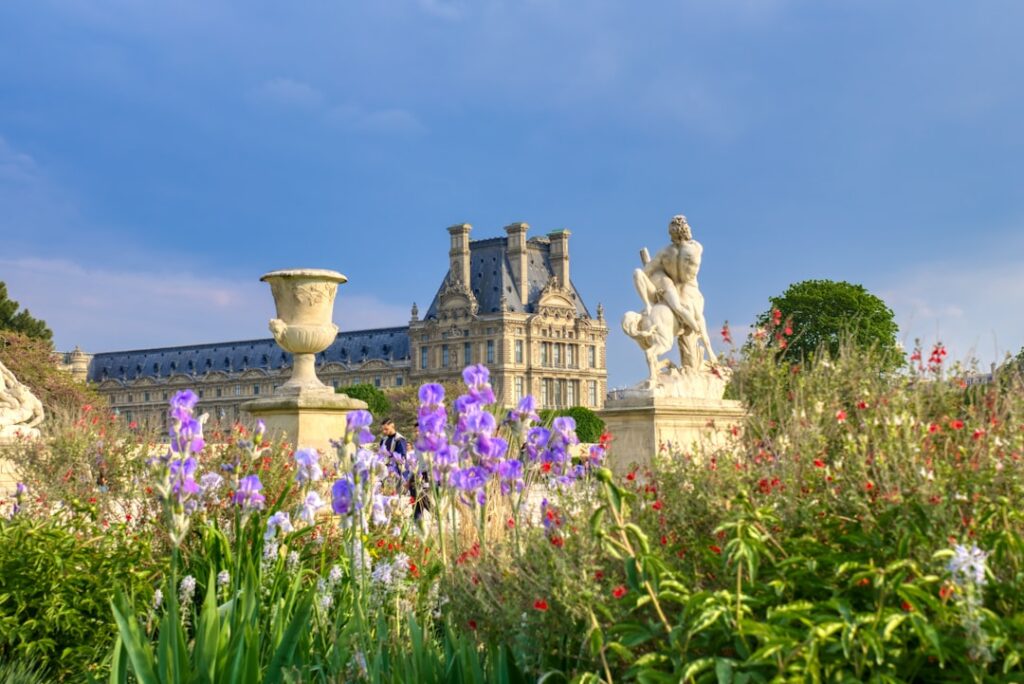
Stretching between the Louvre and Place de la Concorde, the Jardin des Tuileries is Paris’s most central garden—and one of its most storied. Created by Catherine de’ Medici in 1564, redesigned by André Le Nôtre in the 17th century, and opened to the public after the Revolution, the Tuileries has been a stage for royal intrigue, political upheaval, and everyday Parisian life for over 450 years.
Today, it’s where locals come to read on green metal chairs, where children sail wooden boats in the fountains, and where visitors catch their breath between the Louvre and the Musée de l’Orangerie. But beyond the main allées, the Tuileries holds quiet corners, important sculptures, and seasonal delights that most tourists walk right past.
The Grand Allée and Le Nôtre’s Vision
The central pathway running from the Louvre to the Place de la Concorde is André Le Nôtre’s masterpiece of formal French garden design. The same landscape architect who created Versailles laid out these symmetrical tree-lined paths, precisely clipped hedges, and octagonal ponds in the 1660s. Walk down the center in late afternoon when the sun slants through the chestnut trees, and you’ll see why this style became the template for gardens across Europe.
The two round ponds—the Grand Bassin Rond on the Louvre side and the octagonal Grand Bassin Octogonal near the Concorde—are where you’ll find children sailing rented wooden boats from March through October. Rent one from the kiosk for a few euros; it’s been a Tuileries tradition for generations.
The Sculpture Collection
The Tuileries doubles as an open-air sculpture museum. More than 200 works dot the garden, from 17th-century marble nymphs to modern bronzes by Rodin, Maillol, Giacometti, and Moore.
Don’t miss Rodin’s Le Baiser (The Kiss) and La Meditation near the western entrance by Place de la Concorde. Maillol’s voluptuous female nudes—18 in total—are scattered throughout, their curves contrasting beautifully with Le Nôtre’s straight lines. Look for La Rivière reclining near the Orangerie and L’Air by the Jeu de Paume.
Near the central terrace, Coysevox’s dramatic Mercure and La Renommée (Fame) riding winged horses have guarded the garden since Louis XIV’s time—though these are copies; the originals are safely inside the Louvre.
Hidden Corners and Best Spots
While crowds cluster around the main fountain, slip into the shaded side allées along Rue de Rivoli for near-solitude. The double row of lime trees on the north side creates a green tunnel in summer, and the benches here catch morning sun without afternoon heat.
The terrace between the two museums—Jeu de Paume on the north, Orangerie on the south—offers the best view down the garden toward the Louvre. Arrive at golden hour, and you’ll understand why painters have been capturing this perspective for centuries.
In the southwest corner near Place de la Concorde, look for the small enclosed garden with modern sculptures—quieter and often overlooked. The Exedra grove on the western end has semi-circular benches tucked into hedge alcoves, perfect for reading or sketching.
Seasonal Highlights and Practical Tips
The Tuileries transforms with the seasons. Spring brings blooming tulips (a nod to the garden’s name, derived from the tile factories that once occupied the site). Summer means the Fête Foraine des Tuileries, a traditional carnival with a Ferris wheel, from late June through August—tacky but beloved by Parisians. Autumn turns the chestnuts golden, and winter reveals the garden’s elegant bones.
Access is free and the garden opens at 7:00 or 7:30 a.m. depending on season, closing at dusk. Enter from Place de la Concorde (metro: Concorde on lines 1, 8, or 12), from the Louvre courtyard, or from gates along Rue de Rivoli. Wheelchair accessible throughout.
The garden has several spots to grab coffee or lunch. Café Renard near the Place de la Concorde entrance serves decent espresso and salads with table service. For something lighter, kiosks sell crêpes and ice cream near the ponds.
Combine your visit with the Musée de l’Orangerie to see Monet’s immersive Water Lilies—entrance is on the garden’s southern edge. The smaller Jeu de Paume on the northern side hosts excellent contemporary photography exhibitions.
The Tuileries is at its most magical early morning before tour groups arrive, or at dusk when the light softens and Parisians claim their favorite chairs. Bring a book, find a bench facing the fountain, and do as the locals do: sit, watch, and let Paris come to you.
Want more stories from Paris delivered to your inbox? Subscribe to the Love Paris newsletter and get one short story a day—the Paris beyond the guidebooks, straight to you each morning.
Tours & experiences in Paris


Powered by Viator. Some links are affiliate links — we may earn a small commission at no extra cost to you.