On a cold February day in 1992, representatives from twelve European nations gathered in the southern Dutch city of Maastricht to sign one of the most consequential treaties in modern European history. The Maastricht Treaty, formally known as the Treaty on European Union, transformed the European Economic Community into the European Union and paved the way for the euro currency that French citizens use today.
For Paris, the treaty represented a diplomatic triumph. French President François Mitterrand had been a driving force behind deeper European integration, working closely with German Chancellor Helmut Kohl to push for a common currency and strengthened political union. The negotiations leading to Maastricht were intense, with French diplomats playing a central role in shaping the treaty’s economic and monetary provisions.
Why Maastricht?
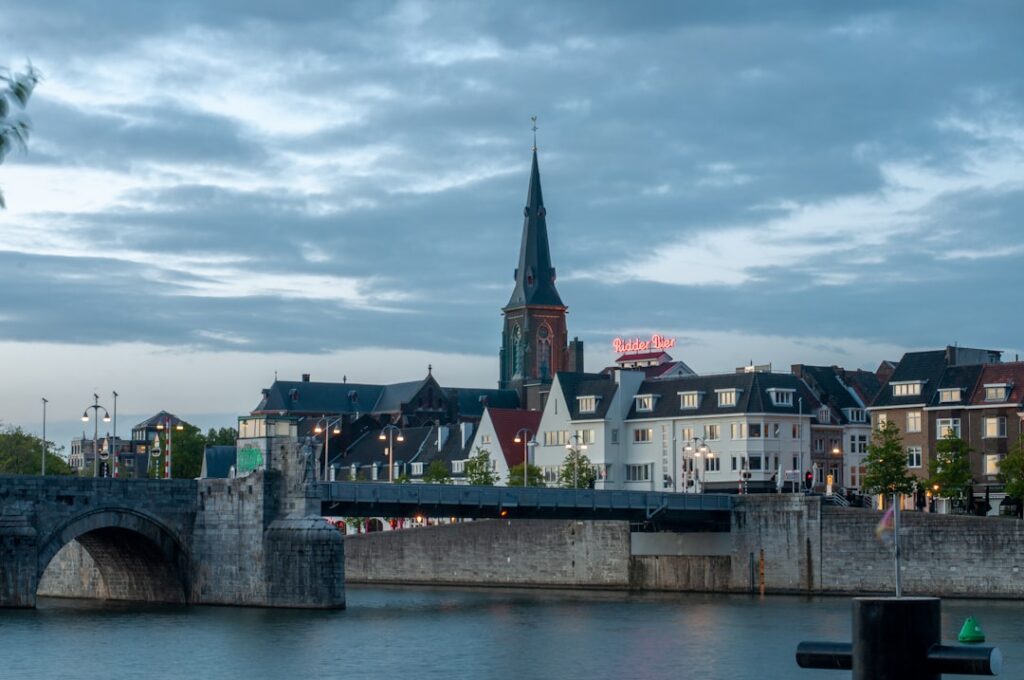
The choice of Maastricht as the signing location was deliberate and symbolic. This historic city in the Netherlands’ southernmost province of Limburg sits at the crossroads of Dutch, Belgian, and German borders—a geographic reality that made it an apt metaphor for European cooperation. The treaty was signed in the Gouvernement aan de Maas, the provincial government building overlooking the Meuse River.
The treaty’s connection to Paris runs deeper than French diplomatic involvement. Many of its key provisions reflected French economic philosophy, particularly regarding monetary policy and the structure of what would become the European Central Bank. French negotiators insisted on strict criteria for countries joining the euro, including limits on budget deficits and public debt—standards that would shape European economic policy for decades.
A Shared European Vision
The Maastricht Treaty established the three-pillar structure of the European Union and created European citizenship, allowing French citizens to live, work, and vote in municipal elections throughout the EU. It also laid the groundwork for the Schengen Agreement’s full implementation, enabling passport-free travel between Paris and Maastricht—a journey that today takes just over three hours by high-speed train.
The treaty’s cultural provisions also strengthened ties between French and Dutch cultural institutions. EU funding programs established under Maastricht have supported numerous Franco-Dutch artistic collaborations, museum exchanges, and heritage preservation projects connecting Paris and cities throughout the Netherlands.
Legacy and Remembrance
Every year on February 7th, European institutions commemorate the treaty’s signing. In Paris, the Maison de l’Europe hosts events marking the anniversary, while in Maastricht, the city celebrates its role in European history. The Gouvernement aan de Maas now houses exhibitions about the treaty, attracting visitors interested in understanding how this Dutch city became synonymous with European integration.
For Parisians planning to visit the Netherlands, Maastricht offers a compelling destination beyond Amsterdam’s canals and tulip fields. The city’s medieval architecture, vibrant café culture, and historical significance as the birthplace of the modern European Union make it a meaningful stop for anyone interested in the shared history that binds France and the Netherlands together.
The Maastricht Treaty remains a defining moment in French European policy and a testament to the enduring partnership between France and the Netherlands in shaping the continent’s future. What began as negotiations in various European capitals culminated in a Dutch city whose name would forever be associated with European unity—a unity that allows millions of French citizens to travel, work, and build lives across borders that once divided a continent.
Tours & experiences in Paris


Powered by Viator. Some links are affiliate links — we may earn a small commission at no extra cost to you.