

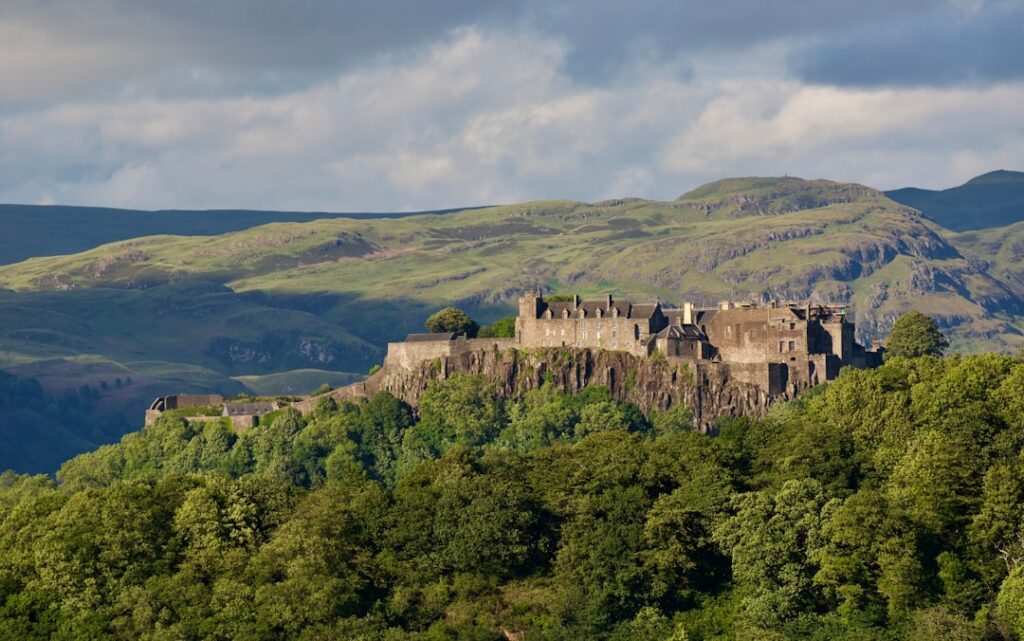
When visitors explore the magnificent Renaissance interiors of Stirling Castle today, they’re witnessing a remarkable chapter in the cultural exchange between Scotland and France that transformed one of Scotland’s most important fortresses into a palace worthy of European royalty.
In the early 16th century, King James V of Scotland embarked on an ambitious project to rebuild Stirling Castle’s royal apartments. Rather than looking to England for inspiration, the Scottish king turned his gaze firmly toward France—and specifically to Paris and the Loire Valley, where he had traveled from September 1536 to January 1537 before his marriage to Madeleine of Valois, daughter of King Francis I of France.
James V married Madeleine at Notre-Dame de Paris in January 1537, though the young princess died shortly after arriving in Scotland. His second marriage, to another French noblewoman, Mary of Guise, further cemented the Franco-Scottish alliance known as the “Auld Alliance.” These French connections profoundly influenced the king’s architectural vision for Stirling.
French Craftsmen at a Scottish Fortress
To realize his Renaissance dream, James V recruited French master masons and craftsmen. These artisans brought with them the latest Continental techniques and decorative styles that were transforming French royal residences.
The result was the stunning Palace Block at Stirling Castle, completed in the 1540s. Its exterior features elaborate stone carvings and classical proportions that reflected Renaissance ideals. The famous Stirling Heads—a collection of carved oak medallions that once decorated the king’s presence chamber ceiling—were based on French models, and some may have been made by a French carver.
A French Queen’s Scottish Home
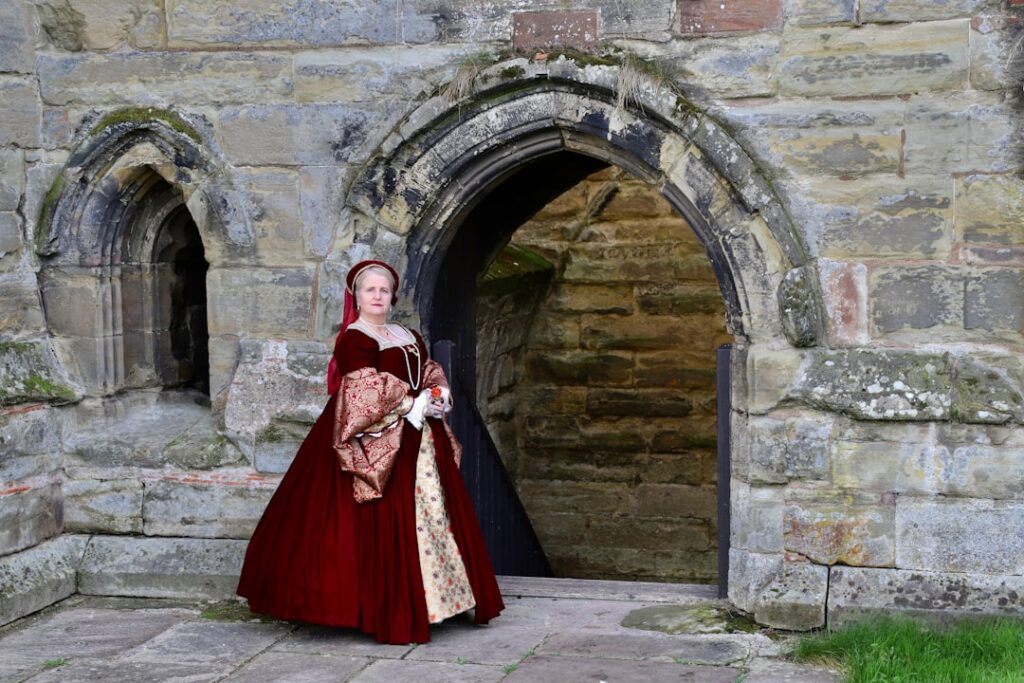
Mary of Guise, James V’s French widow, continued to shape Stirling Castle after her husband’s death in 1542. As Queen Regent for her infant daughter Mary, Queen of Scots, she maintained the castle’s French character, employing French servants and advisors. The young Mary herself would be sent to France at age five, spending her formative years at the French court before returning to Scotland—bringing yet more French tastes and fashions back to Stirling.
A Lasting Legacy
Today, historians recognize Stirling Castle as one of Scotland’s finest examples of Renaissance architecture, and its debt to French influence is undeniable. The castle stands as a physical testament to the Auld Alliance, the centuries-long bond between Scotland and France that shaped Scottish culture, politics, and architecture.
For visitors to Paris interested in tracing these connections, the story comes full circle: the city that inspired Scottish kings to transform their fortress also witnessed the royal weddings, diplomatic negotiations, and cultural exchanges that made such transformation possible. The stones of Stirling may be Scottish, but their Renaissance beauty speaks with a distinctly French accent.
Tours & experiences in Paris


Powered by Viator. Some links are affiliate links — we may earn a small commission at no extra cost to you.