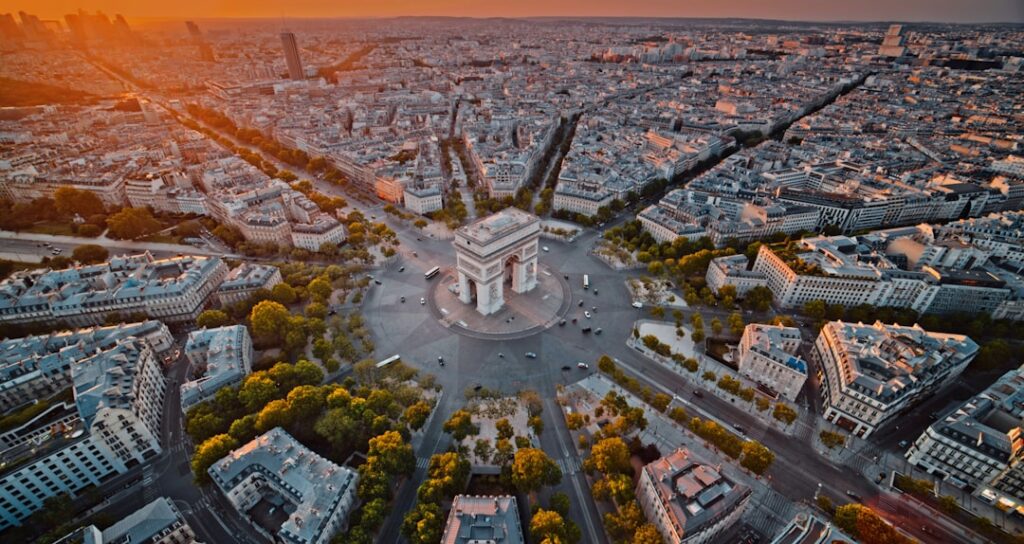
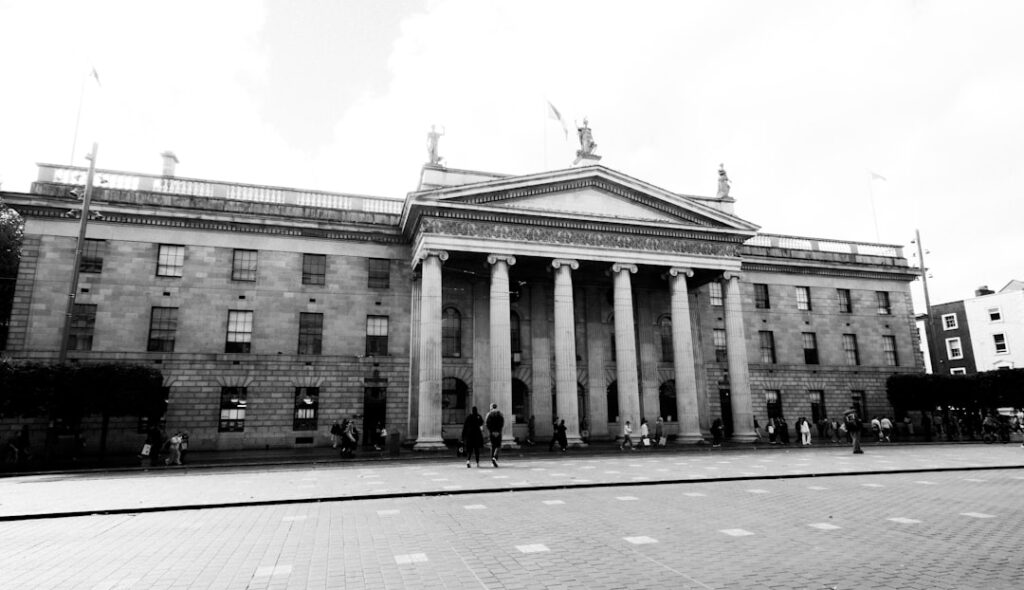
Long before the tricolour flew over Dublin’s General Post Office, the green, white and orange of Irish republicanism was conceived in Paris. The city that gave the world liberté, égalité, fraternité also provided sanctuary and inspiration to generations of Irish revolutionaries throughout the 19th and early 20th centuries.
The connection between Paris and Irish nationalism runs deep through the 19th and early 20th centuries. After the failed Young Ireland rebellion of 1848, Paris became a crucial refuge for Irish political exiles. The city’s tradition of revolutionary thought, its distance from British authorities, and its community of international radicals made it an ideal base for Irish republicans to regroup and organise.
Among the most significant Paris exiles was James Stephens, founder of the Irish Republican Brotherhood (the Fenians). After the failed 1848 Young Ireland rebellion, Stephens fled to Paris, where he lived in exile. He later returned to Paris again in the late 1860s after his deposition from Fenian leadership, maintaining contact with Irish activists and helping to keep the flame of republicanism alive during difficult times.
The Paris influence on Irish independence extended beyond mere sanctuary. The very symbols of Irish nationalism bear Parisian fingerprints. When the Irish tricolour was first unfurled in 1848 by Thomas Francis Meagher, he explicitly modelled it on the French tricolour, with green representing Irish Catholics, orange representing Irish Protestants, and white representing the peace between them—a direct echo of French revolutionary ideals.
Paris served as a meeting ground where Irish revolutionaries could connect with international socialist and republican movements. The ideas of French republicanism, absorbed in Parisian cafés and meeting halls, would help shape Irish political philosophy in the years leading up to the Easter Rising of 1916, the pivotal event that set Ireland on its path to independence.
One of the most colourful connections involves Maud Gonne, the revolutionary and actress who became the muse of poet W.B. Yeats. Gonne lived extensively in Paris, where she moved in radical political circles and used the city as a base for her anti-British activities, working tirelessly to build French support for Irish independence.
The cultural exchange flowed both ways. Samuel Beckett, born in Dublin, would later make Paris his permanent home, writing in both English and French. James Joyce spent crucial years in Paris, where he completed “Ulysses,” his masterwork of Dublin life, in the city that offered him the artistic freedom he couldn’t find at home.
For visitors to Paris interested in this lesser-known chapter of the city’s history, the Latin Quarter—long a haven for political exiles and radical thinkers—offers the best sense of the world these Irish revolutionaries inhabited. The same streets that sheltered Irish rebels also hosted revolutionaries from across Europe, all drawn to Paris’s enduring promise of liberty and its tradition of challenging established power.
Tours & experiences in Paris


Powered by Viator. Some links are affiliate links — we may earn a small commission at no extra cost to you.