
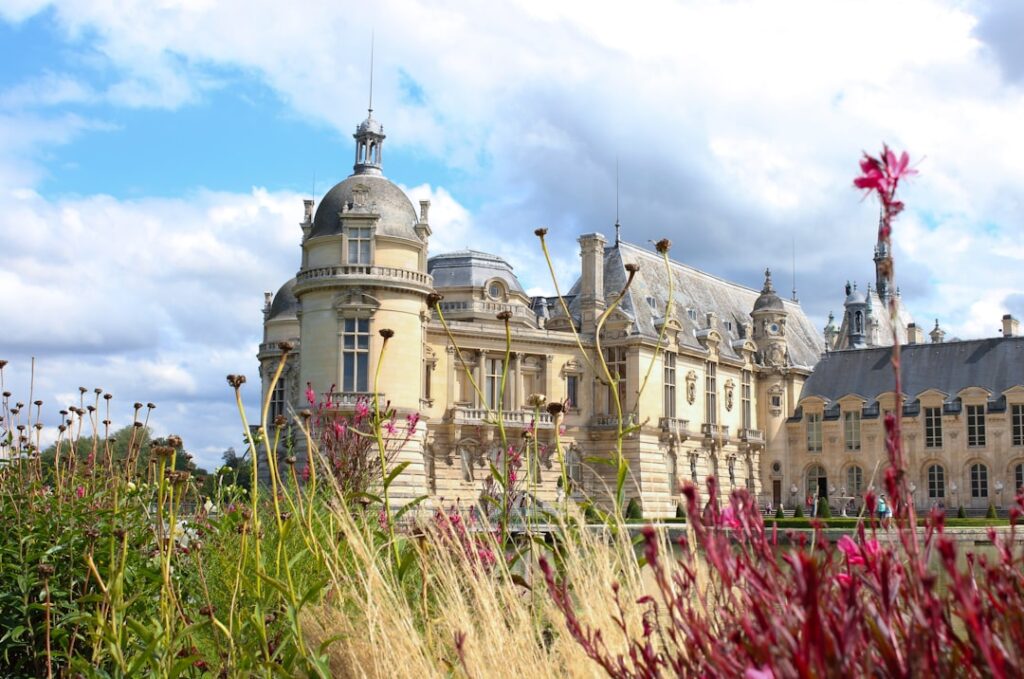
While most travelers flock to Versailles, savvy visitors head north to Chantilly, a graceful estate that rivals the Sun King’s palace for beauty but delivers a far more intimate experience. This Renaissance château sits surrounded by formal gardens, dense forest, and the most magnificent horse stables in Europe. Best of all, you can see it all in a leisurely day trip from Paris.
The town of Chantilly lies just 25 miles north of the capital, easily reached by train from Gare du Nord. The journey takes 35 to 40 minutes, and trains run frequently throughout the day. From Chantilly-Gouvieux station, it’s a pleasant 20-minute walk through the forest to the château, or you can catch the free shuttle bus that runs on weekends and holidays.
The Château and Its Treasures
The Château de Chantilly looks like something from a fairy tale, with its creamy stone towers reflected in a moat fed by natural springs. The current structure dates primarily from the 19th century, when the Duke of Aumale rebuilt the Grand Château after Revolutionary destruction. But it’s what he put inside that makes this place extraordinary.
The Musée Condé, housed within the château, contains the second-largest collection of antique paintings in France after the Louvre. You’ll find works by Raphael, Botticelli, Poussin, and Delacroix, displayed exactly as the Duke arranged them in ornate galleries. The jewel of the collection is the Très Riches Heures du Duc de Berry, an illuminated medieval manuscript considered one of the most beautiful books ever created. The pages are so fragile that only facsimiles are displayed, but even these reproductions take your breath away.
Don’t rush through the apartments. The library holds 13,000 volumes, and the private rooms reveal how French aristocracy lived in the belle époque. Unlike at Versailles, where you’re herded through roped-off corridors, Chantilly feels personal and unhurried.
The Great Stables and Living Horse Museum
The Grandes Écuries — the Great Stables — might be the most beautiful building ever constructed for horses. Louis-Henri de Bourbon built this classical masterpiece in the 18th century, allegedly because he believed he’d be reincarnated as a horse and wanted suitable accommodations. The building could house 240 horses and 500 hunting dogs.
Today, the stables hold the Living Horse Museum, where you can learn about the history of horsemanship and watch equestrian demonstrations. The shows run most afternoons and showcase classical dressage, carriage driving, and jumping. Even if you’re not particularly interested in horses, the architecture alone justifies the visit — the central dome soars overhead like a cathedral dedicated to equine elegance.
Gardens, Forest, and the Hamlet
André Le Nôtre, who designed the gardens at Versailles, also worked his magic at Chantilly. The formal French gardens stretch out from the château in geometric perfection, with fountains, parterres, and perfectly clipped hedges. Beyond them lies the Anglo-Chinese Garden, designed in the romantic English style with winding paths, a pagoda, and an island temple.
Marie Antoinette’s famous hamlet at Versailles was actually inspired by the Hameau de Chantilly, built earlier by the Prince de Condé. This charming mock village includes thatched cottages, a mill, and a dairy where the aristocracy played at farming. It’s quieter than its more famous counterpart and feels genuinely peaceful beside the carp-filled ponds.
The estate is surrounded by the Forest of Chantilly, with miles of trails perfect for walking. If you have time, rent a bike in town and explore the woodland paths that radiate from the château grounds.
Crème Chantilly and Practical Details
Before leaving, stop at the château’s tearoom for a sweet reminder that this estate gave the world crème Chantilly — what we call whipped cream. The cream was supposedly invented here in the 17th century by the chef Vatel, and it’s been served at the château ever since. Order a bowl of strawberries with a generous dollop of the real thing.
The château is open daily except Tuesdays from 10 a.m. to 5 p.m. in winter, until 6 p.m. in summer. A combined ticket covering the château, gardens, and stables costs less than two Paris museum admissions. Come on a weekday if possible — weekends draw French families, especially to the horse shows.
The entire estate is walkable, but wear comfortable shoes. You’ll cover several miles between the château, stables, and gardens. Plan for four to five hours to see everything properly, or six if you want to explore the forest or linger over lunch.
In warm weather, pack a picnic to enjoy in the Anglo-Chinese Garden. In cooler months, the town of Chantilly has several good restaurants within walking distance of the château, including traditional bistros serving game from the surrounding forest.
For the best photos, arrive when the château opens. Morning light catches the towers beautifully, and you’ll have the galleries nearly to yourself before the afternoon crowds arrive.
Want more insider tips for exploring Paris and beyond? Subscribe to the Love Paris newsletter and get one short story delivered to your inbox each day — the kind of details that turn a good trip into an unforgettable one.
Tours & experiences in Paris


Powered by Viator. Some links are affiliate links — we may earn a small commission at no extra cost to you.