
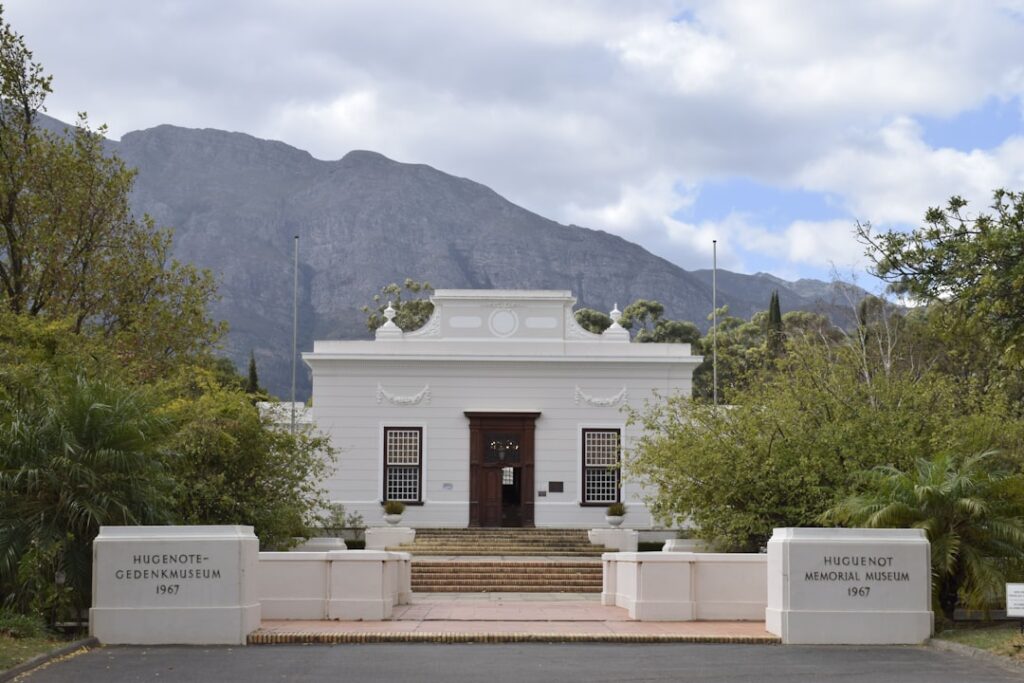
In the winelands east of Cape Town, the town of Franschhoek—literally “French Corner”—preserves the memory of French Huguenots who fled religious persecution and helped build South African society.
When Louis XIV revoked the Edict of Nantes in 1685, ending religious tolerance in France, thousands of Protestant Huguenots fled from regions across France including Flanders, Saintonge, Dauphiné, Languedoc, and Provence. While many sought refuge in England, the Netherlands, and Germany, approximately 200 French Huguenots were granted passage by the Dutch East India Company to the Cape of Good Hope, with the bulk arriving between 1688 and 1689.
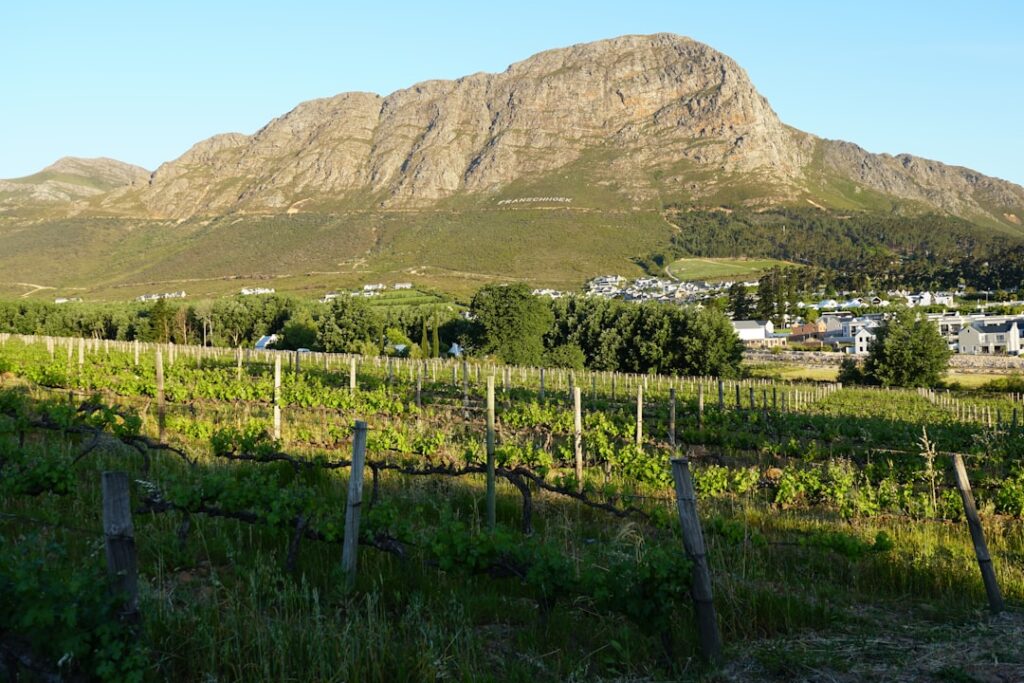
These French refugees brought with them viticulture expertise that would transform the Cape. They settled in areas now known as Franschhoek and Stellenbosch, establishing the wine industry that remains central to South African identity today. The surnames they carried from across France—Du Toit, Joubert, Marais, Du Plessis, Malherbe—are now among the most common Afrikaner family names.
The French Huguenot influence intersected with other communities at the Cape in fascinating ways. While the Cape Malay community was being formed by enslaved people and political exiles from the Dutch East Indies, the French Protestants were establishing themselves as free burghers. Both groups, though from vastly different circumstances, contributed to the complex cultural tapestry of Cape Town and the broader Cape Colony.
The French Legacy in the Winelands
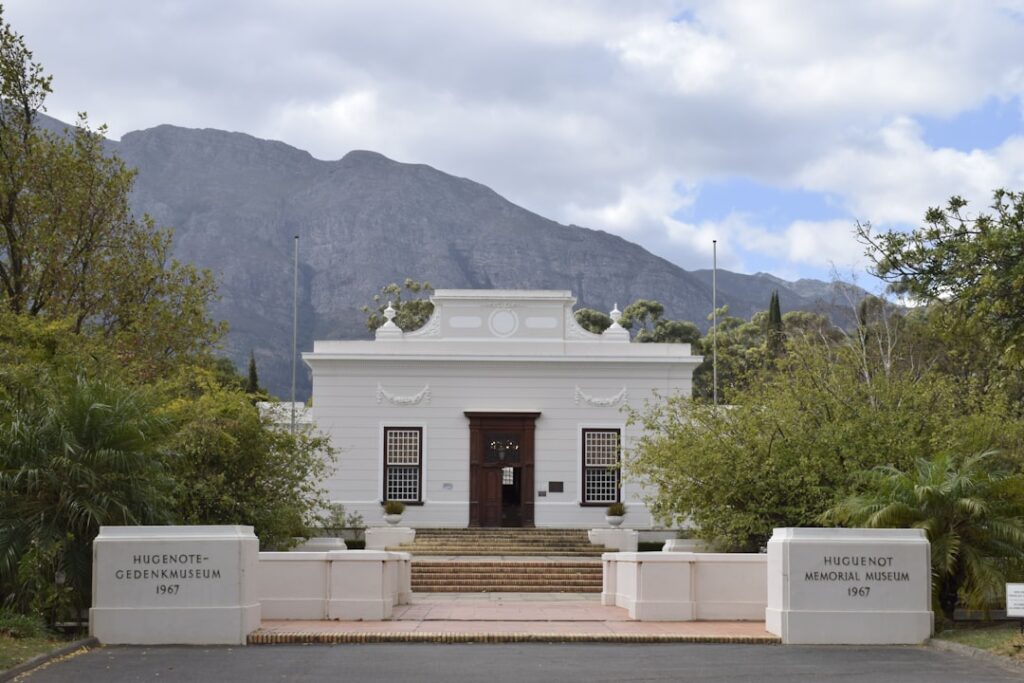
The architectural and cultural contributions of these French refugees are most visible in the winelands. The Huguenot Memorial Museum and Monument in Franschhoek preserve documents and artifacts that trace lineages back to various French regions.
Many of these Huguenots had been prosperous artisans, merchants, and professionals in France. The revocation of the Edict forced them to abandon homes, businesses, and workshops, carrying only what they could transport on the perilous journey to the Cape.
A Living Connection
Today, the Huguenot Society of South Africa maintains detailed genealogical records linking thousands of South Africans to their French ancestors. The organization houses archives containing passenger lists, marriage records, and property deeds that document the exodus from France and settlement at the Cape.
The annual Franschhoek Bastille Festival, held each July, celebrates this enduring French connection with wine tastings, French cuisine, and cultural performances. It serves as a reminder that France’s loss in 1685—when it expelled some of its most skilled citizens—became South Africa’s gain, shaping the nation’s agricultural, architectural, and cultural landscape for centuries to come.
Tours & experiences in Paris


Powered by Viator. Some links are affiliate links — we may earn a small commission at no extra cost to you.