
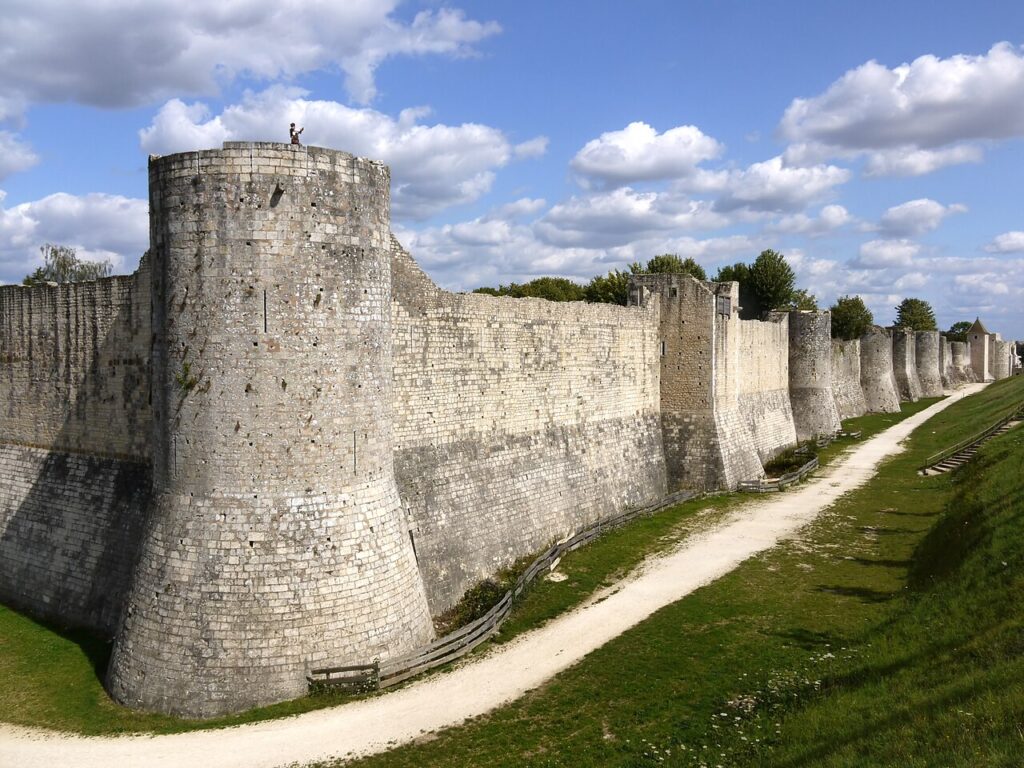
While most visitors head to Versailles or Giverny, the medieval town of Provins offers something completely different: a remarkably preserved 12th-century fortified city perched on a hill in the Île-de-France countryside. This UNESCO World Heritage Site sits just 90 minutes southeast of Paris by train, yet feels like stepping back eight centuries.
Provins was once one of the great trading centers of medieval Europe, hosting massive champagne fairs that drew merchants from across the continent. Today, its ramparts, towers, and underground passages remain largely intact, offering one of France’s most authentic medieval experiences without the tourist crowds that pack other destinations.
The Upper Town: Ramparts and Towers
The Ville Haute, or upper town, is where you’ll spend most of your time. Start at the Tour César, a 12th-century octagonal keep that dominates the skyline. Climb the 60 steps to the top for views over the surrounding wheat fields and vineyards that still look much as they did in medieval times. The tower’s walls are four meters thick in places, a testament to its military importance.
From there, walk along the three kilometers of medieval ramparts that still encircle the upper town. The best-preserved section runs from the Porte Saint-Jean to the Tour aux Engins, with walkways along the top offering perspectives on medieval defensive architecture. Unlike reconstructed sites, these walls are the real thing, built between the 11th and 13th centuries.
Stop at the Grange aux Dîmes, a 13th-century tithe barn where merchants stored goods during the famous fairs. The vaulted stone rooms now house exhibits on medieval commerce, including reproductions of goods traded here: wool from England, leather from Spain, silk from Italy.
Underground Provins
Beneath the upper town lies a network of underground galleries that few visitors expect. The Souterrains de Provins extend for several kilometers under the medieval streets, though only about 300 meters are open to visitors. These aren’t natural caves but hand-carved passages from the 12th and 13th centuries.
The exact purpose remains debated—theories range from storage cellars to defensive tunnels to wool workshops—but walking through the cool, vaulted chambers offers a tangible connection to medieval life. Some passages feature carved markings left by stonemasons 800 years ago. The temperature stays around 10°C year-round, so bring a jacket even in summer.
Practical Details: Getting There and Around
Direct trains run from Paris Gare de l’Est to Provins roughly every hour, taking between 80 and 90 minutes. Buy tickets at the station or online through SNCF—no advance booking needed for this regional route, though weekend trains can fill up in summer.
The train station sits in the lower town, about a 15-minute walk (uphill) to the medieval upper town. Follow the signs or take the small tourist train that shuttles between the two from April through October. Save your energy for exploring the ramparts.
Entry to major sites (Tour César, ramparts, underground passages) is covered by a combined ticket that costs less than visiting each separately. Buy it at any of the main monuments. The town is compact enough to see in a half day, but a full day allows for a leisurely lunch and time to wander the cobbled lanes without rushing.
Visit between April and October when all sites are open and the town hosts medieval demonstrations and falconry shows on weekends. Summer means crowds, but nothing compared to Versailles. Off-season visits have their own appeal—you’ll often have the ramparts nearly to yourself, though some sites operate on reduced schedules.
Where to Eat
The upper town has several restaurants clustered around Place du Châtel. La Table Saint-Jean serves solid French classics in a 13th-century building with exposed beams—try the brie de Meaux, produced just down the road and served here since medieval times. For something simpler, grab a crêpe from one of the stands near the Tour César.
If you’re visiting on a market day (Saturday morning in the upper town), pick up supplies for a picnic along the ramparts: local cheeses, bread from the bakeries on Rue Saint-Jean, and seasonal fruit from the Île-de-France farms that supply the stalls.
Pack water and snacks if you’re visiting between November and March, when some restaurants close or operate limited hours. The few open cafés near the tourist office will do in a pinch, but options thin out off-season.
Provins makes an excellent alternative to the standard Paris day trip circuit. You’ll encounter more French families than international tour groups, and the medieval atmosphere feels remarkably authentic—no Disneyfied recreations, just stone that’s stood for eight centuries. For travelers who’ve already done Versailles or want something beyond the usual château experience, this fortified town delivers.
Want more insider guides to Paris and beyond? Subscribe to the Love Paris newsletter for one short story about the city every day—the neighborhoods, history, and practical tips that help you experience Paris like a local.
Tours & experiences in Paris


Powered by Viator. Some links are affiliate links — we may earn a small commission at no extra cost to you.