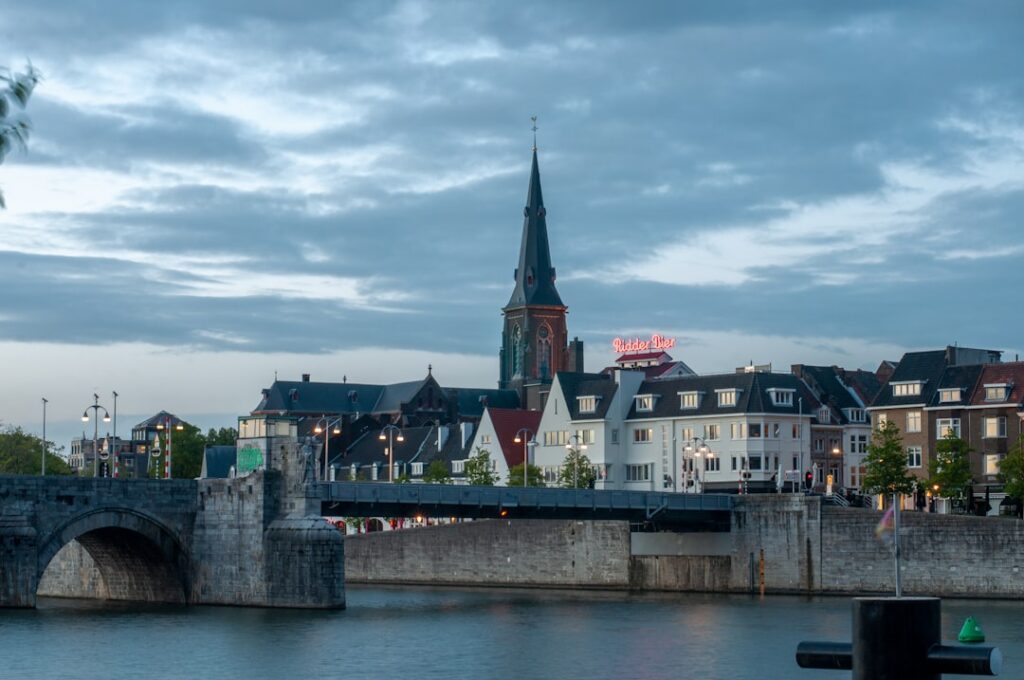
On a cold February day in 1992, representatives from twelve European nations gathered in the Dutch city of Maastricht to sign a treaty that would forever change the continent. The Maastricht Treaty, formally known as the Treaty on European Union, established the European Union as we know it today and paved the way for the euro currency that millions of Europeans—including Parisians—use daily.
For Paris, the Maastricht Treaty represented both a triumph and a transformation. French President François Mitterrand had been one of the treaty’s principal architects, working alongside German Chancellor Helmut Kohl to create a more integrated Europe. The treaty’s provisions reflected French diplomatic priorities: a common currency to rival the dollar, enhanced political cooperation, and the preservation of national identities within a broader European framework.
The choice of Maastricht as the signing location was itself symbolic. This southern Dutch city, with its unique position at the crossroads of the Netherlands, Belgium, and Germany, embodied the European ideal of transcending borders. Its historic centre, with medieval walls and Roman foundations, represented centuries of European cultural exchange—the very heritage the treaty sought to protect and promote.
The French Vision for Europe
France’s relationship with the Maastricht Treaty was complex. While Mitterrand championed the agreement, it faced significant domestic resistance. On September 20, 1992, France held a referendum on ratification, and the result was razor-thin: just 50.8% voted in favour. The debate divided Paris and the nation, with concerns about sovereignty, the franc’s future, and French identity dominating café conversations and newspaper columns.
Yet the treaty’s passage marked a pivotal moment in French European policy. Paris had successfully negotiated key protections for French interests, including provisions for cultural exception—allowing France to protect its film industry and cultural products from pure market forces—and maintaining French as an official EU language alongside English and German.
The Euro and Parisian Life
Perhaps no aspect of the Maastricht Treaty has touched Parisian daily life more directly than the euro. When the currency launched in 1999 for electronic transactions and arrived in physical form in 2002, it replaced the franc that had been part of French identity since 1360. The Banque de France, that imposing institution in the 1st arrondissement, saw its role transformed as monetary policy shifted to the European Central Bank in Frankfurt.
Today, visitors to Paris use the same currency they might have used in Maastricht that morning, a seamless experience that would have been unimaginable before 1992. The euro has become so integrated into Parisian commerce that younger generations barely remember the franc-denominated price tags in shop windows or the complex exchange calculations that once accompanied every international transaction.
A Continuing Partnership
The connection between Paris and Maastricht extends beyond that historic February signing. Both cities continue to champion European integration, hosting conferences, cultural exchanges, and academic programmes focused on European unity. The treaty signed in that Dutch city fundamentally reshaped how Parisians travel, trade, and think about their place in Europe.
As debates about European integration continue—intensified by Brexit, migration challenges, and economic pressures—the Maastricht Treaty remains a touchstone. For Paris, it represents a moment when French diplomatic vision helped create the institutional framework that still governs much of European life, linking the City of Light permanently to a modest Dutch city where Europe’s future was reimagined.
Tours & experiences in Paris


Powered by Viator. Some links are affiliate links — we may earn a small commission at no extra cost to you.