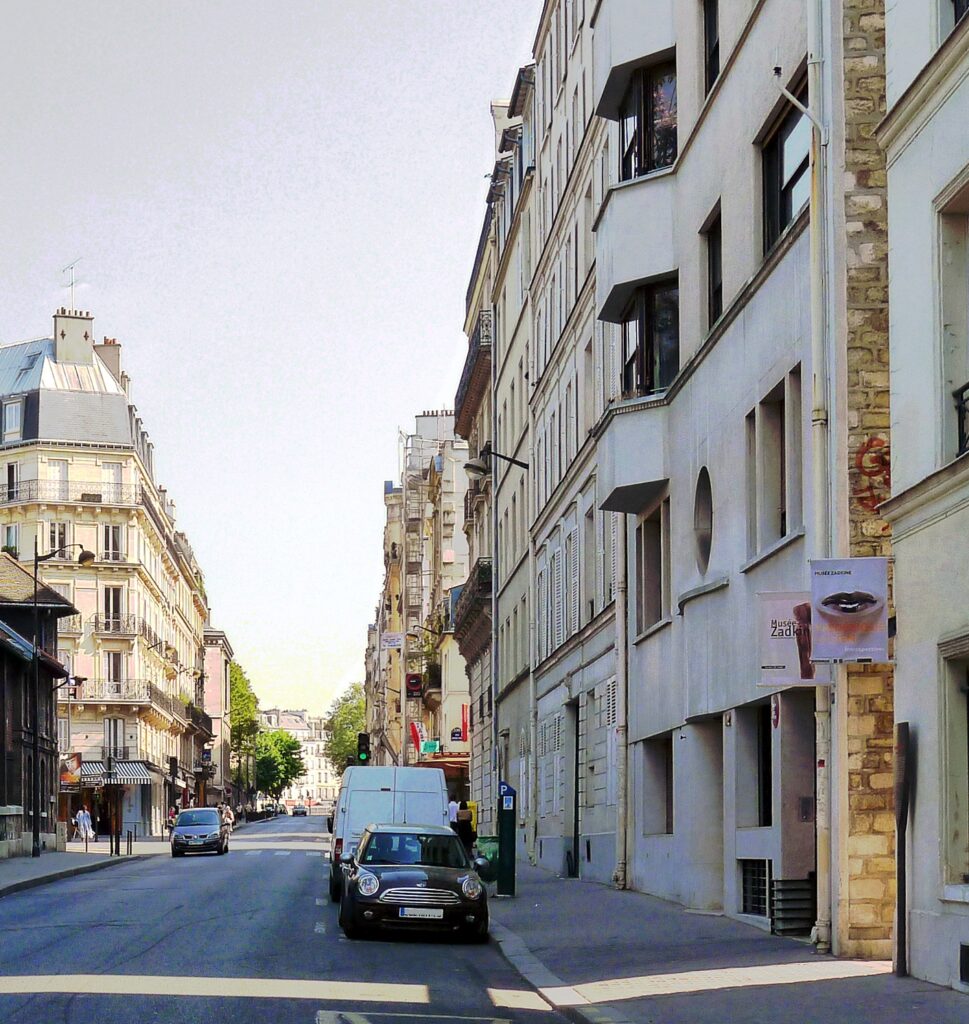
Most visitors to Montparnasse rush past the quiet stretch of Rue d’Assas between the Luxembourg Gardens and the Vavin métro, unaware that one of Paris’s most intimate artist museums sits behind a modest garden gate at number 100 bis. The Musée Zadkine occupies the home and studio where Russian-born sculptor Ossip Zadkine lived from 1928 until his death in 1967, and the space is still a quiet, small-scale glimpse into the working life of a twentieth-century sculptor.
The Studio and Garden
The museum’s greatest strength is its authenticity. You enter through a small garden where bronze and stone figures stand among the greenery. Inside, his sculptures fill the house and the studio where he made them.
Zadkine carved a great deal in wood and stone as well as working in bronze, and seeing the different materials side by side in the rooms where he worked makes his way of making things easy to follow.
The Paris most visitors miss
Our free 8-page PDF guide: 25 places, from Galerie Vivienne's 1880 mosaic floor to Canal Saint-Martin's locks, each linked to its official site.
Unlike larger Paris museums, you’ll rarely encounter crowds here. On weekday mornings, you may have entire rooms to yourself.
Zadkine’s Paris Years
Born in Vitebsk (now Belarus) in 1888, Zadkine arrived in Paris in 1910 and quickly became part of the Montparnasse art scene. He knew Picasso, Modigliani, and Apollinaire, and his early work shows the influence of Cubism adapted to three-dimensional form.
His most famous sculpture stands not in Paris but in Rotterdam: The Destroyed City, a massive bronze figure commemorating the 1940 bombing of that port. It shows how Zadkine turned the human figure into an image of suffering and resilience.
Throughout his career, Zadkine drew on classical mythology and biblical themes, but he filtered them through a modernist sensibility. His figures are angular, often elongated, with hollowed-out spaces that create dramatic plays of light and shadow.
Visiting Practical Details
The museum sits in the 6th arrondissement, a five-minute walk from either the Vavin or Notre-Dame-des-Champs métro stations. The Luxembourg Gardens are a few minutes’ walk away, making this an easy addition to a Left Bank walking day in historic Montparnasse.
The Musée Zadkine is smaller than the Rodin Museum or Musée Bourdelle, so plan for about an hour to ninety minutes. The museum’s size works in its favor: you can see everything without rushing, and the intimate scale makes you feel like a guest in the artist’s home rather than a tourist checking off a landmark.
Check the official Musée Zadkine site before your visit for current opening information. The museum occasionally hosts temporary exhibitions focusing on Zadkine’s contemporaries or his influence on later sculptors.
Why Zadkine Matters
In a city filled with house-museums dedicated to writers and painters, sculptor museums are relatively rare. The Musée Zadkine, along with the Musée Bourdelle and the Musée Rodin, gives you direct access to the physical process of making three-dimensional art. You see the materials sculptors worked with, the tools they used, and the spaces where they made creative decisions.
Zadkine bridged several artistic movements—he absorbed Cubism’s geometry, maintained connections to classical forms, and pushed toward abstraction without abandoning the human figure entirely. Walking through his studio, you trace these developments sculpture by sculpture. The garden setting adds another dimension: sculptures meant to be seen outdoors actually are outdoors, changing with the light and seasons just as the artist intended.
For anyone interested in twentieth-century art beyond the famous names, or for those who want to escape the crowds at larger museums, the Musée Zadkine offers a quiet, authentic encounter with a significant artist’s work and world.
Tours & experiences in Paris


Powered by Viator. Some links are affiliate links — we may earn a small commission at no extra cost to you.