On a cold February day in 1992, the foreign ministers of twelve European nations gathered in a historic Dutch city to sign a treaty that would fundamentally reshape the continent. The Maastricht Treaty, signed in the provincial capital of Limburg, created the European Union as we know it today—and France, represented by Foreign Minister Roland Dumas, played a pivotal role in bringing this vision to life.
The choice of Maastricht was no accident. This southern Dutch city, with its unique position at the crossroads of the Netherlands, Belgium, and Germany, symbolized the very essence of European integration. For France, the treaty represented the culmination of decades of diplomatic effort, dating back to the Schuman Declaration of 1950 and the Treaty of Rome in 1957.
France’s Vision for Europe
French President François Mitterrand and German Chancellor Helmut Kohl had worked closely together to draft the framework for the treaty. France saw the agreement as essential for maintaining European stability following German reunification in 1990. The treaty established the three-pillar structure of the European Union, created a pathway to a single currency—the euro—and introduced the concept of European citizenship.
The negotiations leading up to the Maastricht summit were intense. French diplomats pushed hard for monetary union, seeing it as a way to anchor Germany more firmly within European institutions. The Banque de France would eventually cede significant authority to the new European Central Bank, a decision that sparked considerable debate in Paris.
The Dutch Connection
The relationship between Paris and the Netherlands has long been intertwined with European cooperation. During the Maastricht negotiations, Dutch Prime Minister Ruud Lubbers served as a crucial mediator between French and British positions. The Netherlands held the rotating EU presidency during the final negotiations, and Dutch diplomats worked tirelessly to bridge differences between member states.
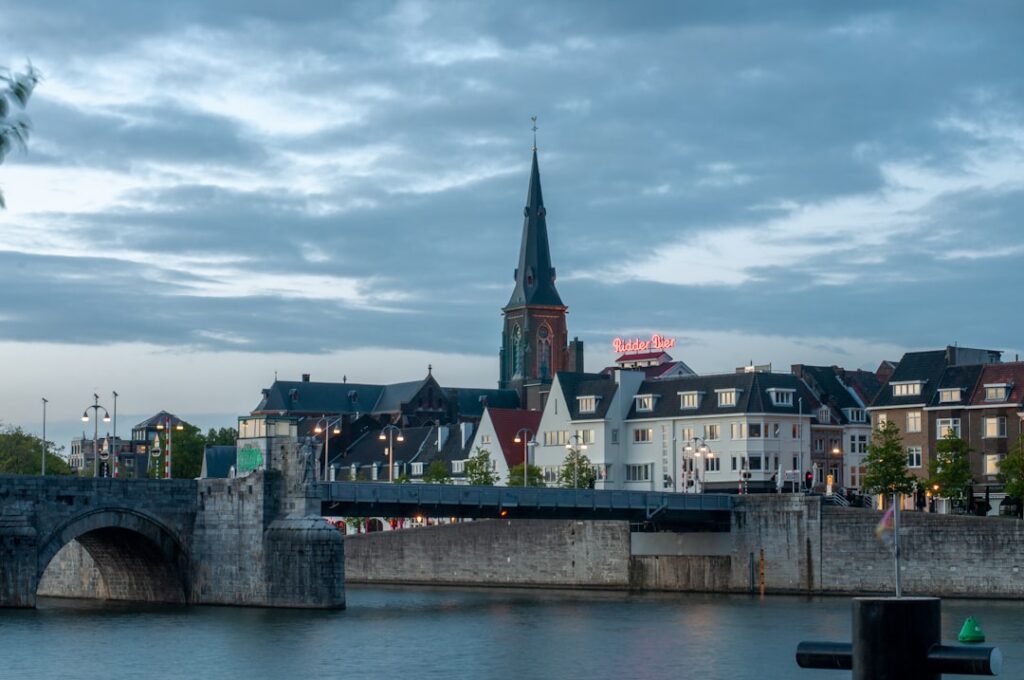
The Limburg region has a distinctive culture and history, quite different from the rest of the Netherlands. The area’s Catholic heritage and unique characteristics reflect centuries of movement across these borderlands. Many families in the region carry Dutch surnames from Limburg that reflect this complex history.
A Lasting Legacy
The Maastricht Treaty was ratified by France in September 1992, though only narrowly—with approximately 51% voting in favor in a referendum that revealed deep divisions about European integration. Despite this ambivalence, France has remained at the heart of the European project that was formalized in that Dutch city.
Today, the building where the treaty was signed—the Gouvernement aan de Maas—stands as a monument to European cooperation. The city has become an important site for those interested in the history of European integration.
The Paris-Maastricht connection reminds us that European integration was never inevitable—it was built through patient diplomacy, compromise, and a shared vision for peace and prosperity. The treaty signed in that southern Dutch city created institutions that now touch the daily lives of over 440 million Europeans, from the euro in French wallets to the freedom to cross borders without passport checks.
More than three decades later, as Europe faces new challenges, the spirit of Maastricht—of nations coming together to forge common solutions—remains as relevant as ever.
Tours & experiences in Paris


Powered by Viator. Some links are affiliate links — we may earn a small commission at no extra cost to you.