
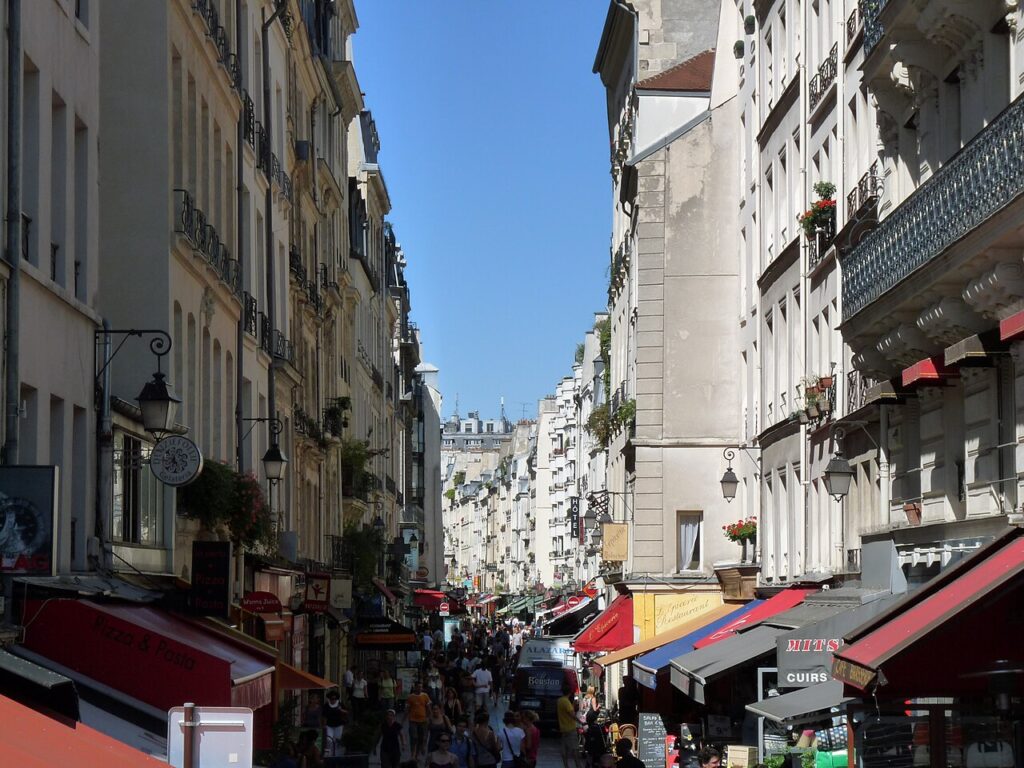
Tucked between Les Halles and the Grands Boulevards, Rue Montorgueil is what Parisians call a true market street—a pedestrian lane lined with food shops, produce stands, fishmongers, and bakeries that have served the neighborhood for generations. Unlike tourist-heavy streets, Rue Montorgueil remains a working market where locals do their daily shopping, making it one of the best places in Paris to experience authentic food culture.
This historic street dates back to the 12th century, when it was the main route from central Paris to the village of Montmartre. Today, it stretches from Rue Réaumur to Rue Étienne Marcel in the 2nd arrondissement, and every morning it comes alive with vendors setting up displays of oysters on ice, wheels of aged Comté, and baskets overflowing with seasonal vegetables.
The Essential Shops and Stands
Start your visit at Stohrer, Paris’s oldest patisserie, founded in 1730 by Louis XV’s pastry chef. The baba au rhum was invented here, and the jewel-like fruit tarts in the window are worth the inevitable queue. Go early—by mid-morning, the best selections are gone.
A few doors down, Fromagerie Alléosse is where serious cheese lovers shop. The staff will guide you through regional varieties and offer samples of aged Beaufort, creamy Saint-Marcellin, or pungent Époisses. Ask them to suggest a selection that’s ripe for tonight—they’ll wrap each cheese individually with notes on serving order.
For seafood, stop at one of the outdoor stands where fishmongers shuck oysters to order. A dozen oysters with a glass of Muscadet, standing at a small table on the sidewalk, is a quintessential Montorgueil experience. The oysters come from Brittany and Normandy, delivered fresh each morning.
Pâtisserie Gâteaux Thoumieux offers a modern take on French classics—their Paris-Brest and seasonal fruit tarts are beautifully executed. Meanwhile, La Fermette is the go-to for farm-fresh butter, eggs, and poultry from small producers in the Île-de-France region.
Where to Eat and Drink
The street is lined with cafés and bistros, many with outdoor seating that fills up quickly on sunny days. Le Comptoir de la Gastronomie specializes in duck and foie gras—their cassoulet is excellent, and you can buy tins of duck confit to take home. For a classic bistro meal, try Au Rocher de Cancale, named after the Breton town famous for oysters. The zinc bar, vintage tiles, and handwritten menus feel unchanged since the 1950s.
L’Escargot Montorgueil, with its ornate Belle Époque facade, has been serving snails since 1832. Even if you’re not dining, the exterior alone is worth admiring—golden snails crawl up the building’s front, a landmark on the street.
For coffee, skip the tourist traps and head to Café Verlet, a family-run roaster since 1880. They source beans from around the world, roast them on-site, and serve expertly pulled espresso. The shop also sells bags of beans and brewing equipment.
Best Times to Visit and How to Get There
Rue Montorgueil is at its liveliest Tuesday through Saturday mornings, when vendors are fully stocked and locals are out doing their shopping. Arrive around 9 or 10 a.m. to see the street in full swing. Sunday mornings are quieter but still charming, with a relaxed, neighborhood feel. Most shops close Monday, and many take a midday break from 1 to 3 p.m.
The nearest métro stations are Étienne Marcel (line 4) and Sentier (line 3). From either station, it’s a two-minute walk to the street. If you’re coming from Les Halles, it’s an easy five-minute stroll north.
The street is entirely pedestrian, so bring a comfortable bag for shopping—you’ll want to collect cheese, bread, pastries, and whatever else catches your eye. Plan to spend at least an hour wandering, tasting, and people-watching.
Insider Tips for Shopping Like a Local
Parisians shop Rue Montorgueil with intention. They buy bread daily from their preferred boulangerie, choose vegetables by season, and ask their fromager for advice. Don’t be shy about requesting samples or asking questions—vendors expect it and are usually happy to explain the difference between a Normandy Camembert and one from the Île-de-France.
If you’re assembling a picnic, start with a baguette from Boulangerie Arnaud Delmontel, then add cheese, charcuterie, fruit, and a bottle of wine from one of the neighborhood wine shops. The nearby Square des Innocents or a bench along the Seine make perfect picnic spots.
For a deeper dive into Paris’s food culture and other hidden corners of the city, subscribe to the Love Paris newsletter—one short story a day, delivered to your inbox.
Tours & experiences in Paris


Powered by Viator. Some links are affiliate links — we may earn a small commission at no extra cost to you.