
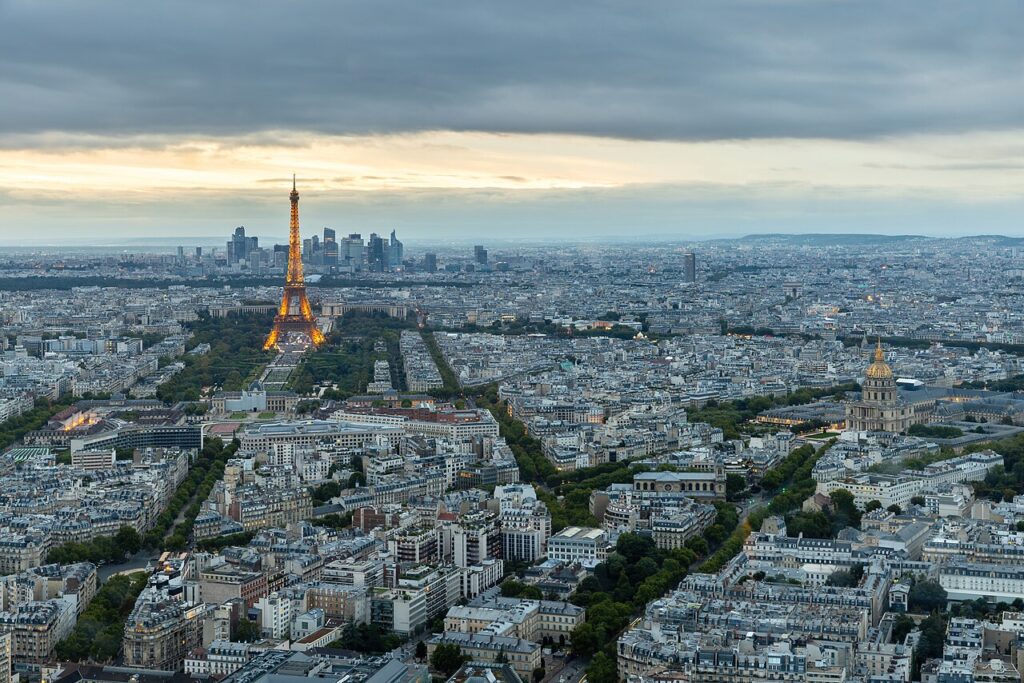
The 7th arrondissement holds more iconic Paris landmarks per square kilometer than any other district in the city. But between the Eiffel Tower, Les Invalides, and the Musée Rodin, you’ll find quiet residential streets, a bustling market corridor, and some of the best small museums most visitors never see. This is monumental Paris with a surprisingly intimate face.
The Landmark Circuit: More Than Photo Ops
Yes, the Eiffel Tower dominates the skyline from nearly every corner of the 7th. But start your day early at the Champ de Mars gardens before the crowds arrive. The northwest lawn offers the classic straight-on view, while the southeast corner near Avenue de la Motte-Picquet gives you the tower framed by Haussmann buildings.
Walk east along the Esplanade des Invalides to Napoleon’s tomb at Les Invalides. Most visitors rush through to see the emperor’s red porphyry sarcophagus, but the Musée de l’Armée upstairs holds stunning medieval armor and an entire wing dedicated to the World Wars. The 17th-century Église du Dôme, where Napoleon rests, rivals any church in Paris for pure architectural drama.
Three blocks south, the Musée Rodin sits in an 18th-century mansion with gardens that might be more beautiful than the sculptures themselves—though The Thinker and The Gates of Hell outdoors make a strong case otherwise. Come on a weekday morning when you can have the rose garden nearly to yourself.
Rue Cler and the Residential Heart
The real soul of the 7th reveals itself on Rue Cler, a pedestrian market street that runs between Avenue de la Motte-Picquet and Rue de Grenelle. This is where the arrondissement’s well-heeled residents do their daily shopping—and where you should too.
Pick up supplies at Fromagerie Quatrehomme for cheese (their aged Comté is exceptional), then cross the street to Maison Mulot for pastries. The outdoor produce stands between Rue du Champ de Mars and Rue de Grenelle operate every day except Monday, and the fishmonger at number 31 has been there for three generations.
The surrounding streets—Rue Saint-Dominique, Rue de Grenelle, Rue du Bac—hold the kind of specialist shops that survive because locals depend on them. Poilâne at 49 Boulevard de Grenelle still bakes their famous sourdough in wood-fired ovens. Debauve & Gallais at 30 Rue des Saints-Pères has been selling chocolate since 1800, when they supplied Marie Antoinette.
Museums You’ll Have to Yourself
Beyond Rodin, the 7th holds several small museums that rarely see crowds. The Musée Maillol at 61 Rue de Grenelle showcases the sculptor’s voluptuous bronzes and hosts excellent temporary exhibitions in an intimate 18th-century townhouse.
The Musée du Quai Branly, Jean Nouvel’s controversial glass-and-garden structure near the Eiffel Tower, houses non-Western art and artifacts in one of Paris’s most striking modern buildings. The rooftop café offers better Eiffel Tower views than most paid viewpoints, and admission is free on the first Sunday of each month.
For a deep dive into French military history beyond Napoleon, the Musée de l’Ordre de la Libération inside Les Invalides tells the story of the French Resistance through personal objects and documents. It’s small, powerful, and almost always empty.
Where to Eat Like a Local
The 7th has more Michelin stars than most French cities, but you don’t need a reservation months in advance to eat well. L’Ami Jean at 27 Rue Malar serves robust Basque-inspired dishes in a perpetually packed dining room—arrive at 7:00 p.m. or 9:30 p.m. for the best chance at a table.
Au Bon Accueil at 14 Rue de Monttessuy sits directly across the Seine from the Eiffel Tower with terrace tables that book up fast in warm weather. The seasonal French menu changes daily and the wine list favors small producers.
For something more casual, Café Constant at 139 Rue Saint-Dominique offers bistro classics at reasonable prices from Christian Constant, who runs three restaurants on the same block. No reservations, so expect a short wait at peak times.
Getting Around and Practical Tips
The 7th is walkable end to end, but metro stations are fewer here than in other central arrondissements. La Tour-Maubourg, Invalides, and Varenne stations (line 8) serve the central area, while Rue du Bac (line 12) connects to the Left Bank antiques district. The 69 bus runs the length of the arrondissement from the Eiffel Tower to the Musée d’Orsay.
Most shops close Sunday and Monday, with Rue Cler’s market being the notable exception (closed Monday only). Museum-pass holders can skip lines at Rodin and the Musée d’Orsay, which sits just across the Seine at the arrondissement’s northern edge.
The streets between Avenue Bosquet and Rue du Bac hold some of Paris’s most expensive real estate, but window shopping the interior design showrooms and antiquaires costs nothing and offers a glimpse into how the other half lives.
Want more stories about Paris’s neighborhoods, hidden museums, and where to eat like a local? Subscribe to the Love Paris newsletter and get one short story a day delivered to your inbox.
Tours & experiences in Paris


Powered by Viator. Some links are affiliate links — we may earn a small commission at no extra cost to you.