
In the early 20th century, the Château de Saumur faced an uncertain future. After decades as military property, the medieval fortress-turned-Renaissance palace had fallen into disrepair. The rescue would come through a Paris-trained architect who brought the capital’s expertise to the Loire Valley.
Lucien Magne, a Paris-based architect and professor at the École des beaux-arts, was contacted to restore the château after the city of Saumur purchased it in 1905-1906. Magne had trained in Paris under his father Auguste-Joseph Magne and architect Honoré Daumet, gaining expertise in historical restoration work.
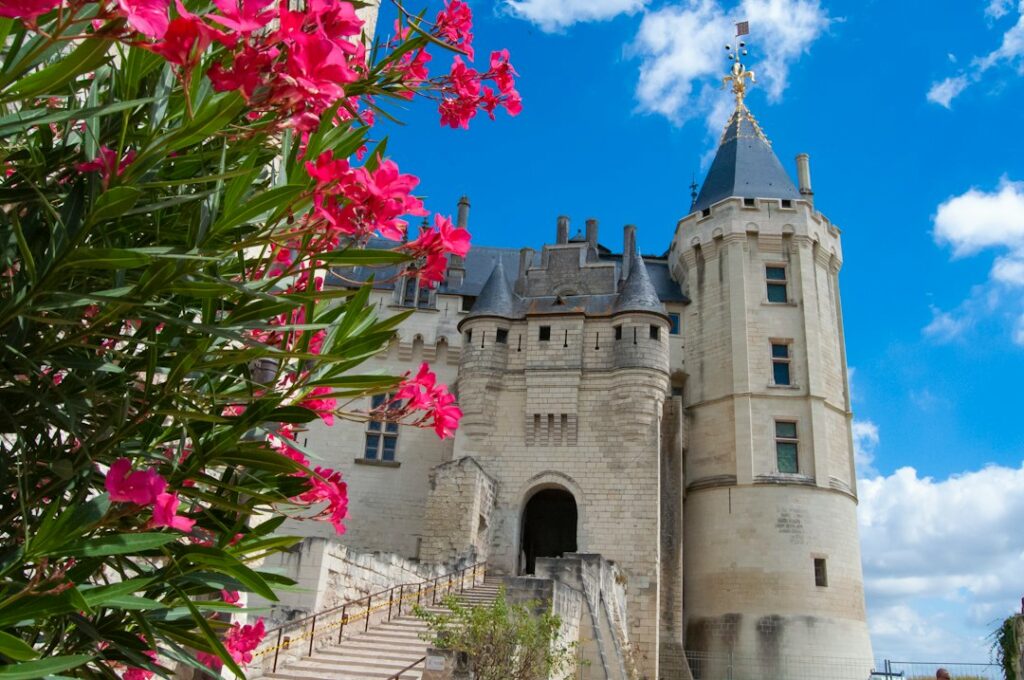
The restoration work, documented between 1909 and 1911, focused on stabilizing the medieval towers and restoring the château’s distinctive silhouette that had made it a Loire Valley landmark. Magne’s approach reflected the Parisian architectural establishment’s growing interest in France’s medieval heritage as a source of national identity.
Capital Expertise for Provincial Heritage
The city of Saumur funded the restoration after purchasing the château from the military, which had vacated the property in 1889. The project represented the application of Parisian architectural training and methods to preserving France’s provincial monuments.
Magne’s work at Saumur included reconstructing portions of the curtain walls, reinforcing the foundations, and restoring the château’s Gothic windows and decorative elements. His restoration decisions drew on his training in the capital’s architectural schools and the methods developed by the French restoration movement.
A Testing Ground for Restoration Techniques
The Saumur project served as an example of how Paris-trained architects applied their expertise to Loire Valley châteaux. Magne’s work was part of a broader pattern during the Third Republic of professionally trained architects from the capital working on provincial monuments.
This dynamic—Parisian-trained experts leading the restoration of provincial monuments—sparked debate that continues today. Critics argued that architects trained in Paris imposed a standardized, idealized vision of medieval France that erased regional variations and authentic historical layers. Defenders countered that the expertise developed in the capital’s schools was essential to save monuments that local authorities lacked the technical knowledge to preserve.
Today, the château stands as a testament to this relationship between Paris-trained expertise and provincial heritage. Visitors admiring its restored towers and walking its ramparts are seeing both a medieval fortress and the results of early 20th-century restoration work guided by methods developed in the capital’s architectural schools.
Tours & experiences in Paris


Powered by Viator. Some links are affiliate links — we may earn a small commission at no extra cost to you.