
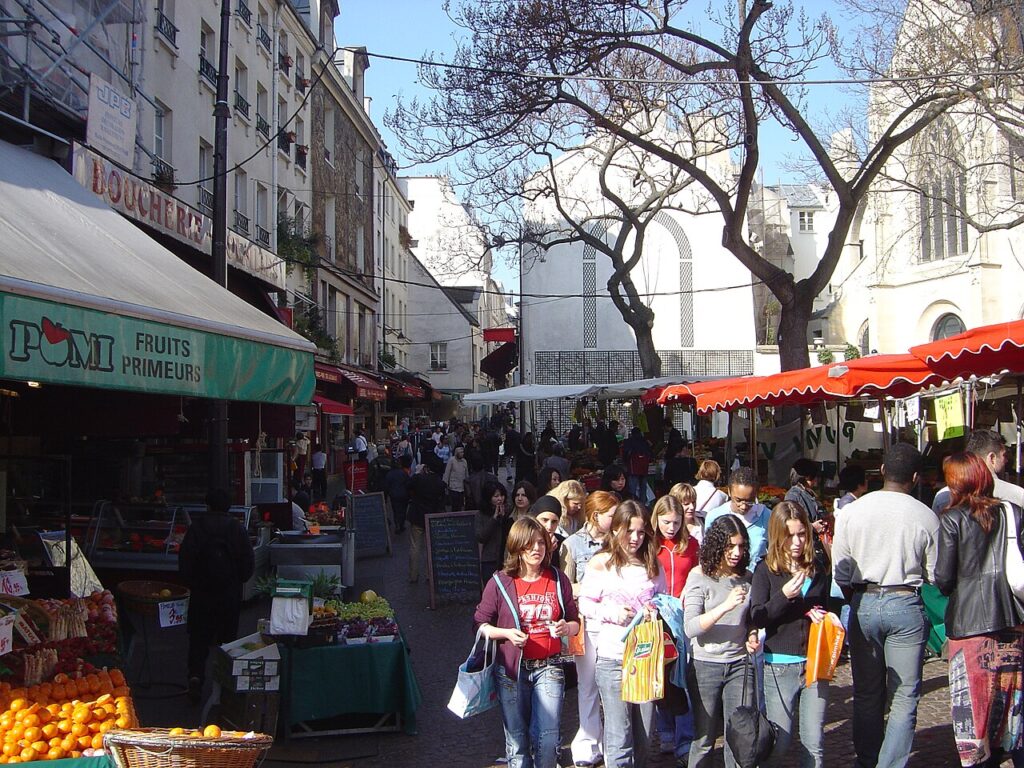
Rue Mouffetard curves down the slope of the Montagne Sainte-Geneviève in the 5th arrondissement like it has for nearly a thousand years. This narrow, cobbled street was once a Roman road leading south from Lutetia, and today it remains one of Paris‘s most authentic food markets—where locals still buy their daily bread, cheese, and vegetables from shopkeepers who remember their names.
The street runs from Place de la Contrescarpe down to the Church of Saint-Médard, and every morning except Monday, the lower section transforms into one of the city’s liveliest open-air markets. Unlike the more tourist-heavy markets near the Seine, Rue Mouffetard belongs to the neighborhood. Come here to shop, not just to photograph.
The Market: Tuesday Through Sunday Morning
The Marché Mouffetard officially runs from Tuesday through Sunday, but the real action happens between 8:30 a.m. and 1 p.m. Arrive before 10 a.m. if you want first pick of the vegetables and a chance to chat with vendors before the crowds arrive.
Start at the top, near Place de la Contrescarpe, and work your way downhill. The permanent shops—fromageries, boulangeries, wine merchants—open their doors, while produce vendors set up their stands directly on the narrow street. You’ll find seasonal French fruits and vegetables piled in careful pyramids: asparagus in spring, cherries in June, wild mushrooms in autumn.
Stop at Fromagerie Androuët at number 134 for cheese aged in their own cellars. The staff will guide you through regional selections and tell you exactly when each wheel will reach peak ripeness. A few doors down, Boulangerie Mouffetard turns out warm baguettes every hour—grab one around 11 a.m. when they’re still hot from the oven.
The Permanent Food Shops Worth Visiting
Between the market days, Rue Mouffetard’s permanent shops keep the street alive with food culture. At number 116, Maison Quatrehomme has been selecting and aging cheese since 1953. Their Comté, aged 24 months, is the standard by which all others should be judged.
For meat, La Ferme de Mouffetard at number 122 sources from small French farms. Ask for their house-made pâté or terrines—the staff will slice samples until you find what you want. During game season (autumn and winter), they carry wild boar, venison, and pheasant.
Across the street, Cave La Bourgogne at number 144 stocks natural wines from small producers. The owner, who’s run the shop for two decades, will steer you toward bottles you won’t find in the supermarkets. Tell him what you’re cooking; he’ll find the right pairing.
Don’t miss the Italian market Chez Paladino at number 123, where three generations have sold imported olive oil, fresh pasta, and prosciutto since 1948. The smell of aged Parmigiano-Reggiano fills the shop.
Where to Eat on Rue Mouffetard
The street itself holds dozens of restaurants, many catering to tourists with mediocre menus. Skip those and head to the side streets where locals actually eat.
Just off Mouffetard on Rue Pot de Fer, Le Pot de Terre serves traditional French cooking without pretension—duck confit, beef bourguignon, and a daily changing plat du jour that reflects what’s fresh at the market. Reserve ahead for dinner.
For a quick lunch, grab a crêpe from one of the stands near Place de la Contrescarpe. The savory buckwheat galettes filled with ham, cheese, and egg make a perfect meal after shopping. Eat standing at the counter, like everyone else.
At the bottom of the street near Saint-Médard, Café Delmas has been serving the neighborhood since the 1950s. The zinc bar, pressed-tin ceiling, and worn wooden tables haven’t changed. Order a café crème and watch the market vendors taking their mid-morning break.
How to Get There and When to Visit
Take métro line 7 to Place Monge or Censier-Daubenton—both stations put you within two minutes of Rue Mouffetard. From Place Monge, walk south on Rue Ortolan, which becomes Rue Mouffetard after you cross Rue de l’Épée de Bois.
Visit on a weekend morning if you want the full market experience with crowds and energy. Come on a Tuesday or Thursday if you prefer a quieter shopping trip where you can actually talk to the vendors. Avoid Monday entirely—most shops close for the day.
The street slopes downhill, so start at the top near Place de la Contrescarpe and let gravity help you. Bring your own shopping bag; the market vendors charge for plastic bags, and regulars all carry their own baskets or totes.
Rue Mouffetard shows you a Paris that still lives by market rhythms and seasonal eating. It’s not a museum of how things used to be—it’s simply how Parisians in this neighborhood continue to shop and eat. Come hungry, bring cash (many vendors don’t take cards), and take your time.
Want more insider guides to Paris’s neighborhoods, markets, and hidden corners? Subscribe to the Love Paris newsletter and get one short story about the city delivered to your inbox each day.
Tours & experiences in Paris


Powered by Viator. Some links are affiliate links — we may earn a small commission at no extra cost to you.