
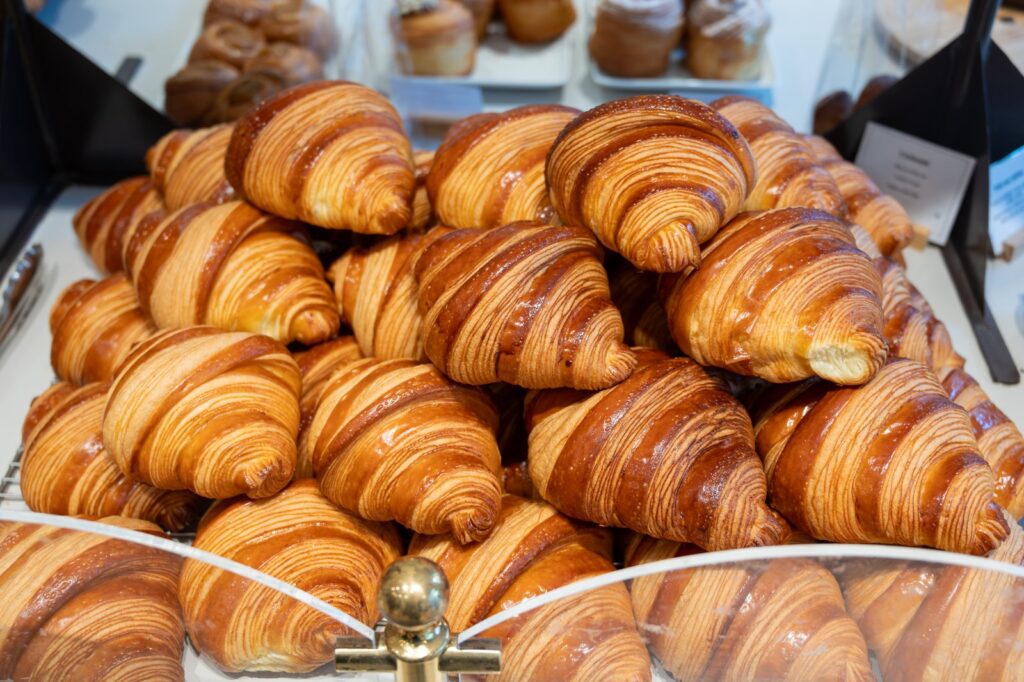
Walk past any patisserie in Paris and you’ll understand why the French take their pastries seriously. Behind those gleaming windows sit rows of tarts, towers of macarons, and éclairs so glossy they reflect the light. These aren’t just desserts: they’re the work of artisans who’ve spent years mastering their craft.
Forget the diet. In Paris, a proper patisserie is as much a part of the trip as the Louvre. Here’s where we go for the city’s finest pastries, and what to try when you get there.
Maison Mulot, Saint-Germain
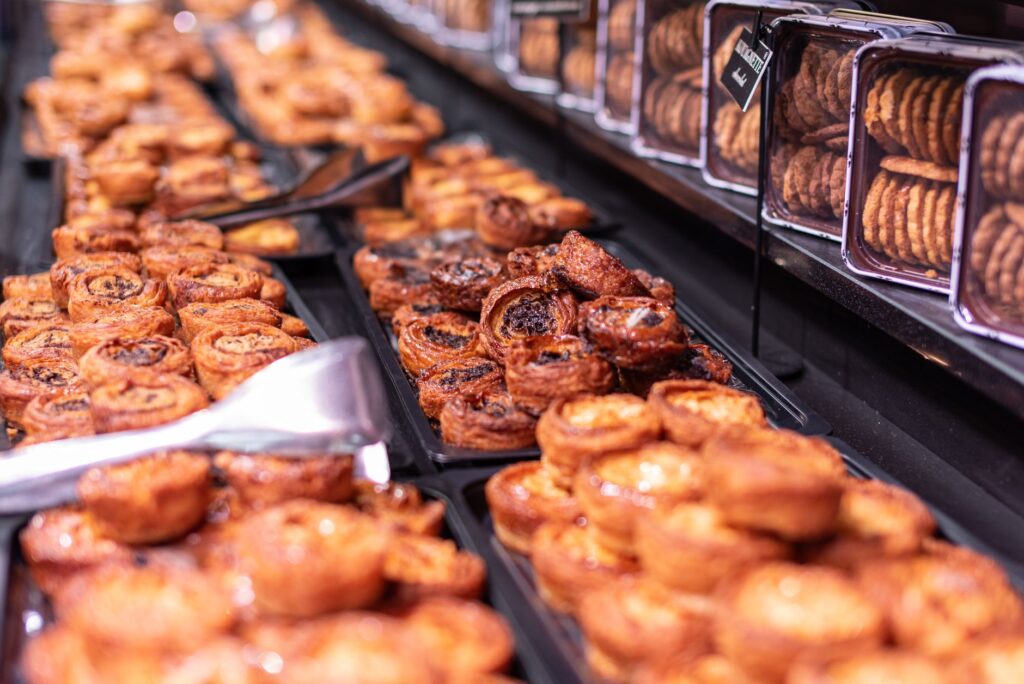
Start on Rue de Seine in Saint-Germain-des-Prés at Maison Mulot, which Gérard Mulot opened here in 1975. Pastry chef Fabien Rouillard has run the kitchen since 2016. We come for the croissants and the macarons, and stay to look at a counter full of tarts and entremets. It’s a proper neighborhood bakery too, with sourdough loaves for a picnic. Check the official site before you go.
The Paris most visitors miss
Our free 8-page PDF guide: 25 places, from Galerie Vivienne's 1880 mosaic floor to Canal Saint-Martin's locks, each linked to its official site.
Pierre Hermé, Rue Bonaparte
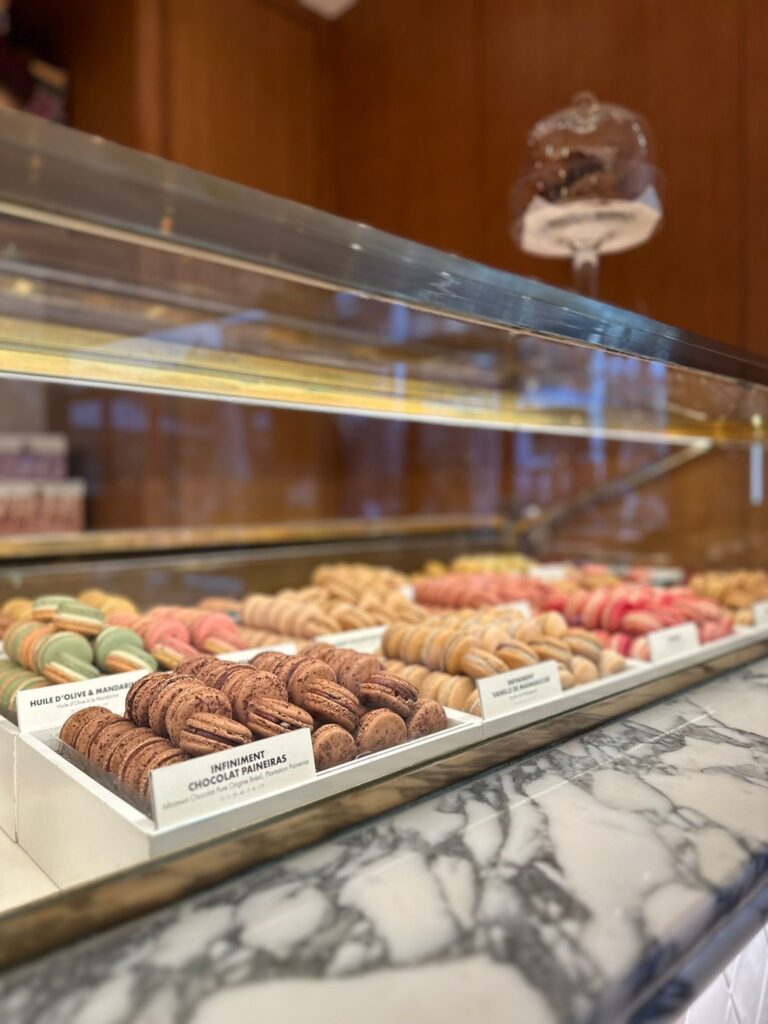
A short walk away, Pierre Hermé on Rue Bonaparte is where we buy the Ispahan: rose, lychee and raspberry, built on a macaron. If you love vanilla, try his Tarte Infiniment Vanille: shortbread, vanilla-soaked cake, vanilla ganache and mascarpone cream. It isn’t cheap, and we think it’s worth it.
La Maison d’Isabelle, Boulevard Saint-Germain
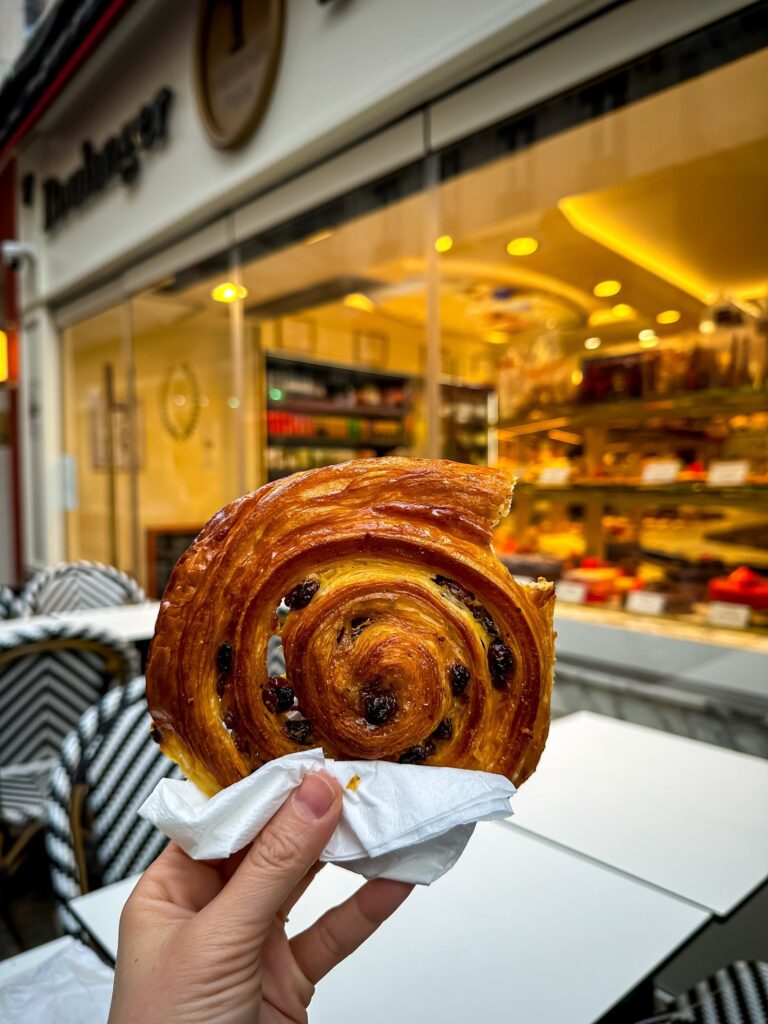
On Boulevard Saint-Germain in the 5th, near Maubert, La Maison d’Isabelle is a family bakery run by the Leday family. It won first prize for the best croissant in Paris in 2018 (Gault&Millau listing), and the croissant is the reason to come. Expect a queue on weekend mornings.
Jacques Genin, the Marais
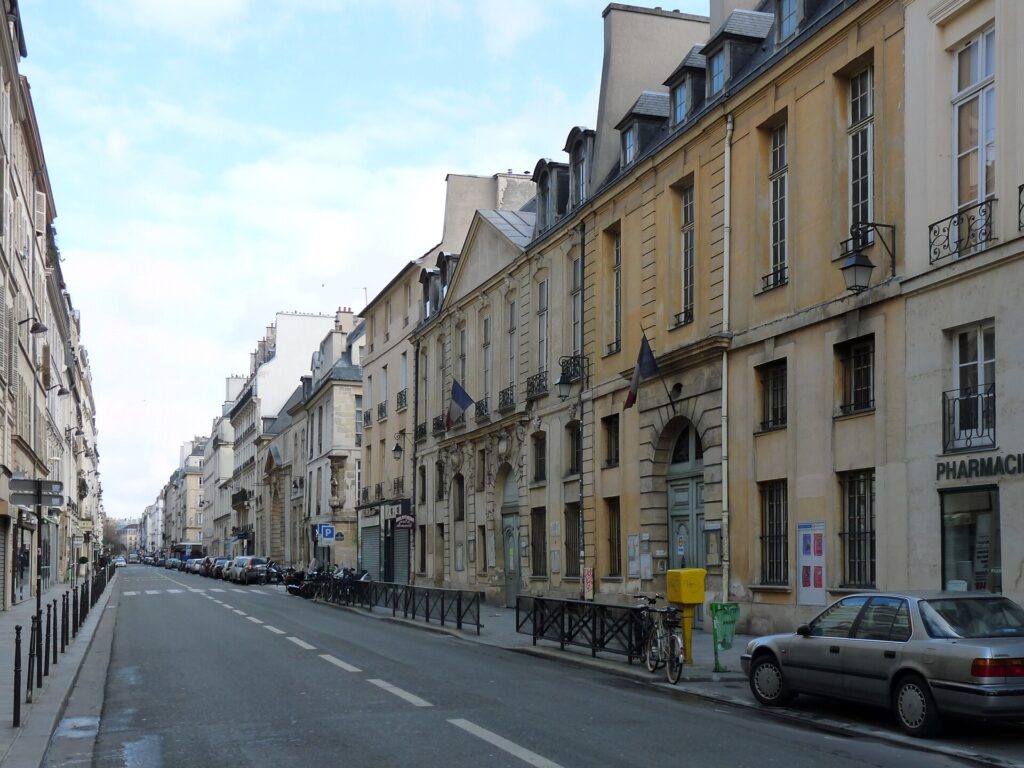
In the Marais, Jacques Genin on Rue de Turenne is a chocolatier first: caramels, pâtes de fruits and ganaches made in his own workshop. He’s also known for a mille-feuille assembled to order, so ask if it’s on when you visit. He has a second shop on Rue de Varenne in the 7th. Check the official site before you go.
Carl Marletti, Rue Censier
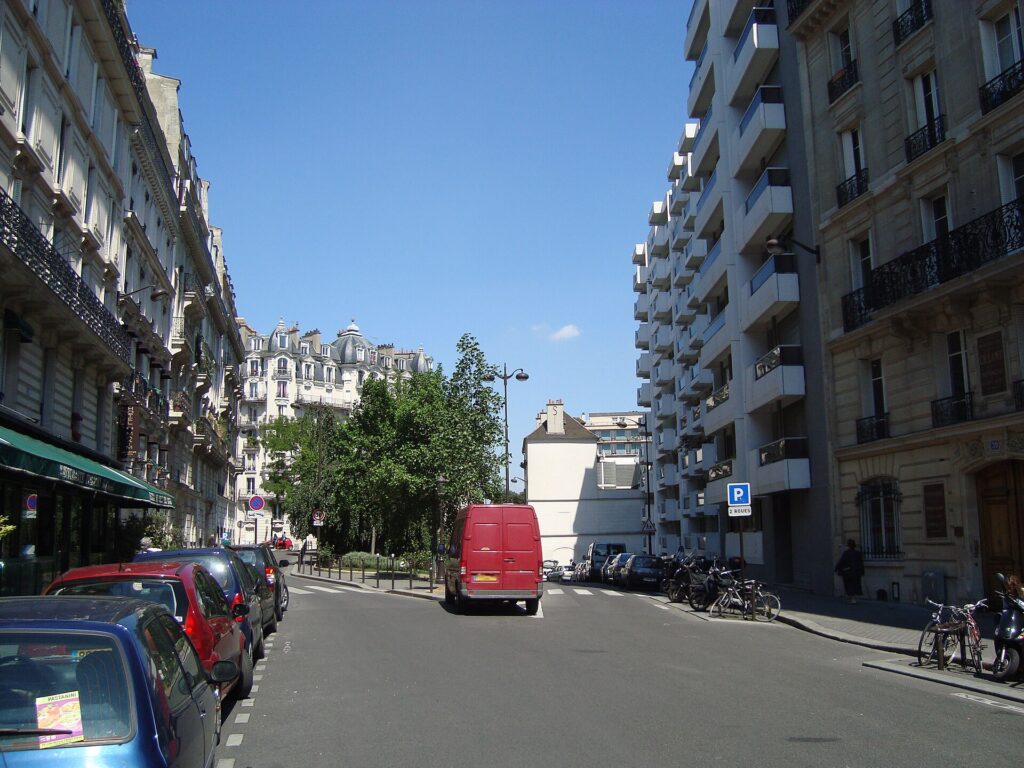
In the 5th, on Rue Censier near Rue Mouffetard, Carl Marletti opened his own shop after years as head pastry chef at the Grand Hôtel Intercontinental. His counter mixes reworked classics with his own creations, and reviewers single out the éclairs and the lemon tart. Take yours for a short walk to the Jardin des Plantes and eat it on a bench. Check the official site before you go.
What to Order
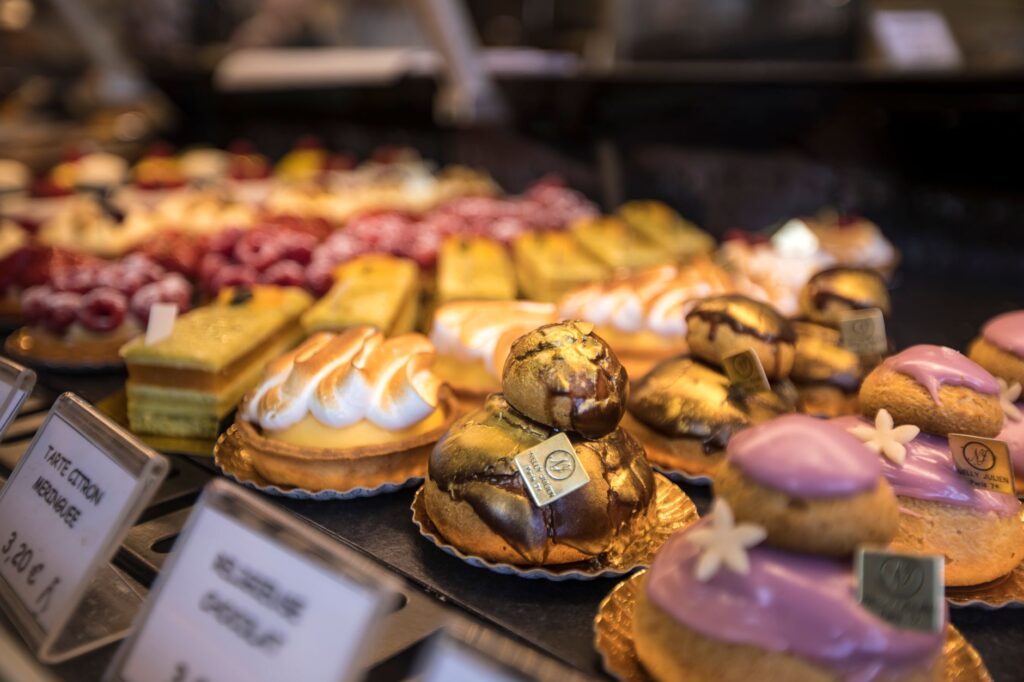
If you’re new to French patisserie, start with these classics:
- Tarte au citron: Lemon tart with a thin pastry crust and sharp, smooth curd
- Éclair: Long choux pastry filled with cream, topped with fondant; try chocolate, coffee, or pistachio
- Paris-Brest: Ring-shaped choux pastry filled with praline mousseline cream
- Millefeuille: Layers of puff pastry with vanilla cream
- Religieuse: Two choux buns filled with cream, typically chocolate or coffee
- Tarte Tatin: Upside-down caramelized apple tart
To try several of these at one counter, go back to Carl Marletti on Rue Censier: his pastry list includes a tarte au citron, éclairs, a Paris-Brest, a millefeuille and religieuses (checked October 2026).
Order at the counter, pay, then point to what you want. If you’re eating in (when there’s a salon), ask for “sur place.” Takeaway is “à emporter.” Most shops package pastries beautifully; they know you’re bringing them back to someone.
Insider Tips
Go early. The best patisseries bake throughout the day, but the choice is widest in the morning. Anything cream-filled is made fresh and doesn’t keep, so eat it the same day.
Sunday is patisserie day in Paris. Families pick up dessert for lunch, so shops are busy and fully stocked. If you’re shopping on a Sunday, go in the morning, before popular items sell out.
Opening days vary from shop to shop, and many close one or two days a week. Check the official site before you make a special trip.
If you want to understand what you’re eating, get your hands floury. The Paris French Bakery Experience Le Marais is a small hands-on session in a working Marais bakery, where you shape baguettes and roll your own croissant. It changes how you see the counter at every bakery after.
Finally, buy the pastry, find a park bench, and eat it slowly. That’s the real Paris.
Want a fresh Paris story in your inbox every morning? Subscribe to the Love Paris newsletter: one short story a day about the city beyond the guidebooks.
Heads up — some links in this article are affiliate links. If you sign up through them, we may earn a small commission at no extra cost to you. We only recommend tools we use ourselves.
Tours & experiences in Paris


Powered by Viator. Some links are affiliate links — we may earn a small commission at no extra cost to you.