
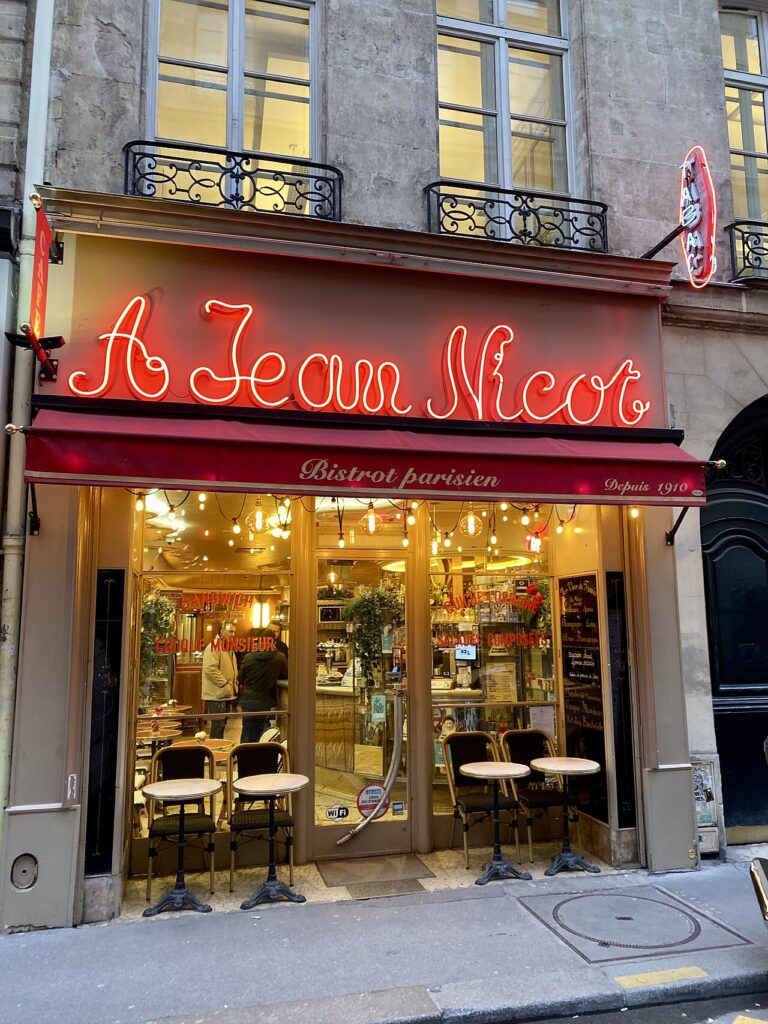
The Parisian bistro isn’t a museum piece. It’s a living tradition where locals still gather for lunch at noon sharp, where handwritten daily specials arrive on paper placemats, and where the owner knows half the room by name. These neighborhood institutions serve the kind of honest French cooking that never goes out of style: boeuf bourguignon that’s been simmering since morning, perfectly dressed frisée aux lardons, and tarte Tatin still warm from the oven.
Finding the real ones takes knowing where to look. The best bistros hide in residential corners of the 10th, 11th, and 14th arrondissements, not along the Champs-Élysées. They’re the places where the menu changes with the seasons, the wine list favors small producers, and nobody rushes you through your coffee.
The Classic Bistro Experience
A true Parisian bistro follows a rhythm established over generations. The zinc-topped bar near the entrance, the closely packed tables with paper cloths or none at all, the chalkboard menu that changes daily based on what looked good at Rungis market that morning. You’ll find copper pots hanging in open kitchens, bentwood chairs that have served thousands of diners, and waiters in long white aprons who’ve worked the same room for decades.
The menu reads like a greatest hits of French bourgeois cooking: pâté de campagne with cornichons, blanquette de veau, confit de canard, steak frites with shallot sauce. Desserts remain refreshingly simple: île flottante, profiteroles, crème caramel. These aren’t trendy dishes. They’re what Parisians have been eating for lunch since their grandparents’ time.
Expect to pay €18-€28 for a two-course lunch menu, €35-€50 for dinner. Wine by the carafe or bottle runs €20-€40 for something very drinkable. Reserve ahead for dinner, especially Thursday through Saturday.
Where Neighborhoods Still Have Their Own
In the 11th arrondissement near Charonne métro, Bistrot Paul Bert on rue Paul Bert draws crowds for its dry-aged côte de boeuf and Grand Marnier soufflé. The tile floors, vintage posters, and red banquettes haven’t changed in fifty years. Arrive at noon for lunch or book dinner three days ahead.
Cross into the 10th near Goncourt métro and you’ll find Chez Michel on rue de Belzunce, where chef Thierry Breton serves Breton-inflected bistro cooking: bone marrow with fleur de sel, roasted turbot, kouign-amann for dessert. The €38 dinner menu is one of Paris‘s best values.
South of Montparnasse in the 14th, L’Assiette on rue du Château has been feeding the neighborhood since 1936. New ownership respects tradition while sourcing carefully: Charolais beef, line-caught fish, vegetables from market gardeners outside Paris. The terrine maison and roast chicken with tarragon are definitive versions.
In the 7th near Duroc métro, L’Ami Jean packs in regulars for Basque-influenced bistro fare: piperade, grilled pork with Espelette pepper, rice pudding served family-style from a giant copper pot. The energy runs high, tables sit close together, and nobody leaves hungry. Book two weeks ahead for weekend dinner.
Lunch vs. Dinner Strategy
Lunch remains the best time to experience bistro culture at its most authentic. Arrive between noon and 1 p.m. to catch the full dining room: office workers, neighborhood merchants, retired couples at their weekly table. The prix-fixe lunch menus (€16-€24) offer the same cooking as dinner for significantly less. Service moves at a brisk but unhurried pace, respecting the traditional two-hour French lunch hour.
Dinner brings a different atmosphere: more tourists, more couples on dates, higher prices. But evening also means the full menu is available, more time to linger over wine, and the pleasure of walking through lit streets afterward. Many bistros close Sunday and Monday, so plan accordingly. Always reserve for Friday and Saturday dinner.
For wine, ask for house recommendations by the carafe or glass. Bistro sommeliers excel at finding small-producer bottles in the €28-€45 range that pair beautifully with traditional dishes. Skip the €80 Burgundies for neighborhood spots where the chef works with natural wine importers.
Reading the Room
The best sign of an authentic bistro? A dining room where at least half the tables are speaking French to each other, not to a waiter. Look for handwritten menus that change daily, not laminated cards in four languages. Notice whether dishes arrive at different paces—proper bistro cooking can’t be rushed.
Red flags include photos on the menu, servers who start in English without asking, and identical-looking dishes emerging too quickly from the kitchen. Real bistros cook à la minute when possible, which means occasional waits and slight variations from day to day.
The zinc bar near the entrance should see actual use: regulars stopping for a glass of white wine and a dozen oysters before dinner, the owner sharing a coffee with a supplier, neighbors catching up after work. If the bar sits empty and polished, you’re in the wrong place.
Dress comfortably but neatly. Parisians don’t wear athletic clothes or baseball caps to dinner, but bistros aren’t formal. Leave room for dessert—the Paris-Brest, tarte Tatin, and chocolate mousse are as important as anything that came before.
Want more insider stories about where Parisians actually eat, drink, and spend their time? Subscribe to the Love Paris newsletter and get one short story about the real city delivered to your inbox every day.
Tours & experiences in Paris


Powered by Viator. Some links are affiliate links — we may earn a small commission at no extra cost to you.