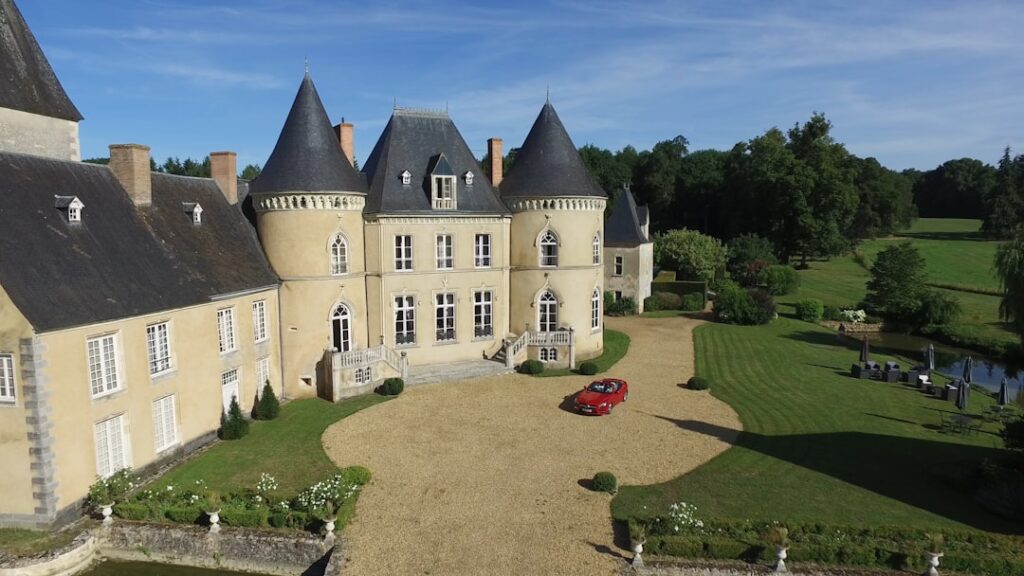
Just an hour southeast of Paris, a baroque masterpiece triggered one of the most dramatic reversals of fortune in French history—and set in motion the creation of the world’s most famous palace. The story of Château de Vaux-le-Vicomte is inseparable from Paris itself, woven into the fabric of Louis XIV’s reign and the transformation of the French capital into the center of European power.
In August 1661, Nicolas Fouquet, Louis XIV’s finance minister, hosted a fête at his newly completed château that would prove to be his undoing. The young king arrived from Paris with approximately six hundred courtiers to witness an evening of unprecedented splendor: gardens designed by André Le Nôtre, interiors by Charles Le Brun, architecture by Louis Le Vau, and entertainment choreographed by Molière. Fountains danced, tables groaned with delicacies served on gold plate, and fireworks illuminated the sky.
Louis XIV was not impressed—he was enraged. How dare his finance minister possess a residence that outshone the royal palaces? Three weeks later, Fouquet was arrested by d’Artagnan (yes, the real musketeer) on charges of embezzlement. He would spend the rest of his life in prison.
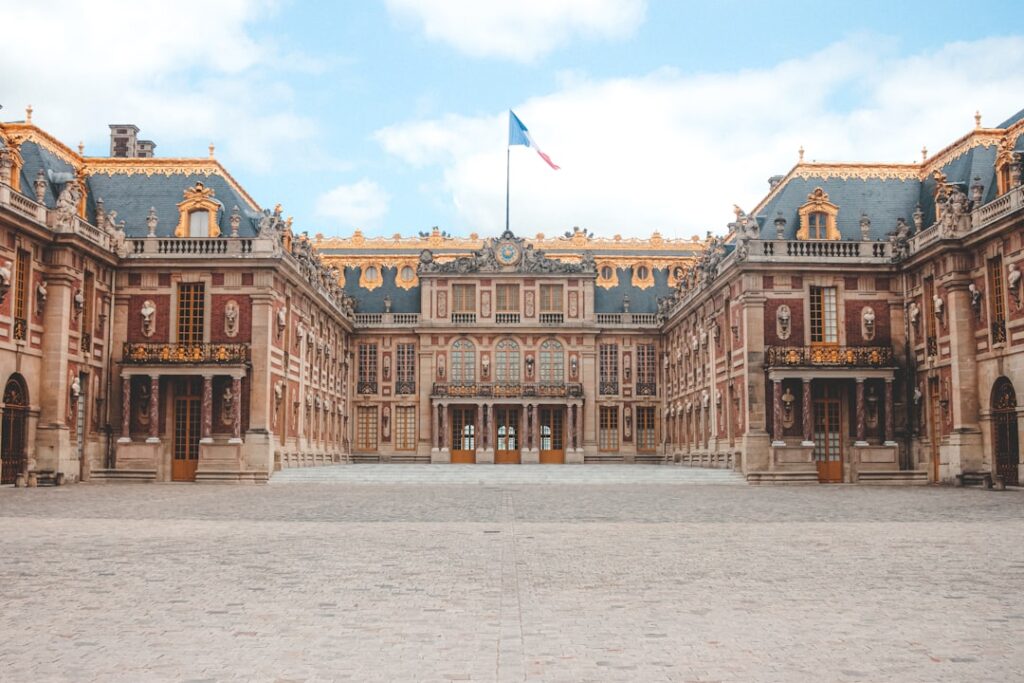
But the king did more than punish Fouquet. He appropriated his entire creative team. Le Vau, Le Nôtre, and Le Brun were immediately commissioned to create something far grander: the Palace of Versailles. The artistic triumvirate that had perfected their collaboration at Vaux-le-Vicomte would spend the next decades transforming Louis XIII’s modest hunting lodge into the symbol of absolute monarchy.
The Parisian Connection
The relationship between Vaux-le-Vicomte and Paris runs deeper than royal jealousy. Fouquet had been a key figure in Parisian society, hosting the city’s literary elite at his hôtel particulier in the Marais. His salon attracted La Fontaine, who would later immortalize his patron’s fall in elegiac verse, and Madame de Sévigné, whose letters provide our most vivid account of the fatal party.
After Fouquet’s arrest, his art collection was confiscated and absorbed into the royal holdings. The tapestries, paintings, and sculptures that once adorned Vaux were seized by the crown.
The architectural influence flowed in both directions. The oval salon at Vaux, with its soaring dome, became a template for Parisian hôtels particuliers throughout the late 17th century. The Marais and Faubourg Saint-Germain neighborhoods still contain dozens of mansions whose central salons echo Vaux’s innovation.
A Living Monument
Today, Vaux-le-Vicomte remains in private hands—the only grand château of its era never owned by the state. Parisians make the easy journey to Maincy for candlelit evening visits, when two thousand candles illuminate the gardens exactly as they did in 1661. The château offers a direct line to the moment when the Sun King decided to outshine everyone, a decision that would reshape not just Versailles but Paris itself.
For the capital became the administrative heart of Louis XIV’s centralized state, the place from which power radiated outward. The same aesthetic principles perfected at Vaux—geometric gardens, classical proportions, theatrical grandeur—would be applied to Parisian projects from the Place Vendôme to Les Invalides. In destroying Fouquet, Louis XIV inadvertently ensured that the vision born at Vaux-le-Vicomte would define French architecture for generations.
Tours & experiences in Paris


Powered by Viator. Some links are affiliate links — we may earn a small commission at no extra cost to you.