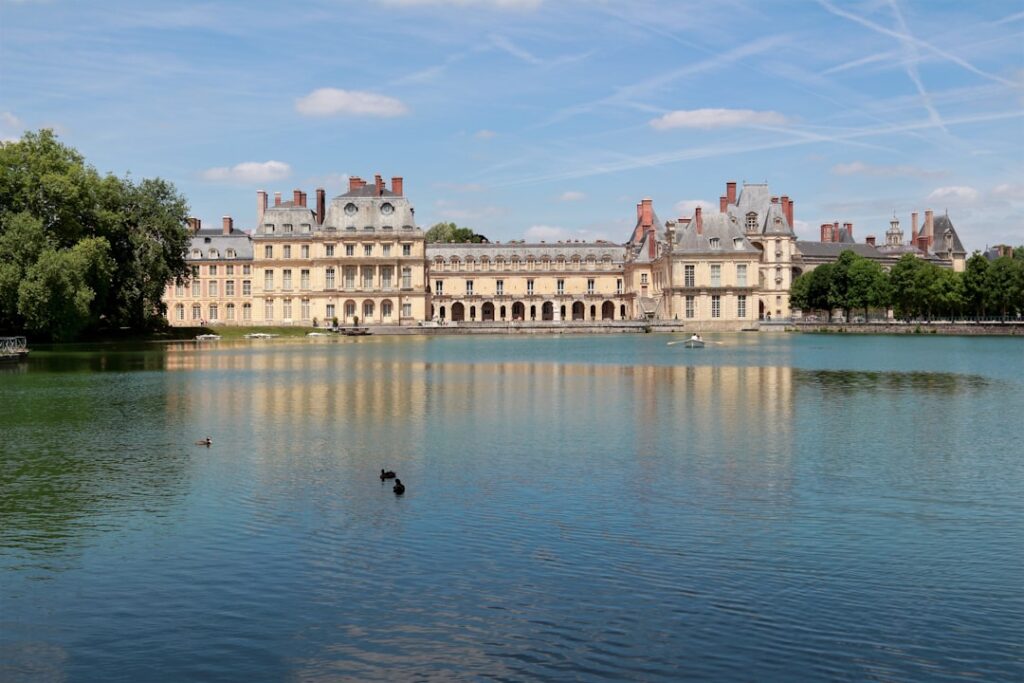
While Versailles claims the spotlight, Fontainebleau deserves equal attention. This royal residence served French monarchs for over 800 years, from the medieval Capetians through Napoleon III. Unlike Versailles’s single architectural vision, Fontainebleau layers centuries of styles, creating a uniquely rich testament to French royal life. And you can visit without fighting crowds.
The château sits an hour from Paris, surrounded by one of Europe’s finest forests. You’ll find Renaissance frescoes, Napoleon’s apartments, and gardens that rival anything at Versailles—all in a town that feels genuinely French rather than tourist-centric.
Getting to Fontainebleau from Paris
Take the Transilien train from Gare de Lyon to Fontainebleau-Avon station. Trains run hourly, and the journey takes 40 minutes. At the station, catch bus line 1 toward Les Lilas or Château, which drops you at the palace gates in 15 minutes. Buy tickets at the station machines or on the SNCF app.
If you’re driving, take the A6 autoroute south. Parking near the château costs around 3 euros for the day. The drive takes just under an hour without traffic, though weekend mornings can be slow leaving Paris.
Plan to arrive when the château opens at 9:30 a.m., especially on weekends. You’ll have the State Apartments nearly to yourself for the first hour.
What to See Inside the Château
Start with the Grands Appartements, particularly the Gallery of Francis I. These Renaissance frescoes and carved walnut panels set the standard for French royal decoration. The ballroom, with its coffered ceiling and massive fireplace, shows Italian influence at its most elegant.
Napoleon’s apartments deserve an hour. Unlike Versailles, where Napoleon’s presence feels secondary, Fontainebleau was his preferred residence. His throne room, bedroom, and the famous abdication room where he signed away his empire in 1814 remain exactly as he left them. The small museum displays his campaign tent, uniforms, and personal items.
Don’t skip the Trinity Chapel, where Louis XV married Marie Leszczyńska and Napoleon III wed Eugénie. The second-floor Pope’s Apartment, created for Pius VII during his contentious stay, offers remarkable Empire-style decoration.
The Chinese Museum, filled with treasures Empress Eugénie collected, provides a fascinating glimpse into 19th-century Orientalism. The Theatre of Napoleon III, recently restored, opens for guided tours on weekends.
The Gardens and Forest
The formal French gardens stretch behind the château, designed by André Le Nôtre (yes, the Versailles gardener). The Grand Parterre, Europe’s largest, extends toward the Carp Pond, where you can rent rowboats from April through October.
The English Garden, added by Napoleon, offers shaded walks along the canal. Pack a lunch and claim a bench under the plane trees—locals do.
The Forest of Fontainebleau covers 25,000 hectares of woodland, sandstone ridges, and dramatic rock formations. Climbers flock here for bouldering on world-class sandstone blocks. Hikers can follow marked trails ranging from easy one-hour loops to all-day expeditions. Pick up a trail map at the tourist office on Place Napoléon Bonaparte, just outside the château gates.
The Gorges de Franchard, a 30-minute drive into the forest, offers spectacular rocky landscapes and medieval hermit caves. The marked blue trail takes two hours and requires decent shoes.
Where to Eat in Fontainebleau
Avoid the mediocre cafés facing the château. Instead, walk five minutes to Rue Grande, the main shopping street, where locals actually eat.
La Table des Maréchaux, inside the Hôtel Napoléon, serves refined French cuisine in Napoleon III-era surroundings. Expect to pay 35-45 euros for lunch.
For something casual, Crêperie La Petite Ardoise on Rue Montebello makes excellent savory galettes with local ingredients. Count on 15 euros per person.
L’Axel on Rue Grande offers solid bistro fare—steak frites, roast chicken, and changing daily specials. The outdoor terrace fills with locals at lunch. Budget 20-25 euros.
If you’re picnicking, stop at the Marché Couvert, the covered market on Rue des Pins, open Tuesday, Friday, and Sunday mornings. Load up on cheese, charcuterie, and bread, then head to the gardens.
Practical Information
The château opens every day except Tuesday, from 9:30 a.m. to 5 p.m. (6 p.m. April through September). Admission costs 14 euros; it’s free for EU residents under 26. The gardens are always free.
Allow three hours minimum for the château interior, another hour for the formal gardens. If you’re hiking or exploring the forest, make it a full day.
The château gets busy from 11 a.m. to 3 p.m., especially on Sundays. Early morning or late afternoon visits offer breathing room and better light for photography.
Guided tours in English run at 10:30 a.m. and 2:30 p.m. daily, covering areas not accessible on general admission. Book online in advance during summer.
The town of Fontainebleau itself warrants an hour’s stroll. The area around Rue Grande retains genuine provincial charm, with independent shops and cafés that close for two-hour lunch breaks.
Ready to explore more of Paris and beyond? Subscribe to the Love Paris newsletter for one short story about the city every day—the hidden corners, the practical tips, and the Paris that guidebooks miss.
Tours & experiences in Paris


Powered by Viator. Some links are affiliate links — we may earn a small commission at no extra cost to you.