On the last day of May 1961, President John F. Kennedy arrived at Orly Airport, marking the beginning of a state visit to France that would become one of the most celebrated diplomatic moments of the Cold War era. But Kennedy’s journey to Paris carried a deeper resonance than Cold War politics alone—it represented the arrival of an American president whose Irish heritage had profoundly shaped his identity and whose family story embodied the transatlantic journey of millions.
Kennedy’s great-grandfather Patrick Kennedy had left Ireland in October 1848, departing County Wexford for Boston during the Famine years with nothing but hope. Just over a century later, his descendant stepped onto French soil as leader of the free world, accompanied by First Lady Jacqueline Kennedy, whose fluency in French and grace would captivate Parisian society.
The Paris Summit
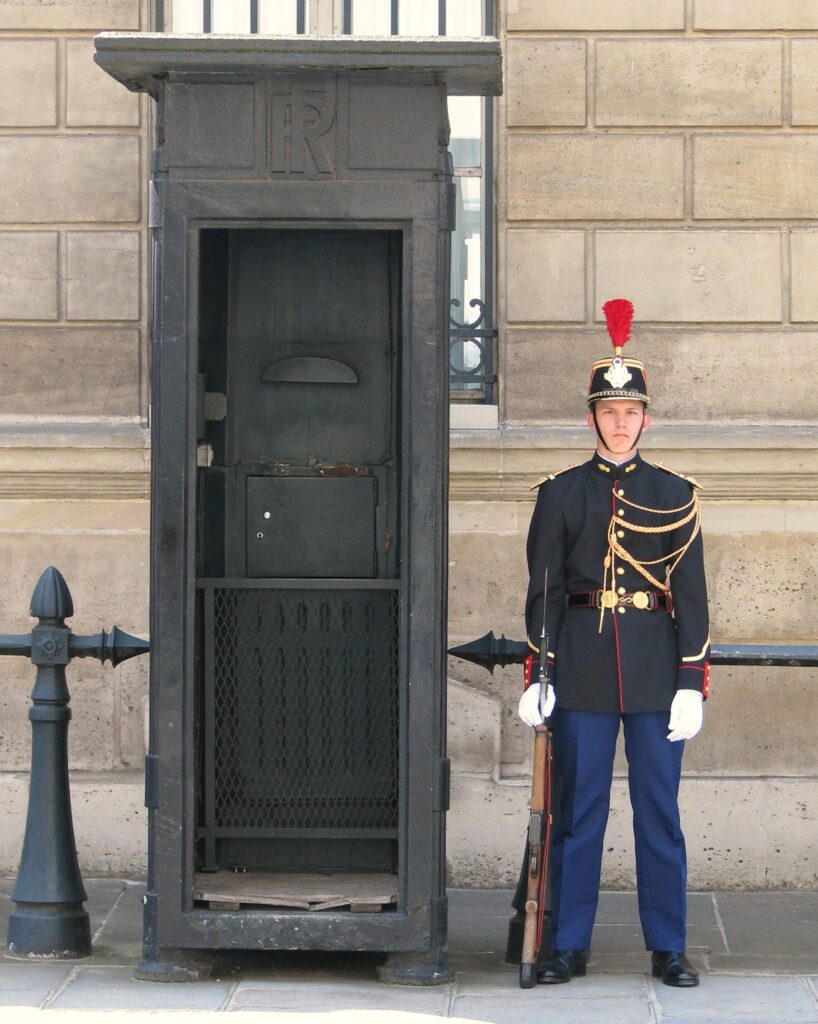
The three-day visit saw Kennedy meet with President Charles de Gaulle at the Élysée Palace, where the two leaders discussed nuclear strategy, NATO, and the growing crisis in Berlin. Yet beyond the formal diplomacy, Paris witnessed something more personal. Kennedy’s Irish Catholic background—once a liability in American politics—became an asset in France, a predominantly Catholic nation that had long maintained cultural and religious ties with Ireland.
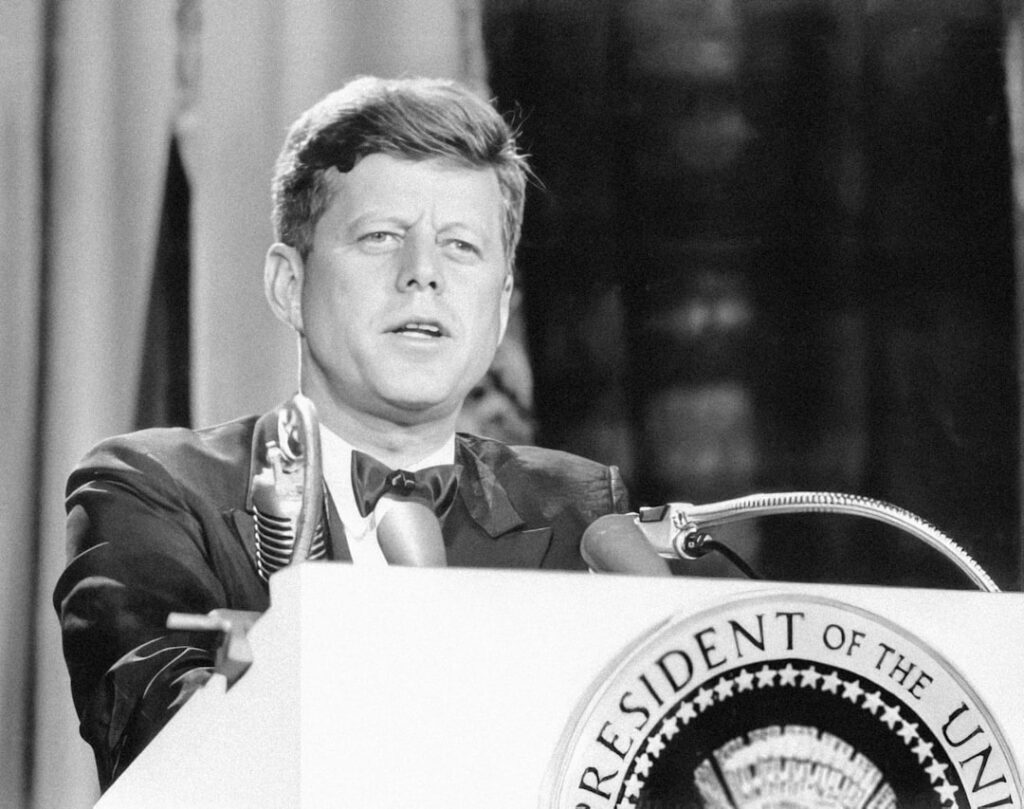
At a press conference at the Palais de Chaillot on June 2, 1961, Kennedy charmed the French press while acknowledging his wife’s triumph: “I do not think it altogether inappropriate to introduce myself,” he quipped. “I am the man who accompanied Jacqueline Kennedy to Paris.” The self-deprecating humor, so characteristic of Irish wit, endeared him to his hosts.
Ireland’s Place in Franco-American Relations
Kennedy’s Irish roots were no mere footnote to his presidency. Like many US Presidents with Irish Heritage, he wore his ancestry proudly, and it influenced his worldview. Ireland had maintained careful neutrality during World War II, but its diaspora—particularly in America—had built bridges across the Atlantic that no political doctrine could erase.
France and Ireland shared their own complex history. Thousands of Irish soldiers had served in French armies throughout the 17th and 18th centuries as part of the “Wild Geese”—Catholic Irish exiles who fled penal laws at home. Their regiments fought for French kings, and their descendants remained in France for generations. This shared Catholic heritage created cultural sympathies that persisted into the 20th century.
A Legacy Remembered
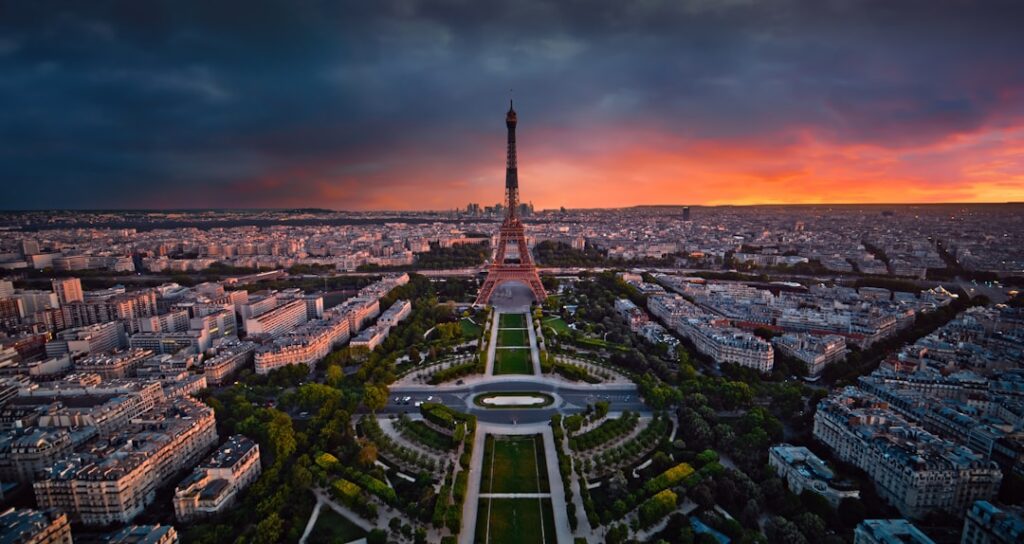
Kennedy’s Paris visit occurred just two years before his assassination in Dallas. Today, several Parisian streets and squares bear his name, including the Avenue du Président Kennedy along the Seine’s right bank near the 16th arrondissement, which offers sweeping views of the Eiffel Tower. The French capital has never forgotten the young president whose charm, idealism, and Irish-American story captivated a generation.
The connection between Paris and Ireland, embodied in that 1961 visit, reminds us that great cities are linked not only by treaties and trade but by the human stories that flow between them—stories of migration, ambition, and the enduring hope that drove Patrick Kennedy from Wexford to Boston, and brought his great-grandson to the heart of Paris as a symbol of what was possible.
Tours & experiences in Paris


Powered by Viator. Some links are affiliate links — we may earn a small commission at no extra cost to you.