

Long before the Eurostar made travel between Paris and London a matter of hours, cultural exchange between the two capitals shaped the literary landscape of Europe. While Shakespeare called London home for more than two decades, his works found their way to Paris through a fascinating route that would forever change French theatre.
The connection began in earnest during the Restoration period and flourished in the 18th century, when Voltaire spent his exile in England from 1726 to 1729. Living in London, Voltaire attended performances of Shakespeare’s plays and was profoundly affected by what he witnessed. He returned to France as Shakespeare’s first major French champion, introducing the Bard’s work to Parisian intellectual circles.
The Comédie-Française and Shakespeare
The most concrete and enduring link between Shakespeare’s London legacy and Paris is the Comédie-Française, France’s national theatre founded in 1680. Located on the Rue de Richelieu in the 1st arrondissement, this institution has been performing Shakespeare’s works in French translation since the late 18th century. The theatre’s archives document their first Shakespeare production—Hamlet—in 1769, translated by Jean-François Ducis.
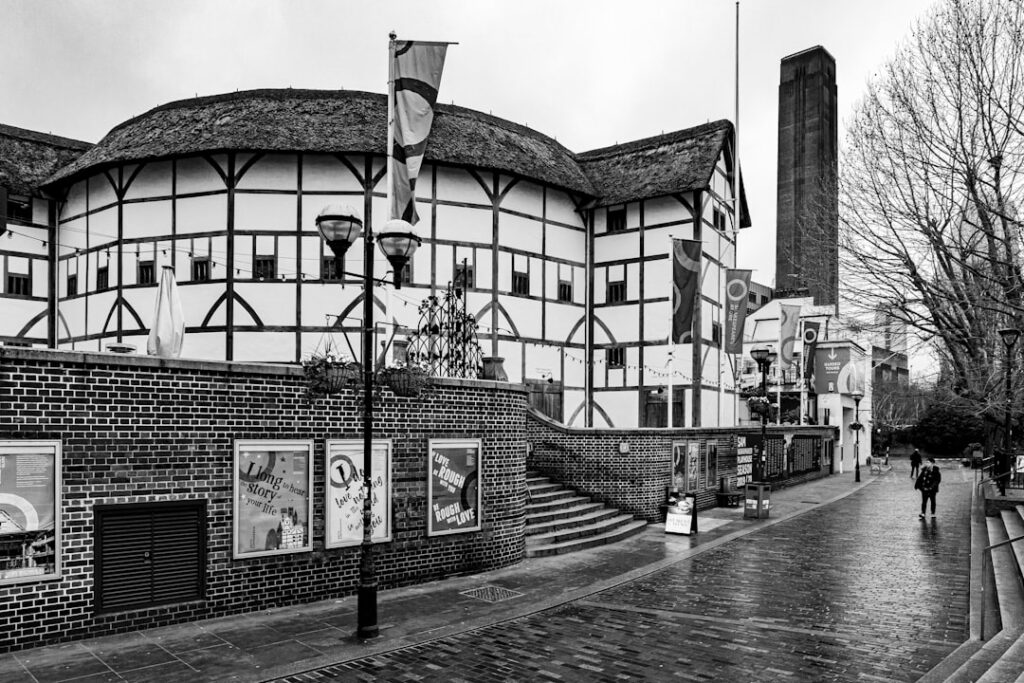
Today, the Comédie-Française maintains Shakespeare as a cornerstone of its repertoire, with productions of his plays performed more frequently than those of any non-French playwright. The theatre’s ornate interior has hosted hundreds of performances of Romeo and Juliet, Macbeth, and A Midsummer Night’s Dream, creating a direct theatrical lineage from the Globe Theatre on London’s Bankside to the heart of Paris.
Victor Hugo’s Shakespeare Obsession
Another verifiable connection runs through Victor Hugo, who lived at Place des Vosges in Paris’s Marais district. Hugo was an ardent Shakespeare admirer who wrote an entire book, William Shakespeare, published in 1864. In it, he called Shakespeare one of the supreme geniuses of humanity, placing him alongside Homer and Dante.
Hugo’s home, now the Maison de Victor Hugo museum, contains numerous references to Shakespeare, including editions of his works and correspondence discussing the English playwright. Hugo’s advocacy helped cement Shakespeare’s reputation in France and influenced French Romantic theatre, creating a cultural bridge between London’s theatrical heritage and Paris’s literary scene.

The Shakespeare Garden
For visitors seeking a tangible Shakespeare connection in Paris today, the Pré Catelan garden in the Bois de Boulogne contains a Shakespeare Garden (Jardin Shakespeare), created in 1953. This unique botanical space features plants mentioned in Shakespeare’s plays and hosts open-air theatre performances during summer months, including French productions of the Bard’s works.
The garden represents a living tribute to the cultural exchange between London and Paris, where the flora of Shakespeare’s English verses grows in French soil, and his words continue to resonate in both languages.
This enduring connection demonstrates how Shakespeare’s London legacy extended far beyond the Thames, shaping Parisian culture in ways that remain visible and vital today—from the stages of the Comédie-Française to the peaceful paths of the Bois de Boulogne.
Tours & experiences in Paris


Powered by Viator. Some links are affiliate links — we may earn a small commission at no extra cost to you.