
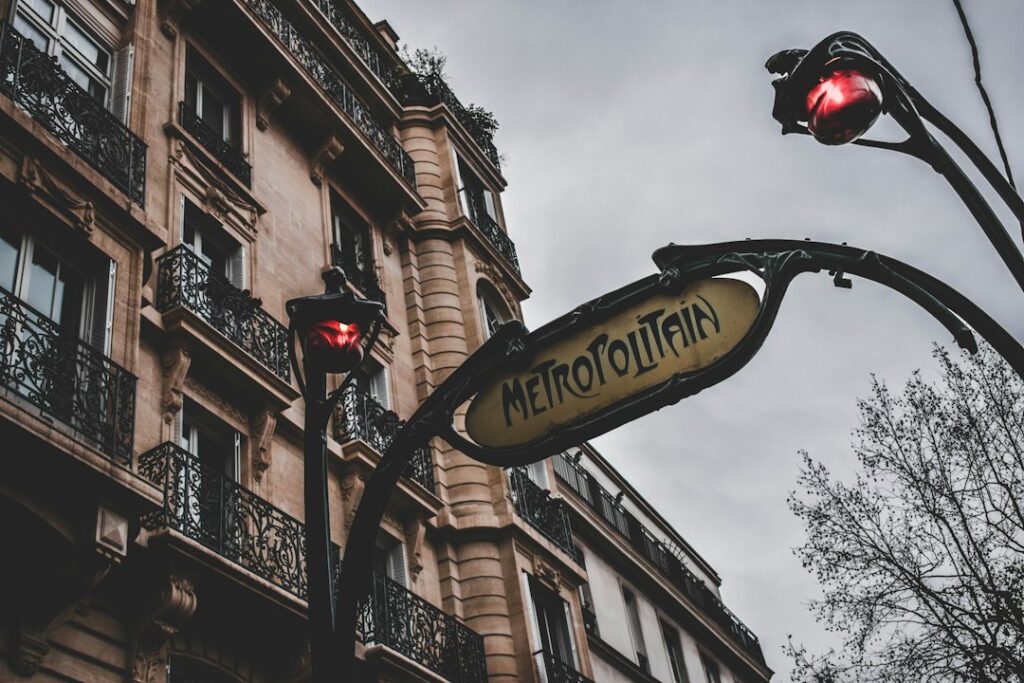
The Paris Metro is one of the world’s most efficient subway systems, carrying nearly five million passengers daily through 245 stations across sixteen lines. For visitors, it’s the fastest, cheapest way to navigate the city—but only if you know how to use it properly. Skip the confused tourist routine and learn the strategies Parisians use every day.
Understanding the System and Choosing Your Ticket
The Metro operates from 5:30 a.m. until about 1:15 a.m. on weeknights, extending to 2:15 a.m. on Friday and Saturday. Lines are numbered 1 through 14, plus two smaller lines, 3bis and 7bis. Each has a distinct color on the map, and trains are named by their final destination—so you’ll follow signs for “Direction Château de Vincennes” rather than “Line 1 East.”
For tickets, forget the single €2.10 t+ tickets unless you’re only making one or two trips. A carnet of ten tickets offers modest savings, but the best value for most visitors is the Navigo Easy card (€2 one-time fee) loaded with ten trips, or better yet, the weekly Navigo Découverte pass. At €30.75 for unlimited Metro, bus, and RER travel within central Paris (zones 1-2) for a full week, it pays for itself in about twelve trips. The pass runs Monday to Sunday, so buy it early in the week.
The Paris Visite pass sounds convenient but is rarely worth the premium unless you’re making an extraordinary number of trips daily. Do the math before buying.
Strategic Line Selection and Transfer Tactics
Not all routes are equal. Line 1, fully automated and running east-west through major landmarks from La Défense to Château de Vincennes, is your friend—fast, frequent, and air-conditioned. Line 14, also automated, speeds between Saint-Lazare and Olympiades with minimal stops. Use these when possible.
Line 13, splitting into two branches in the north, is chronically overcrowded and best avoided during rush hours (8-9:30 a.m. and 5:30-7:30 p.m.). The same goes for Line 4 at Châtelet and Gare du Nord.
When transferring, look for blue “Correspondance” signs. Major hubs like Châtelet-Les Halles and République involve serious walking—the transfer from Line 1 to Line 4 at Châtelet can take seven minutes. At République, the Line 5 to Line 11 connection requires navigating long corridors. Build extra time into journeys requiring these transfers.
Some stations offer secret shortcuts. At La Motte-Picquet-Grenelle, separate platforms serve different lines; at Montparnasse-Bienvenüe, multiple exits lead to different streets—check the neighborhood map before choosing your exit or you’ll surface two blocks from where you intended.
Safety, Etiquette, and Avoiding Common Mistakes
The Metro is generally safe, but pickpockets work the tourist-heavy lines (1, 4, and 6) and crowded transfers. Keep bags zipped and in front of you, especially at Gare du Nord, Châtelet, and near the Louvre. At night, stick to the center of platforms and ride in cars near the conductor (usually mid-train).
Parisian Metro etiquette is simple: stand right on escalators, let passengers exit before boarding, and give priority seats (places prioritaires) to pregnant women, elderly passengers, and people with disabilities. Don’t eat smelly food on crowded trains, and keep your phone volume off.
Common tourist mistakes: not validating tickets at the turnstile (inspectors fine non-validated tickets), trying to exit through entry-only gates, and assuming all exits lead to the same street. Always check the exit list (Plan du Quartier) before ascending—Paris blocks are long, and the wrong exit can add ten minutes to your walk.
Keep your ticket until you’ve fully exited the system. Inspectors sometimes check at exits, and RER platforms require your ticket to exit.
Weekend and Late-Night Alternatives
When the Metro closes, the Noctilien night bus network takes over, with forty-seven routes radiating from major hubs like Châtelet. Buses run every fifteen to thirty minutes from 12:30 a.m. to 5:30 a.m., and your Metro tickets work on them. Route N01 and N02 are most useful for central Paris.
On Sundays and holidays, service can be reduced on some lines. Major lines like 1, 4, and 14 run normal schedules, but smaller lines may have longer waits. Check schedules at RATP.fr before planning Sunday morning trips.
The Paris City Center Free Walking Tour is an excellent way to learn central Paris geography, making Metro navigation easier once you understand how neighborhoods connect above ground.
Master the Metro, and Paris shrinks to manageable size. You’ll spend less time confused at platforms and more time exploring neighborhoods, markets, and cafés. Subscribe to the Love Paris newsletter for one short story a day about navigating the city like someone who lives here—practical tips, neighborhood secrets, and the small details that transform visitors into temporary Parisians.
Tours & experiences in Paris


Powered by Viator. Some links are affiliate links — we may earn a small commission at no extra cost to you.