
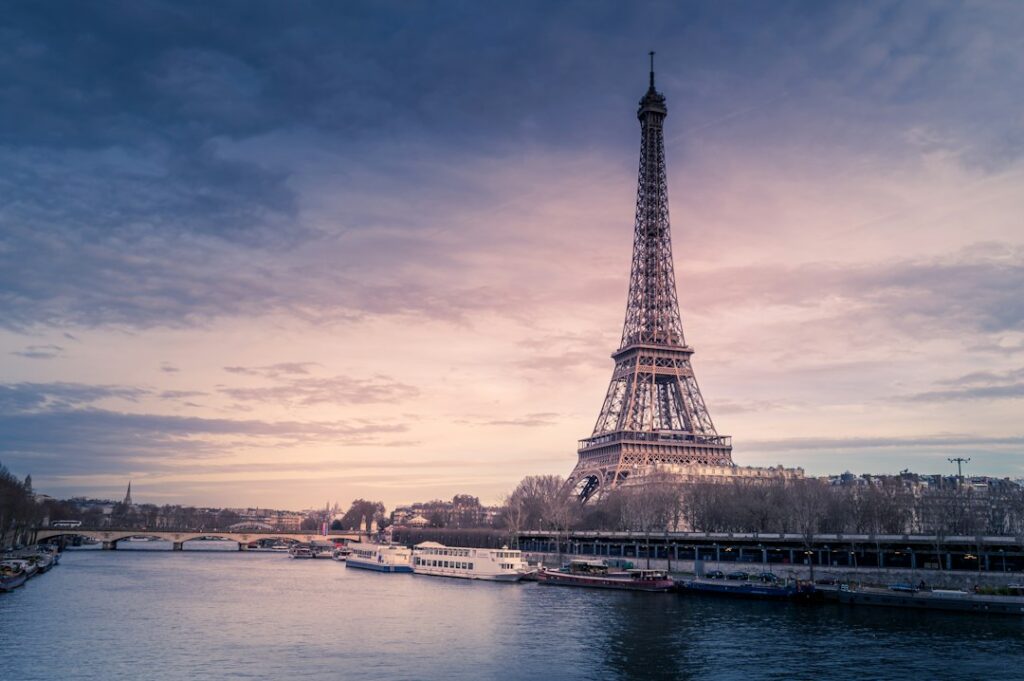
The Eiffel Tower receives nearly seven million visitors every year, yet most people experience only a fraction of what Gustave Eiffel’s masterpiece has to offer. Built for the 1889 World’s Fair and nearly demolished afterward, the 330-meter iron lattice tower has become the symbol of Paris itself. But there’s more to this landmark than the view from the top.
Whether it’s your first visit or your fiftieth, understanding the tower’s hidden details, best vantage points, and smartest visiting strategies transforms a tourist obligation into an unforgettable experience.
Timing Your Visit: When to Go and How to Skip the Lines
The worst time to visit the Eiffel Tower is midday in summer, when lines can stretch two hours or more. The best time? Early morning when the tower opens at 9:30 AM, or after 7 PM when day-trippers have left and the evening light turns golden.
Book tickets online weeks in advance through the official site—they release slots 60 days out and sell out quickly for summit access. If you arrive without tickets, the line for stairs-only tickets (to the second floor) moves much faster than the elevator queue and costs less. The 674-step climb to the second floor takes about 30 minutes and offers a more intimate experience of the tower’s iron structure.
Winter visits have their own magic: shorter lines, crisp air, and the chance to see the tower against grey Parisian skies. The tower sparkles for five minutes every hour after sunset—the best views of this light show are from Trocadéro across the Seine, not from the tower itself.
What Most Visitors Miss: The Tower’s Hidden Details
On the first floor, 57 meters up, most people rush past to reach higher levels. Don’t. The glass floor installed in 2014 lets you look straight down at the Champ de Mars below—thrilling even if you’re not afraid of heights. The first floor also houses exhibits on the tower’s history, including Eiffel’s private apartment (restored and visible through windows), where he entertained Thomas Edison and other luminaries.
Look for the 72 names engraved around the tower’s base—French scientists, engineers, and mathematicians Eiffel wanted to honor. Time and weather had erased them until a 1986 restoration brought them back.
The iron itself tells a story. The tower’s paint color, called “Eiffel Tower Brown,” has three shades—darker at the base, lighter at the top—to create an optical illusion of uniformity against the sky. The entire structure gets repainted every seven years, a process requiring 60 tons of paint and 18 months of work.
The Best Views: From the Tower and of the Tower
The summit at 276 meters offers 360-degree views extending 70 kilometers on clear days. You can spot Montmartre’s Sacré-Cœur to the north, La Défense’s skyscrapers to the west, and the Panthéon’s dome to the south. But many locals argue the second floor (115 meters) provides the better view—high enough for perspective, low enough to identify individual buildings and neighborhoods.
The most spectacular views are of the tower, not from it. Trocadéro across Pont d’Iéna is iconic but crowded. For something different, try these spots:
- Rue de l’Université near the corner with Rue Cognacq-Jay frames the tower perfectly between Haussmann buildings
- Pont Alexandre III, with its Art Nouveau lamps, offers one of Paris’s most beautiful tower views
- Avenue de Camoëns in the 16th arrondissement provides an elevated, uncrowded perspective
- Square Rapp on the opposite side shows the tower rising above elegant residential buildings
Eating at the Tower: Is It Worth It?
The Eiffel Tower has two restaurants. Madame Brasserie on the first floor serves contemporary French cuisine in a casual setting—overpriced but not outrageously so, and you skip entry lines with a restaurant reservation. Le Jules Verne on the second floor is a different story: a Michelin-starred experience where you’re paying for both excellent food and the setting. Book months ahead.
The more practical option? The champagne bar at the summit sells small bottles of bubbly you can sip while taking in the view. Or pack a picnic and eat it on the Champ de Mars before or after your visit—far more Parisian than dining in a tourist restaurant.
Getting there is simple: take Métro line 6 to Bir-Hakeim, line 9 to Trocadéro, or RER C to Champ de Mars-Tour Eiffel. The walk from any of these stations to the tower reveals different perspectives of the structure and surrounding neighborhood.
The Eiffel Tower has survived two world wars, storms, and proposals for demolition. It remains, as Gustave Eiffel wrote, “not only the monument of an Exposition, but the lasting manifestation of an entire century.” Understanding its story makes standing beneath those iron arches feel less like checking a box and more like meeting an old friend.
Want more insider Paris stories delivered to your inbox? Subscribe to the Love Paris newsletter and get one short story a day about the city’s hidden corners, favorite addresses, and timeless secrets.
Tours & experiences in Paris


Powered by Viator. Some links are affiliate links — we may earn a small commission at no extra cost to you.