
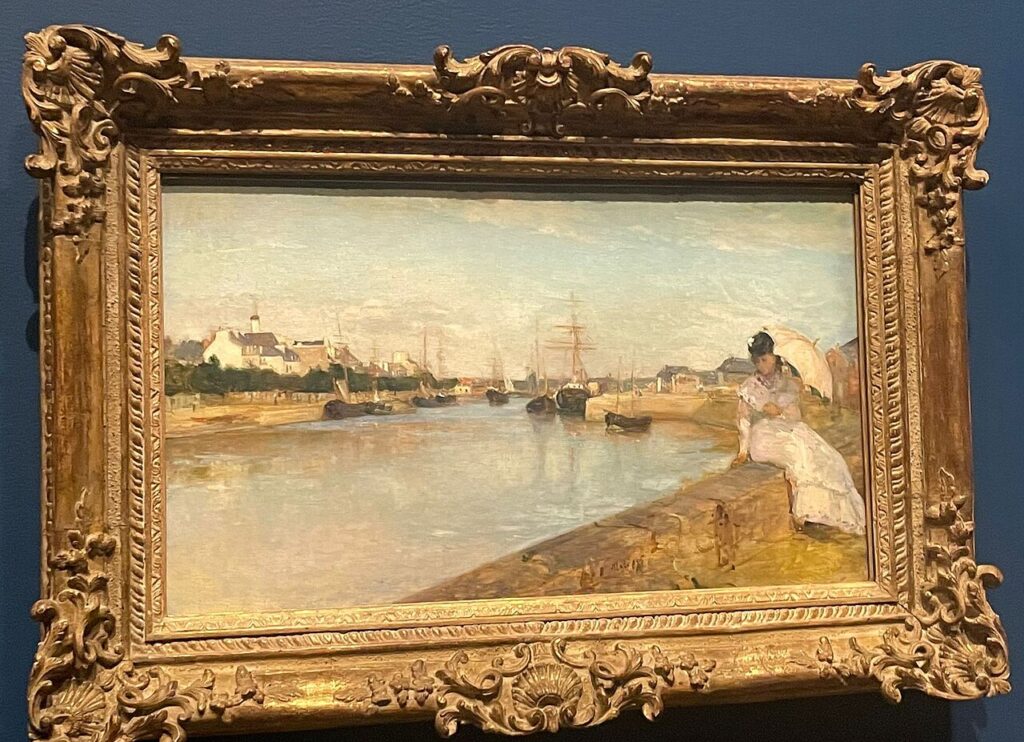
The Musée d’Orsay sits on the Left Bank of the Seine in a former Belle Époque railway station, its grand Beaux-Arts facade hiding one of the world’s finest collections of Impressionist and Post-Impressionist art. While the Louvre gets the crowds and the headlines, many Parisians will tell you the Orsay is their favorite museum—more intimate, more focused, and filled with paintings that changed the way we see light, color, and modern life.
If you’re visiting Paris and care about art, this museum belongs on your shortlist. Here’s what you need to know.
What You’ll See: The Collection
The Orsay covers art from 1848 to 1914, bridging the gap between the Louvre’s classical works and the Centre Pompidou’s modern collection. The fifth floor is where most visitors head first: the Impressionist galleries. Here you’ll find Monet’s Impression, Sunrise (the painting that gave the movement its name), Renoir’s Bal du moulin de la Galette, and entire rooms devoted to Cézanne, Degas, and Pissarro.
Don’t miss the Post-Impressionist rooms on the same floor. Van Gogh’s Starry Night Over the Rhône and Bedroom in Arles hang here, along with Gauguin’s Tahitian scenes and Seurat’s pointillist experiments. The colors are more vivid in person than any reproduction can capture.
The ground floor focuses on academic painting and early Realism—Courbet, Millet, and Manet—as well as sculpture, including Carpeaux’s dramatic Ugolino and His Sons. The middle level holds Art Nouveau furniture, decorative arts, and smaller galleries devoted to Symbolism and Nabis painters like Bonnard and Vuillard.
Practical Tips for Your Visit
The museum is located at 1 Rue de la Légion d’Honneur in the 7th arrondissement. Take the RER C to Musée d’Orsay, or métro line 12 to Solférino. It’s also an easy walk from Saint-Germain-des-Prés or the Tuileries.
Arrive early or late to avoid crowds—Tuesday, Wednesday, and Friday the museum stays open until 6 p.m., but Thursday evenings it’s open until 9:45 p.m., and the galleries are quieter after 7 p.m. Buy tickets online in advance; the line at the main entrance can stretch around the block by midday.
If you have a Paris Museum Pass, you can skip the ticket line and head straight to entrance C. The pass covers two or four consecutive days and includes entry to over 60 museums and monuments across the city, making it a smart investment if you’re visiting several sites.
Start on the fifth floor with the Impressionists, then work your way down. The layout can feel confusing—the museum follows a roughly chronological path, but rooms branch off in unexpected directions. Grab a map at the entrance or download the museum’s app for audio commentary.
Where to Eat and Restcomprehensiveh2>
The Café de l’Ours on the middle level serves sandwiches, salads, and pastries in a casual setting. For something more memorable, book a table at the Restaurant du Musée d’Orsay on the fifth floor, behind one of the station’s original glass clock faces. The food is classic French brasserie fare—nothing groundbreaking—but the view over the Seine toward Montmartre is worth the splurge.
Outside the museum, cross the Pont Royal to the Tuileries Garden for a post-visit stroll, or head east along the Seine toward the Musée Rodin, a ten-minute walk through the elegant 7th arrondissement.
Why Locals Love the Orsay
Parisians appreciate the Orsay because it tells the story of their city’s transformation into a modern capital. The Impressionists painted the boulevards Haussmann carved through medieval Paris, the railway stations that connected the city to the countryside, the cafés and dance halls of Montmartre. Walking through these galleries, you’re seeing Paris as it saw itself in its most innovative, optimistic era.
The building itself—Victor Laloux’s Gare d’Orsay, inaugurated for the 1900 World’s Fair—adds another layer. Trains ran here until 1939; the station nearly became a hotel, then almost got demolished. Its conversion into a museum in 1986 saved one of the city’s most beautiful interiors. Stand in the central nave and look up at the vaulted glass ceiling, and you’ll understand why.
Whether you’re an art history devotee or simply curious, the Musée d’Orsay offers an intimate encounter with some of the most beloved paintings in Western art. Give yourself at least two hours—more if you want to linger.
Want more stories like this delivered to your inbox? Subscribe to the Love Paris newsletter and get one short story about the city every day—no crowds, no clichés, just Paris the way you want to know it.
Tours & experiences in Paris


Powered by Viator. Some links are affiliate links — we may earn a small commission at no extra cost to you.