
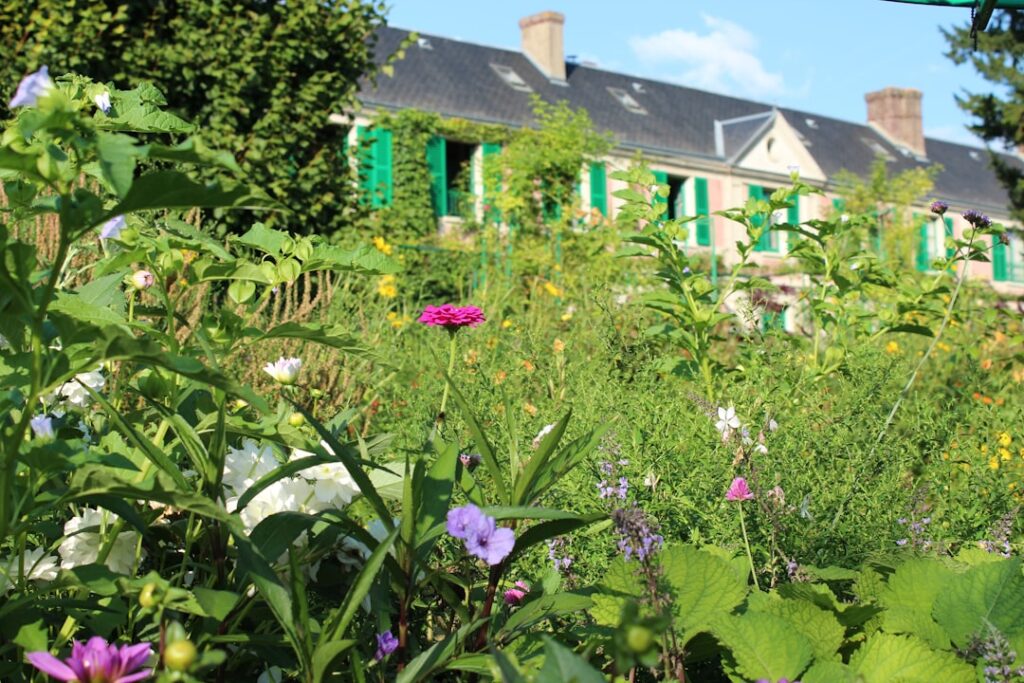
The small Norman village of Giverny, about 80 kilometers northwest of Paris, draws visitors from around the world for one reason: this is where Claude Monet lived, worked, and created the gardens that became his final masterpiece. From 1883 until his death in 1926, Monet transformed a simple farmhouse property into one of the most photographed gardens in France, painting his water lilies obsessively and capturing light on canvas in ways that changed art forever.
A day trip to Giverny is a pilgrimage for art lovers and a revelation for anyone who appreciates beauty. The gardens bloom from late March through early November, with each season offering different colors and moods.
Getting to Giverny from Paris
The most straightforward route is by train from Paris Saint-Lazare to Vernon, the nearest station to Giverny. Trains run regularly and take about 45 minutes. From Vernon, it’s a five-kilometer journey to Giverny—you can take a shuttle bus that meets most trains, rent a bicycle at the station, or walk along the Seine for about an hour if the weather cooperates.
If you prefer not to navigate train schedules and connections, organized tours handle all logistics and often include skip-the-line access during busy summer months. Either way, aim to arrive when the gardens open at 9:30 a.m. to beat the midday crowds, especially from April through June when spring flowers and wisteria are at their peak.
Monet’s Garden: Two Worlds in One
Monet’s property is divided into two distinct sections, connected by an underground passage beneath the road. The Clos Normand, in front of the house, is a riot of color from April through October. Monet planted it without formal borders, allowing flowers to self-seed and mingle—dahlias, hollyhocks, poppies, irises, and roses tumble together in compositions that feel spontaneous but were actually carefully orchestrated.
The Water Garden, across the road, is where you’ll find the scenes from Monet’s most famous paintings. The Japanese bridge draped in wisteria, the weeping willows, and the floating water lilies create reflections that change with every shift in light. Monet designed this garden specifically to paint, adjusting the plantings and water levels to achieve the effects he wanted. The pond is smaller than you might expect from the paintings, but no less magical.
Peak bloom for the water lilies runs from late May through September, though the garden has something to offer every month it’s open. Spring brings tulips and cherry blossoms, summer offers roses and nasturtiums, and autumn turns the foliage gold and russet.
Inside Monet’s House
The pink stucco house with green shutters has been restored to look much as it did when Monet lived here. The rooms are filled with his collection of Japanese prints—he owned more than 200, including works by Hokusai and Hiroshige that influenced his composition and use of color. The dining room is painted a sunny yellow, the kitchen is covered in blue Rouen tiles, and light pours through every window.
You can’t take photographs inside the house, and rooms can get crowded. Move through at your own pace, but don’t skip it—seeing where Monet ate breakfast and stored his paints adds context to the work.
The Village of Giverny
Beyond Monet’s property, Giverny itself is worth an hour or two. The Musée des Impressionnismes, a short walk from Monet’s house, hosts rotating exhibitions about Impressionism and its legacy. The museum’s own garden, designed by landscape architect Mark Rudkin, is a modern take on Monet’s principles and free to wander even if you don’t visit the exhibition.
Rue Claude Monet, the main street, is lined with galleries, cafés, and shops selling art supplies and garden plants. For lunch, the Hôtel Baudy on Rue Claude Monet was once the gathering place for American Impressionists who flocked to Giverny in Monet’s wake. The garden courtyard is lovely on warm days, and the dining room still has the feel of a 19th-century artists’ hangout.
The church of Sainte-Radegonde, where Monet is buried in the family plot, sits at the top of the village. The cemetery is simple and peaceful, with a view over the fields that Monet painted in his early Giverny years.
Practical Tips for Your Visit
Book tickets to Monet’s house and gardens online in advance—they’re timed entry, and summer weekends sell out. The gardens close from early November through late March for winter, though this off-season is when serious restoration work happens. Photography is allowed and encouraged in the gardens; bring a good camera if you have one.
Wear comfortable shoes—the paths are gravel and can be uneven. If you visit after rain, some areas get muddy. Giverny gets hot in summer, so bring water and sunscreen. There’s a small café in the garden complex, but it’s basic; you’re better off eating in the village.
Consider visiting on a weekday in May, September, or October when the light is beautiful and the crowds are thinner. Tuesdays through Thursdays are quietest. The gardens close on Mondays.
Want more Paris stories, insider tips, and neighborhood guides delivered daily? Subscribe to the Love Paris newsletter—one short story every day, straight to your inbox.
Tours & experiences in Paris


Powered by Viator. Some links are affiliate links — we may earn a small commission at no extra cost to you.