
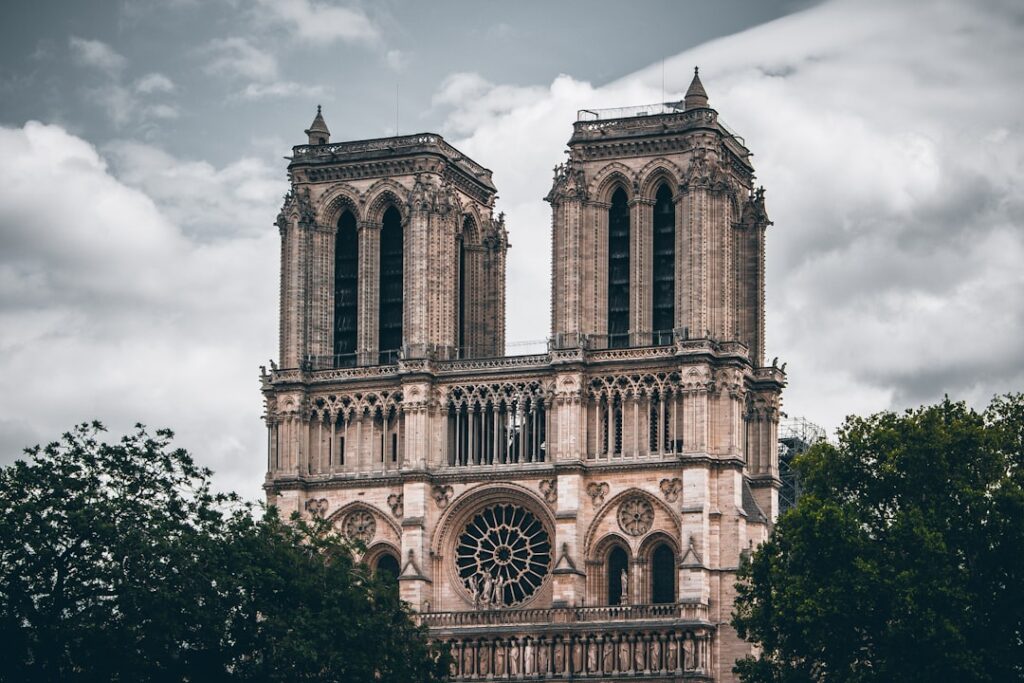
Notre-Dame de Paris has defined the city’s skyline for over 850 years. While the cathedral itself remains closed for restoration following the 2019 fire, the surrounding Île de la Cité neighborhood offers travelers a chance to appreciate its architectural grandeur, explore the history that shaped medieval Paris, and discover remarkable sites often overlooked in the shadow of the famous cathedral.
Here’s how to make the most of a visit to Notre-Dame and the historic heart of Paris today.
Viewing Notre-Dame from the Outside
The best views of Notre-Dame’s exterior are from the small park behind the cathedral, Square Jean XXIII. From here, you can admire the intricate flying buttresses that define Gothic architecture and photograph the apse without crowds blocking your view. The garden benches offer a peaceful spot to sit and appreciate the scale of the restoration work underway.
Cross the Seine to the Left Bank and walk along Quai de Montebello for the classic postcard view of Notre-Dame’s south facade rising above the river. Early morning light is particularly beautiful here, and you’ll often find bouquinistes (booksellers) setting up their green stalls along the quay.
For an elevated perspective, head to the rooftop terrace at the Institut du Monde Arabe, about a 15-minute walk from Notre-Dame. The free terrace on the 9th floor offers sweeping views across the Latin Quarter with Notre-Dame’s towers and spire scaffolding clearly visible.
Sainte-Chapelle: The Île de la Cité’s Hidden Gem
Just a five-minute walk from Notre-Dame, Sainte-Chapelle is one of Paris’s most spectacular interiors and often gets less attention than it deserves. Built in 1248 to house sacred relics, this royal chapel features 15 towering stained-glass windows depicting over 1,000 biblical scenes in brilliant blues, reds, and golds.
Visit on a sunny morning when light pours through the windows, transforming the upper chapel into a kaleidoscope of color. Book tickets online in advance to skip the security line, which can stretch to 45 minutes during peak season. The chapel is located within the Palais de Justice complex on Boulevard du Palais.
Sainte-Chapelle and Notre-Dame were both commissioned by King Louis IX and represent the height of Gothic artistry in medieval Paris. Seeing Sainte-Chapelle helps you imagine what Notre-Dame’s interior was like in its glory.
Exploring the Île de la Cité Neighborhood
The island where Notre-Dame stands has been the heart of Paris since Roman times. Walk to the western tip of the island to find Square du Vert-Galant, a quiet triangular park at water level beneath the Pont Neuf. It’s one of the most romantic spots in Paris, especially at sunset, with views up and down the Seine.
Wander along Rue Chanoinesse and Rue des Chantres, two narrow medieval streets behind Notre-Dame that evoke old Paris with their stone facades and gas-style lamps. Stop at Berthillon (29-31 Rue Saint-Louis en l’Île) on the neighboring Île Saint-Louis for what many consider the city’s best ice cream. The salted caramel and seasonal fruit sorbets are exceptional.
The Crypte Archéologique beneath the square in front of Notre-Dame showcases ruins from Roman and medieval Paris, including ancient walls, heated baths, and foundations from earlier churches. It’s a fascinating 30-minute visit that provides historical context for the cathedral above.
Joining a Guided Walking Tour
To truly understand Notre-Dame’s place in Parisian history and architecture, consider joining a walking tour of the Île de la Cité and surrounding areas. The Paris City Center with Notre Dame interior Exclusive Walking Tour includes expert commentary on the cathedral’s history, the fire, and the restoration efforts, along with visits to other significant sites in the neighborhood.
Another excellent option is How Paris Became Paris: Notre-Dame to the Louvre, which traces the development of Paris from medieval times through the Renaissance, connecting the cathedral to the evolution of the city around it.
Practical Tips for Your Visit
The closest métro stations are Cité (line 4) and Saint-Michel–Notre-Dame (lines 4 and RER B/C). The area can be crowded during midday, especially from April through October, so visit early morning or after 5 p.m. for a quieter experience.
While you can’t enter Notre-Dame currently, the square in front of the cathedral offers clear views of the facade and information panels about the restoration timeline. Security barriers keep visitors at a distance, but you can still appreciate the scale and detail of the western facade with its Gallery of Kings, rose window, and twin towers.
Combine your visit with a stroll through the Latin Quarter across the Pont au Double, where you’ll find Shakespeare and Company bookshop, historic cafés, and winding streets that have looked much the same for centuries.
Notre-Dame remains the spiritual and geographic heart of Paris—the point from which all distances in France are measured. Even closed, it continues to inspire and attract travelers who come to witness its enduring beauty and anticipate its eventual reopening.
Want more insider tips for exploring Paris beyond the guidebooks? Subscribe to the Love Paris newsletter and get one short story about the city delivered to your inbox each day.
Heads up — some links in this article are affiliate links. If you sign up through them, we may earn a small commission at no extra cost to you. We only recommend tools we use ourselves.
Tours & experiences in Paris


Powered by Viator. Some links are affiliate links — we may earn a small commission at no extra cost to you.