
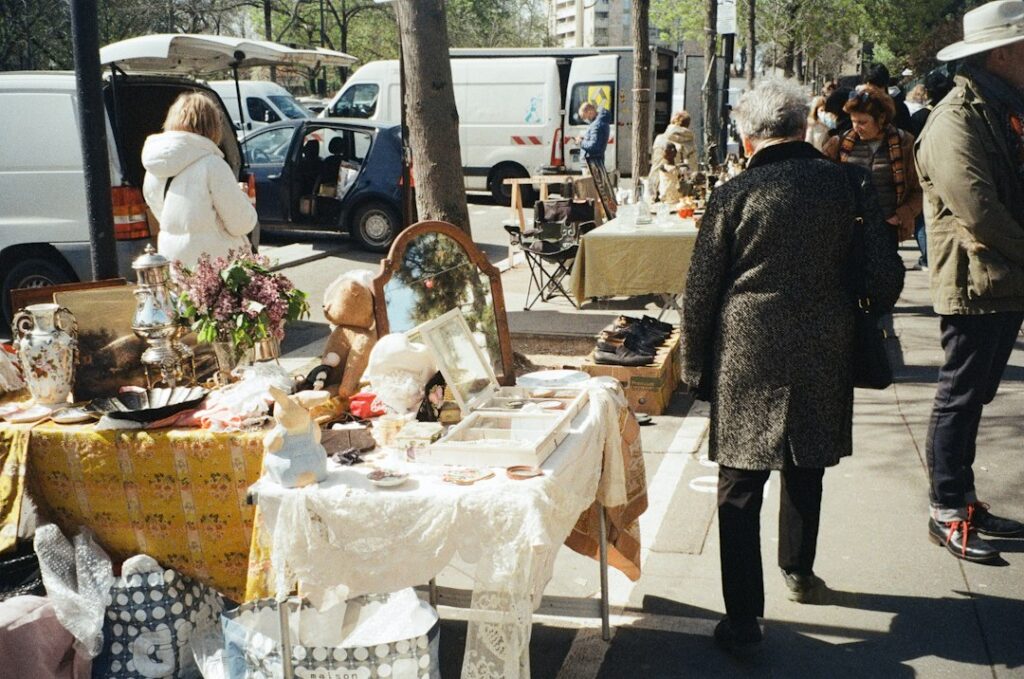
Paris’s flea markets are where the city’s past comes alive in tangible form. These sprawling weekend bazaars offer everything from Belle Époque chandeliers to 1960s Hermès scarves, mid-century furniture to rare vinyl records. For travelers who want to bring home something more meaningful than a souvenir keychain, the city’s marchés aux puces deliver an authentic slice of Parisian treasure hunting.
Marché aux Puces de Saint-Ouen: The World’s Largest
The Marché aux Puces de Saint-Ouen, just north of the 18th arrondissement, sprawls across seven hectares and fifteen distinct markets. With over 2,000 vendors, it’s the largest antiques market in the world and has been operating since the 1880s.
Start at Marché Paul Bert, the most photogenic section, where dealers specialize in high-quality French antiques: gilded mirrors, bistro chairs, vintage advertising posters, and industrial lighting. Prices here reflect the quality, but serious collectors consider it worth every euro. Nearby Marché Serpette houses upscale galleries in a covered arcade built in 1910, perfect for rainy Saturdays.
For vintage clothing and accessories, head to Marché Malik, where you’ll find racks of designer pieces from the 1950s through the 1990s. Marché Vernaison, the oldest section, offers the most eclectic mix: antique linens, old postcards, taxidermy, medical instruments, and curiosities that defy categorization.
Take Métro Line 4 to Porte de Clignancourt. The market operates Saturday through Monday, 10am to 6pm, but arrive early for the best selection. Bring cash for smaller vendors, though many now accept cards. The surrounding streets can feel sketchy—walk confidently straight to the market entrances and ignore anyone offering to “help” you find deals.
Marché aux Puces de Vanves: The Insiders’ Choice
Smaller and more manageable than Saint-Ouen, the Marché aux Puces de Vanves attracts Parisians hunting for affordable treasures. This 14th arrondissement market stretches along Avenue Georges-Lafenestre and Avenue Marc-Sangnier, with about 300 vendors setting up tables every weekend.
The atmosphere here feels less touristy and more like a genuine neighborhood market. You’ll find vintage jewelry, old books, retro kitchen items, cameras, small furniture pieces, and plenty of brocante—the French term for charming old objects that aren’t quite antiques but carry character and history.
Serious bargain hunters arrive at 7am when dealers are still unpacking. By noon, the best pieces are gone. The market runs Saturday and Sunday until about 1pm. Take Métro Line 13 to Porte de Vanves. Unlike Saint-Ouen, this market feels safe and welcoming even for solo travelers.
Marché d’Aligre’s Antiques Pavilion
While Marché d’Aligre is primarily a food market, its covered Beauvau pavilion and surrounding Place d’Aligre host a wonderful brocante section every morning. This 12th arrondissement spot offers a more spontaneous treasure hunt than the organized flea markets.
The vendors here specialize in smaller items: vintage costume jewelry, old café ware, crystal glassware, silverware, linens, and decorative objects. Prices tend to be lower than Saint-Ouen, and the dealers enjoy chatting with browsers. It’s the perfect stop if you’re already exploring the Bastille area and want to add some vintage shopping without dedicating an entire morning.
The market operates Tuesday through Sunday mornings. Combine it with shopping for cheese, bread, and produce in the main market, then have lunch at one of the neighborhood bistros on Rue d’Aligre.
Insider Tips for Flea Market Success
Negotiation is expected at Paris flea markets, but approach it respectfully. Start by asking “Quel est votre meilleur prix?” (What’s your best price?) rather than making a low offer. Vendors typically drop prices by 10-20 percent without much prompting.
Bring a tape measure if you’re shopping for furniture or large items. Know your luggage dimensions and airline weight limits. Many dealers can arrange international shipping, though it’s expensive for anything substantial.
Authenticity varies widely, especially for designer goods and signed pieces. If a deal seems too good to be true, it probably is. Buy what you love for its aesthetic value, not as an investment.
Dress in layers with comfortable shoes—you’ll be walking and standing for hours. Bring a sturdy tote bag for smaller purchases. The best finds often hide in the least organized stalls, so be prepared to dig through boxes and piles.
For furniture and larger items you can’t transport yourself, ask vendors for recommendations on shipping services. Some have relationships with companies specializing in international antiques transport.
Want more insider tips on experiencing Paris like a local? Subscribe to the Love Paris newsletter and get one short story about the city delivered to your inbox each day—from hidden markets to secret museum rooms, we share the Paris beyond the guidebooks.
Tours & experiences in Paris


Powered by Viator. Some links are affiliate links — we may earn a small commission at no extra cost to you.